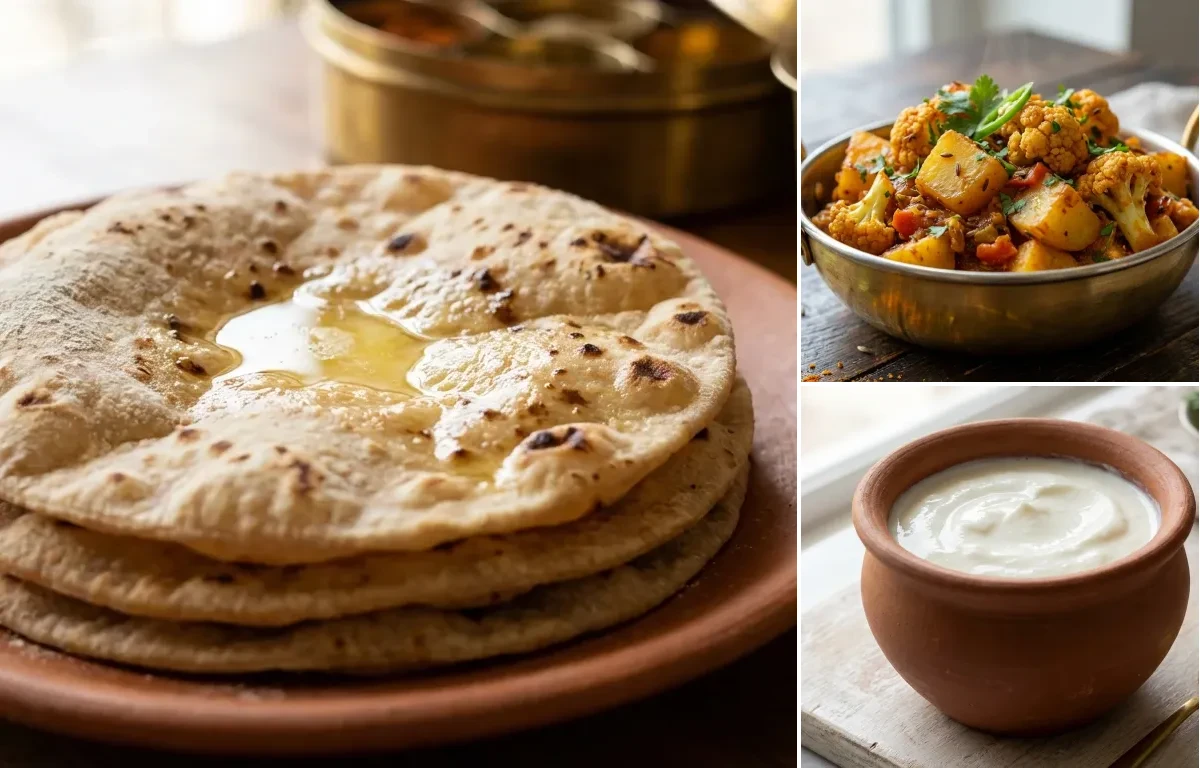
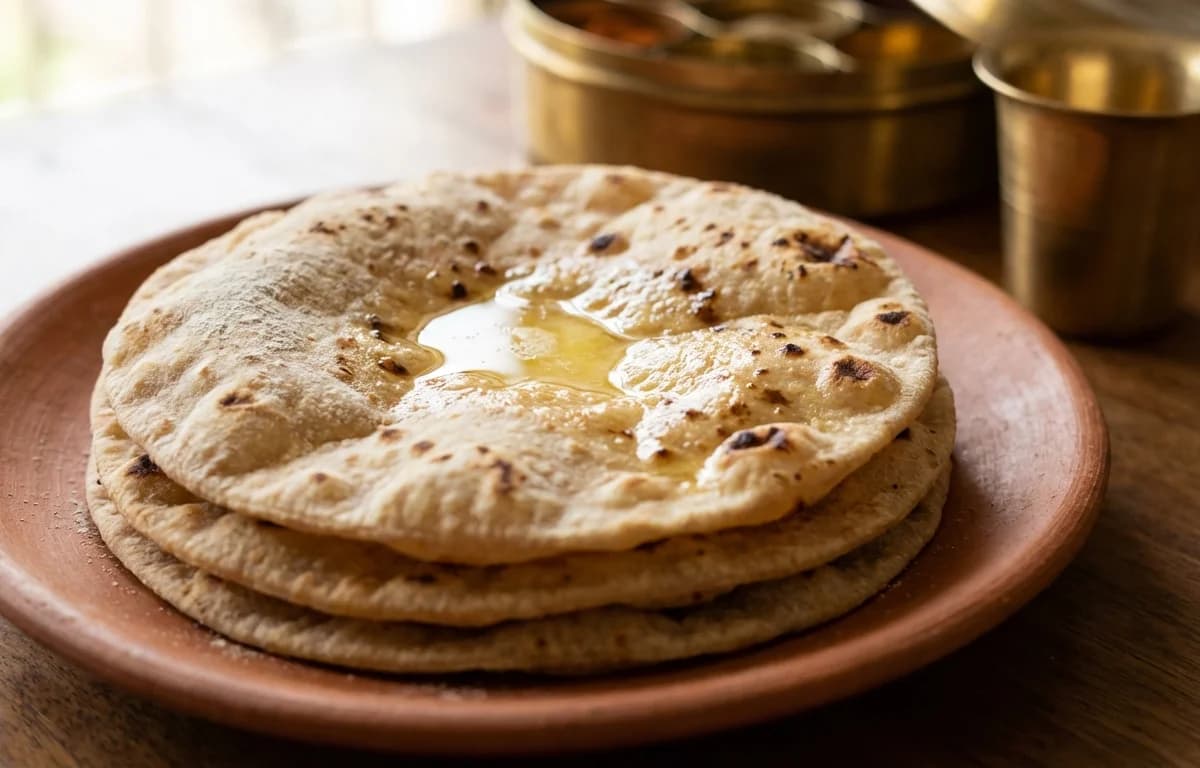
Soft, unleavened whole wheat flatbread, a daily staple in Indian households. Perfect for scooping up curries and dals, this simple, wholesome bread is puffed up on an open flame for that classic, airy texture.
Prep35 min
Cook15 min
Servings4
Serving size: 1 serving
213cal
8gprotein
44gcarbs
2gfat
Ingredients
2 cup atta (Use a fine-milled whole wheat flour for best results.)
1 cup lukewarm water (Adjust quantity as needed; dough should be soft and pliable.)
1 tsp ghee (For the dough, plus extra for brushing (optional).)
Instructions
1
Prepare the dough
In a large mixing bowl, combine the atta and 1 tsp of ghee.
Gradually add lukewarm water, a little at a time, mixing with your fingers to form a shaggy dough.
Knead the dough on a clean surface for 8-10 minutes, using the heel of your palm to push and fold until it is smooth, soft, and pliable, but not sticky.
Cover the dough with a damp cloth or a lid and let it rest for at least 20-30 minutes. This step is crucial for relaxing the gluten and ensuring soft rotis.
A classic North Indian stir-fry of potatoes and cauliflower, perfectly spiced and cooked until tender. This simple, comforting dish is a staple in Indian homes and pairs wonderfully with roti or dal.
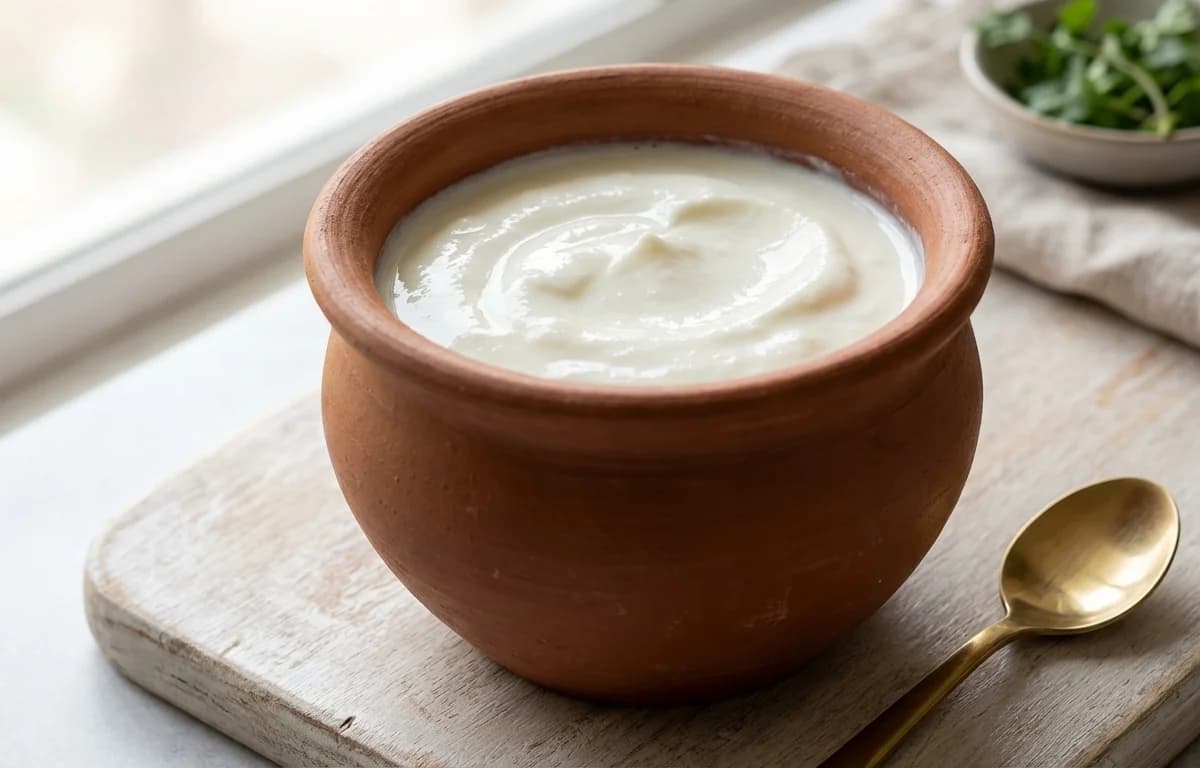
Creamy, tangy, and light homemade curd (dahi), a staple in every Indian household. This simple recipe uses just two ingredients to create a probiotic-rich food perfect for raita, lassi, or enjoying on its own. Note that this recipe requires 6-12 hours of inactive time for fermentation.
Prep5 min
Cook15 min
Ferment480 min
About Roti, Aloo Gobi and Curd
Soul-satisfying roti with aromatic Aloo Gobi and cool curd - a homestyle comfort food dinner!
This indian dish is perfect for dinner. With 613.3199999999999 calories and 23.189999999999998g of protein per serving, it's a high-fiber option for your meal plan.
Other Cuisines to Explore
Discover authentic meals from cuisines around the world.
After resting, knead the dough for another minute.
Divide the dough into 8 equal-sized portions and roll each into a smooth, crack-free ball.
Take one dough ball, flatten it, and dip it in dry atta for dusting.
On a rolling board, use a rolling pin to roll it into an even circle about 6-7 inches in diameter. Ensure the edges are as thin as the center for proper puffing.
3
Cook the roti
Heat a flat griddle (tawa) over medium-high heat. It's ready when a pinch of flour sprinkled on it sizzles and turns brown in seconds.
Place the rolled roti on the hot tawa. Cook for about 20-30 seconds, until you see small bubbles appear on the surface.
Using tongs, flip the roti. Cook the second side for about 45-60 seconds, until light brown spots appear.
4
Puff the roti
Using tongs, carefully remove the roti from the tawa and place it directly over a medium-high open flame. It should puff up into a ball almost instantly. Flip it once and remove immediately to avoid burning.
Alternatively, if you don't have a gas stove, flip the roti back onto the tawa and gently press the edges with a folded kitchen towel. This traps steam and helps the roti puff up.
Once puffed, immediately remove the roti from the heat.
5
Finish and serve
Brush one side with ghee, if desired, for extra flavor and softness.
Place the finished roti in a casserole dish or a container lined with a clean kitchen towel to keep them soft and warm.
Repeat the process for all remaining dough balls. Serve hot with your favorite dal, curry, or sabzi.
238cal
6gprotein
28gcarbs
12gfat
Ingredients
500 g Cauliflower (about 1 medium head, cut into 1.5-inch florets)
400 g Potatoes (about 2 medium, peeled and cut into 1-inch cubes)
3 tbsp Mustard Oil (or any vegetable oil)
1 tsp Cumin Seeds
0.25 tsp Asafoetida (also known as Hing)
1 medium Onion (finely chopped)
1 tbsp Ginger Garlic Paste
2 pcs Green Chili (slit lengthwise, adjust to taste)
2 medium Tomatoes (finely chopped)
0.5 tsp Turmeric Powder
1 tsp Kashmiri Red Chili Powder (for color, adjust for heat)
1 litre Whole Milk (Full-fat milk yields the thickest, creamiest curd. You can use low-fat milk, but the result will be less thick.)
1 tbsp Yogurt Starter (Must contain live active cultures. Ensure the starter is fresh and not sour for the best results.)
Instructions
1
Boil the Milk
Pour the milk into a heavy-bottomed pot or saucepan.
Bring the milk to a rolling boil over medium heat, then reduce the heat to low. Let it simmer for 5-7 minutes, stirring occasionally to prevent a skin from forming and to avoid scorching at the bottom. This process helps thicken the milk slightly, resulting in a creamier curd.
2
Cool to Lukewarm Temperature
Turn off the heat and allow the milk to cool down until it is lukewarm. The ideal temperature is between 40-45°C (105-115°F).
To test without a thermometer, dip a clean finger into the milk. You should be able to hold it in for about 10 seconds without it feeling uncomfortably hot. If it's too hot, it will kill the bacteria; if it's too cold, the curd won't set.
3
Inoculate with Starter
In a small bowl, whisk the yogurt starter until it is smooth and lump-free.
Add 2-3 tablespoons of the warm milk to the starter and mix well. This process, called tempering, helps the culture mix evenly without curdling.
Pour this tempered starter mixture back into the pot of milk and stir gently just a few times to combine everything thoroughly.
4
Ferment and Set the Curd
Pour the inoculated milk into the container you wish to set the curd in (earthenware, glass, or steel containers work well).
Cover the container with a lid and place it in a warm, draft-free spot to ferment. An oven (turned off) with the light on, a warm cupboard, or an Instant Pot on the 'Yogurt' setting are great options.
Let it sit undisturbed for 6 to 12 hours. The time will vary based on the climate; warmer weather requires less time (6-8 hours), while colder weather may take longer (10-12 hours).
5
Chill and Serve
Once the curd is set (it should be firm and not jiggle like a liquid), carefully transfer it to the refrigerator without disturbing it.
Chill for at least 3-4 hours. This crucial step stops the fermentation process (preventing it from becoming too sour) and helps the curd to thicken and set further.
Serve chilled as a side dish, or use it as a base for raita, lassi, or marinades.
Cook the masala, stirring occasionally, for 5-7 minutes until the tomatoes break down completely and oil begins to separate from the mixture. This step is crucial for flavor.
4
Cook the Aloo Gobi (15 minutes)
Drain the potatoes and add them to the pan. Stir well to coat with the masala. Cook for 4-5 minutes, stirring occasionally.
Add the cauliflower florets and gently toss everything together to ensure the florets are evenly coated.
Add 1/4 cup of hot water, cover the pan with a tight-fitting lid, and reduce the heat to low.
Let it cook for 10-12 minutes, or until the potatoes and cauliflower are tender but not mushy. Avoid stirring too often to prevent the florets from breaking.
5
Garnish and Serve (3 minutes)
Once cooked, remove the lid. If there's excess moisture, increase the heat to medium and cook for a minute or two until it evaporates.
Sprinkle the garam masala and crushed kasuri methi over the dish.
Garnish with fresh chopped coriander leaves.
Gently mix, turn off the heat, and let it rest for 5 minutes for the flavors to meld.
Serve hot with roti, paratha, or as a side dish with dal and rice.