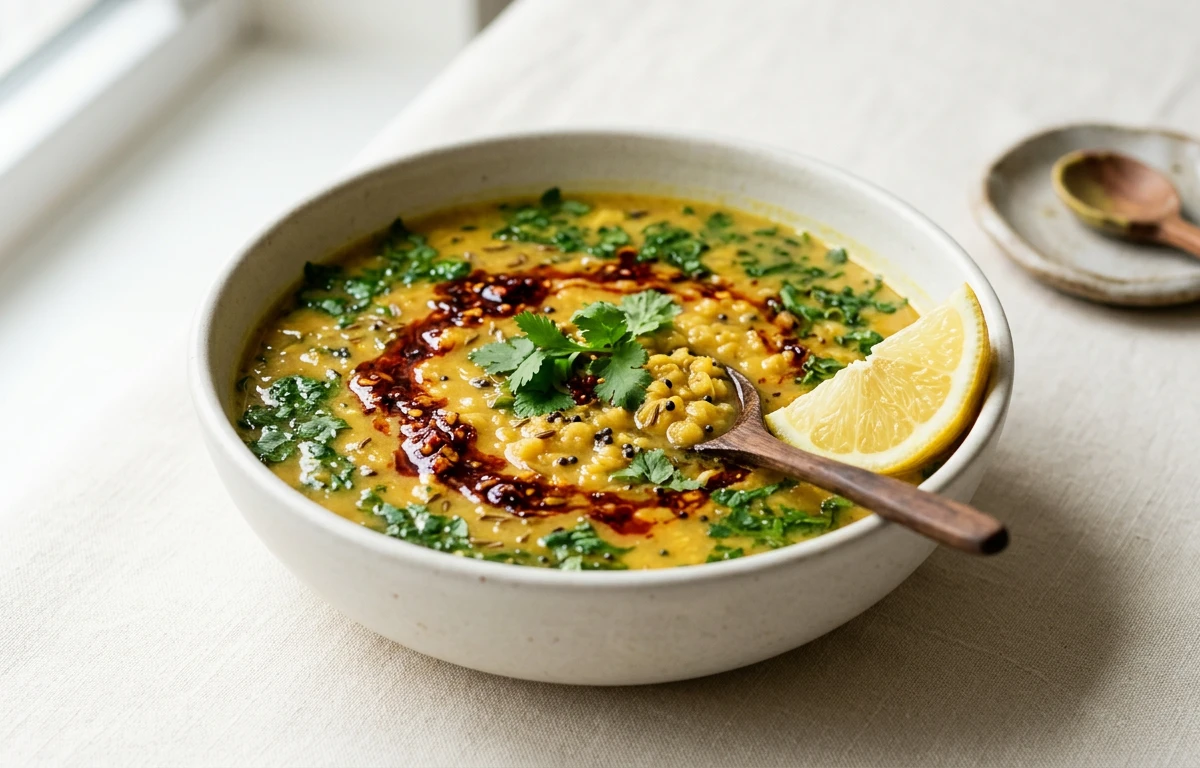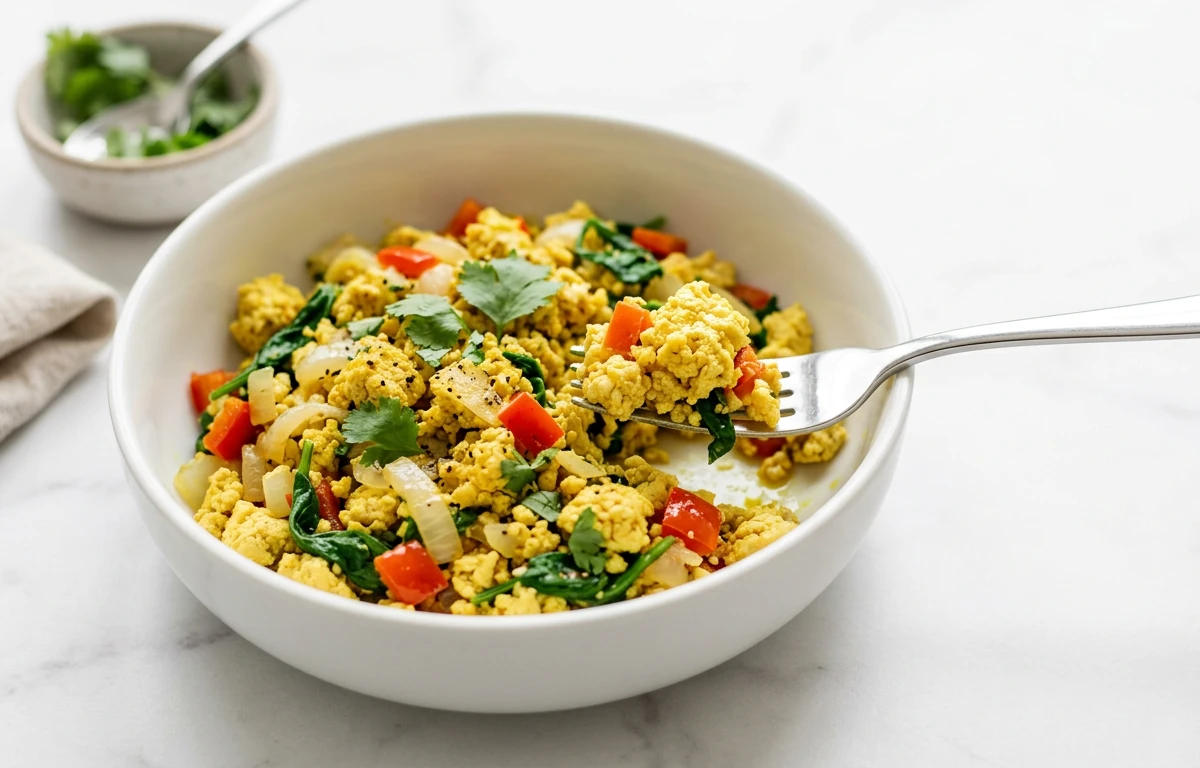
Akuri
Parsi-style spiced scrambled eggs cooked softly with onions, tomatoes, green chili, and fresh herbs. Rich, gently creamy, and full of bright flavor, this comforting dish is perfect with toast or pav as part of a light meal.
For 4 servings
- prep · ~5 min
Prep the vegetables and crack the eggs.
1.Finely chop the onion, tomato, green chili, ginger, garlic, coriander leaves, and mint.2.Crack the eggs into a bowl.3.Add black pepper and a small pinch of the salt to the eggs and beat lightly until just mixed. - saute · ~7 min
Cook the onion mixture.
1.Heat oil and butter in a pan over medium-low heat.2.Add onion and cook until soft but not browned, about 3 to 4 minutes.3.Add ginger, garlic, and green chili, then cook for 1 minute.4.Add tomato, turmeric powder, red chili powder, cumin powder, and the remaining salt.5.Cook until the tomatoes soften and the mixture looks slightly jammy, about 2 to 3 minutes.TIPKeep the heat gentle so the onions stay sweet and the tomatoes do not dry out. - saute · ~3 min
Add the eggs and cook softly.
1.Lower the heat to low.2.Pour in the beaten eggs and stir slowly with a spatula.3.Scrape the pan gently as the eggs begin to set.4.Cook until the akuri is softly scrambled and still a little creamy, about 2 to 3 minutes.TIPDo not overcook; akuri should stay moist and loose, not dry like firm scrambled eggs. - garnish
Fold in the herbs.
Turn off the heat and fold in the coriander leaves and mint. Mix gently so the herbs stay fresh and bright.
- serve
Serve the akuri hot.
Spoon into katoris and serve right away while soft and creamy.
What to keep in mind.
7 tips from the recipe — small details that make a real difference to the final dish.
- 1Keep the onion translucent, not browned; deep browning pushes the dish away from classic soft, bright akuri.
- 2Cook the tomato mixture until slightly jammy before adding eggs so the scramble does not turn watery.
- 3Beat the eggs only until combined; overbeating can make the texture foamy instead of softly creamy.
- 4Use low heat once the eggs go in and stir slowly, scraping the pan in broad strokes for loose curds.
- 5Take the pan off the heat when the eggs still look slightly underdone; carryover heat will finish them.
- 6Fold in coriander and mint only at the end so their aroma stays fresh instead of cooked out.
- 7Akuri is best eaten immediately, but if holding briefly, keep it off direct heat to prevent it from tightening.
Adapt it for your goals.
Low-spice
Reduce or skip the green chili and red chili powder for a gentler version that still keeps the ginger, garlic, and herbs prominent.
extra herbyExtra-herby
Increase coriander and mint slightly for a fresher, greener finish that works especially well when serving akuri with buttered toast.
pav stylePav-style
Serve the akuri with toasted buttered pav instead of sliced toast for a more classic Mumbai-Parsi cafe feel.
ghee richGhee-rich
Replace part or all of the oil with ghee for a rounder, richer flavor and a more indulgent breakfast-style finish.
Why this is on our healthy list.
Protein-Rich Eggs
Eggs make this dish satisfying and provide high-quality protein that helps turn a light meal into a filling one.
Herb and Vegetable Boost
Onion, tomato, coriander, mint, chili, ginger, and garlic add plant compounds, freshness, and variety beyond plain scrambled eggs.
Moderate Fat Cooking
A small amount of oil and butter helps carry the spices and improve texture without deep-frying or heavy cream.
Frequently asked questions
Akuri is softer and looser, and it is built on a spiced onion-tomato masala with herbs, so it tastes much more layered than plain scrambled eggs.