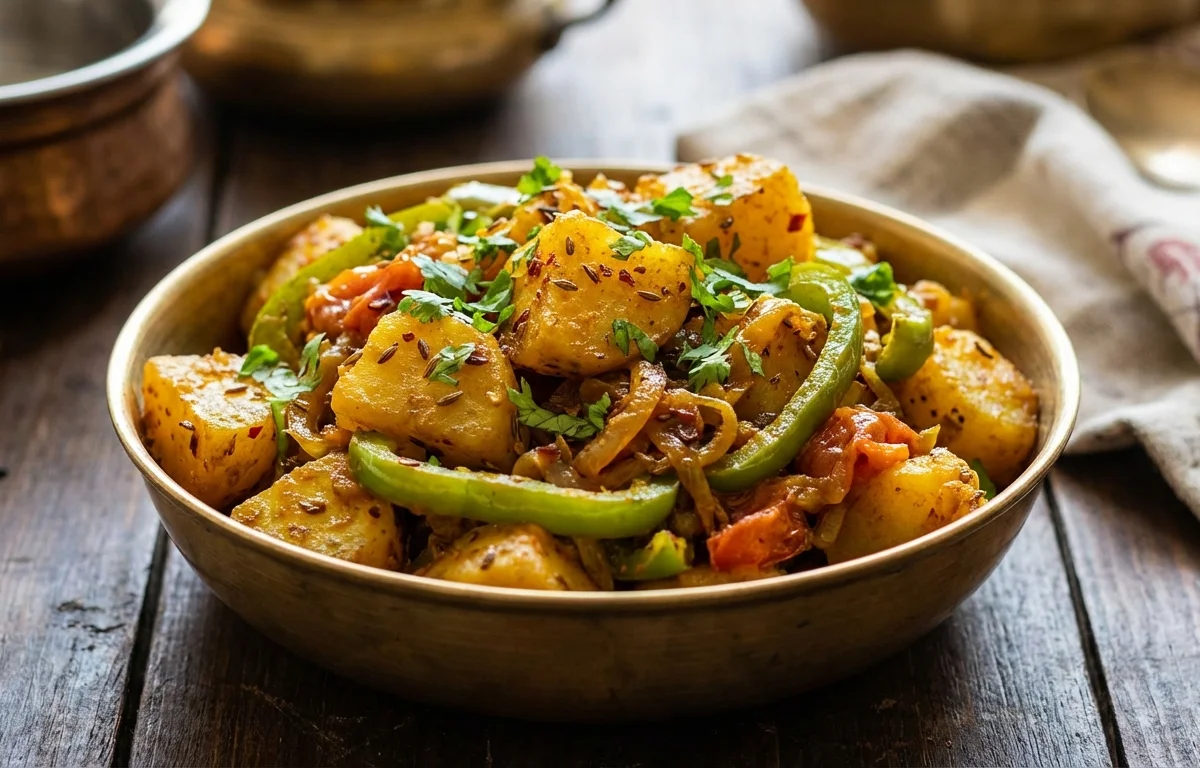
Aloo Shimla Mirch
A simple homestyle dry sabzi made with tender potatoes, sweet capsicum, and everyday spices. It cooks quickly, tastes great with roti or dal, and brings comforting North Indian flavors to the table without much fuss.
For 4 servings
- prep · ~15 min
Prep the vegetables.
1.Peel the potato and cut it into small cubes for even cooking.2.Cut the capsicum into medium pieces so it keeps a little bite.3.Slice the onion, chop the tomato, slit the green chili, and finely chop the ginger. - saute · ~1 min
Heat the oil and crackle the cumin.
Heat oil in a kadai over medium heat. Add cumin seeds and let them sizzle for a few seconds until fragrant.
TIPKeep the heat medium so the cumin flavors the oil without burning. - saute · ~6 min
Cook the onion, ginger, and chili.
1.Add the sliced onion and cook until light golden, 4 to 5 minutes.2.Add the ginger and green chili.3.Stir for 30 seconds until the raw smell fades. - saute · ~4 min
Add the tomato and powdered spices.
1.Add the chopped tomato and cook until softened, about 3 minutes.2.Add turmeric powder, red chili powder, coriander powder, and salt.3.Mix well so the masala lightly coats the onion and tomato. - simmer · ~10 min
Cook the potato until almost tender.
Add the potato cubes and mix well with the masala. Pour in water, cover, and cook on low heat for 8 to 10 minutes, stirring once or twice, until the potatoes are nearly done.
TIPSmall potato cubes cook faster and help the sabzi finish without turning mushy. - saute · ~6 min
Add the capsicum and finish the sabzi.
Add the capsicum and garam masala. Cook uncovered for 5 to 6 minutes, stirring gently, until the capsicum is just tender and the sabzi turns semi-dry.
TIPDo not overcook the capsicum; it should stay bright and slightly crisp. - garnish
Garnish with coriander leaves.
- serve
Serve hot with roti or dal-rice.
What to keep in mind.
7 tips from the recipe — small details that make a real difference to the final dish.
- 1Cut the potato cubes small and even so they finish cooking before the capsicum softens too much.
- 2Let the onions turn light golden, not dark brown, to keep the sabzi sweet and homestyle rather than heavy.
- 3Cook the potatoes covered first and add capsicum only near the end so it stays bright and slightly crisp.
- 4If the masala starts sticking while potatoes cook, sprinkle a spoon of water instead of adding extra oil.
- 5Keep the final stage uncovered so excess moisture evaporates and the sabzi gets its classic semi-dry texture.
- 6This sabzi packs well for lunch; cool completely before storing so the capsicum does not turn soggy.
- 7Reheat on a tawa or in a kadai rather than microwaving if you want to keep the peppers from going limp.
Adapt it for your goals.
No-onion-no-garlic
Skip onion and keep the ginger, tomato, and spices slightly longer in the pan for a simpler satvik-style version.
jainJain
Replace potato with cubed raw banana or ridge gourd and omit onion and ginger for a Jain-friendly take.
low oilLow-oil
Use less oil and add a few extra spoonfuls of water while bhunaoing the masala; good for a lighter everyday sabzi.
spicierSpicier
Add an extra green chili or a bit more red chili powder if you want the sweet capsicum balanced by more heat.
Why this is on our healthy list.
Vegetable-forward side
This sabzi combines potatoes, capsicum, onion, tomato, and coriander, adding variety and plant-based nourishment to the meal.
Rich in antioxidants
Capsicum, tomato, ginger, turmeric, and coriander contribute protective plant compounds along with plenty of flavor.
Comforting energy source
Potatoes provide satisfying carbohydrates, making this a filling companion for roti or dal-rice.
Frequently asked questions
It was likely added too early or cooked covered for too long. Add it only after the potatoes are nearly tender and finish uncovered.



.webp)