Aluchi Vadi
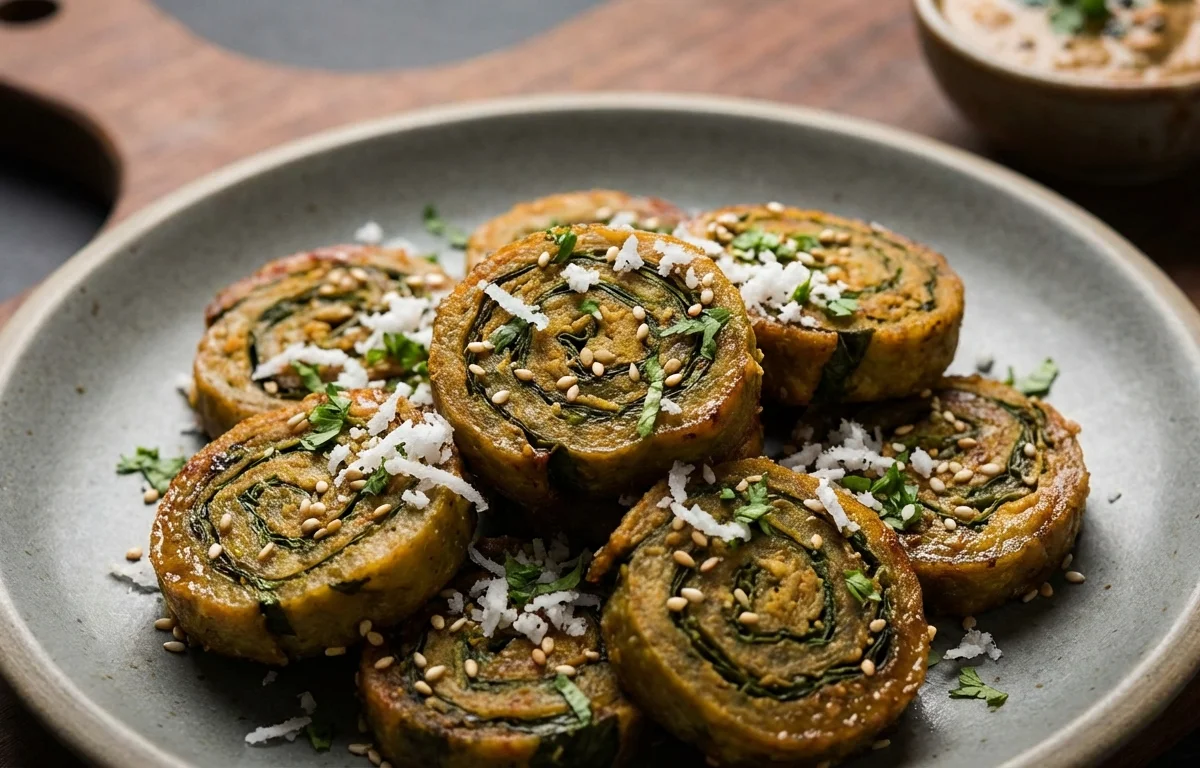
Thin colocasia leaves are layered with a tangy spiced gram flour paste, rolled tightly, steamed until firm, then sliced and lightly pan-fried. This Maharashtrian favorite is savory, nutty, and gently sweet.
For 8 servings
- prep · ~10 min
Prepare the colocasia leaves.
1.Wash the colocasia leaves well and pat them dry.2.Trim the thick stems.3.Turn each leaf over and lightly flatten the thick center vein with a knife so the leaves roll easily.TIPHandle the leaves gently so they stay whole and easy to layer. - mix · ~5 min
Make the spiced gram flour paste.
1.Add chickpea flour, tamarind paste, jaggery, red chili powder, turmeric powder, coriander powder, cumin powder, asafoetida, sesame seeds, and salt to a bowl.2.Pour in water gradually.3.Mix until you have a smooth, thick, spreadable paste with no lumps.TIPKeep the paste thick so it coats the leaves without dripping. - assemble · ~10 min
Layer, spread, and roll the leaves.
1.Place one large leaf shiny side down.2.Spread a thin, even layer of paste over it.3.Place another leaf on top, spread more paste, and repeat with 3 to 4 leaves.4.Fold in the sides and roll tightly from the base to make a log.5.Repeat with the remaining leaves and paste.TIPRoll tightly to help the vadi hold its shape after steaming. - steam · ~20 min
Steam the rolls until firm.
Place the rolls in a steamer and steam over medium heat until cooked through and firm to the touch. Cool completely before slicing.
TIPCooling the rolls fully makes neat slices and prevents crumbling. - prep · ~3 min
Slice the steamed rolls.
Cut each cooled roll into round slices about 2 cm thick.
- temper · ~2 min
Make the tempering.
1.Heat oil in a wide pan over medium heat.2.Add mustard seeds and let them splutter.3.Add sesame seeds and cook for a few seconds.TIPUse medium heat so the sesame seeds toast lightly without burning. - fry · ~7 min
Pan-fry the slices lightly.
Arrange the slices in the pan and cook both sides until lightly golden and crisp at the edges.
- serve
Serve the Aluchi Vadi warm.
What to keep in mind.
7 tips from the recipe — small details that make a real difference to the final dish.
- 1If a leaf has a very thick center vein, flatten it gently without tearing so the roll stays even.
- 2Keep the besan paste thick like a spread, not a batter, or it will ooze out while steaming.
- 3Stack larger leaves at the bottom and smaller ones on top to get a tighter, more uniform log.
- 4Steam until the roll feels firm and a knife inserted in the center comes out without wet batter.
- 5Cool the steamed rolls completely before slicing, or the rounds can squash and crumble.
- 6Pan-fry the slices in a single layer and flip only after the underside turns lightly golden.
- 7Leftover steamed rolls can be refrigerated whole and sliced just before tempering and pan-frying.
Adapt it for your goals.
Steamed-only
Skip the final pan-frying and serve the steamed slices as a softer, lighter version with the same sweet-tangy flavor.
spicierSpicier
Increase red chili powder slightly for a hotter vadi that balances the jaggery and tamarind more sharply.
extra sesameExtra-sesame
Add a little more sesame to the paste and tempering for a nuttier taste and more texture.
no hingNo-hing
Omit asafoetida if needed for dietary preference while keeping the rest of the Maharashtrian flavor profile intact.
Why this is on our healthy list.
Plant-Based Protein Support
Chickpea flour adds plant protein and makes the snack more satisfying than a plain leaf-based preparation.
Fiber From Leaves and Besan
Taro leaves and chickpea flour together contribute fiber, which helps make this savory snack feel filling.
Moderate Cooking Method
Because the rolls are steamed first and only lightly pan-fried, the dish uses less oil than a fully deep-fried snack.
Mineral-Rich Ingredients
Sesame seeds and leafy greens bring useful minerals and add nourishment along with flavor and texture.
Frequently asked questions
They usually need more cooling time, or the paste was too thin. Let the steamed roll cool fully so it firms up before slicing.



.webp)