
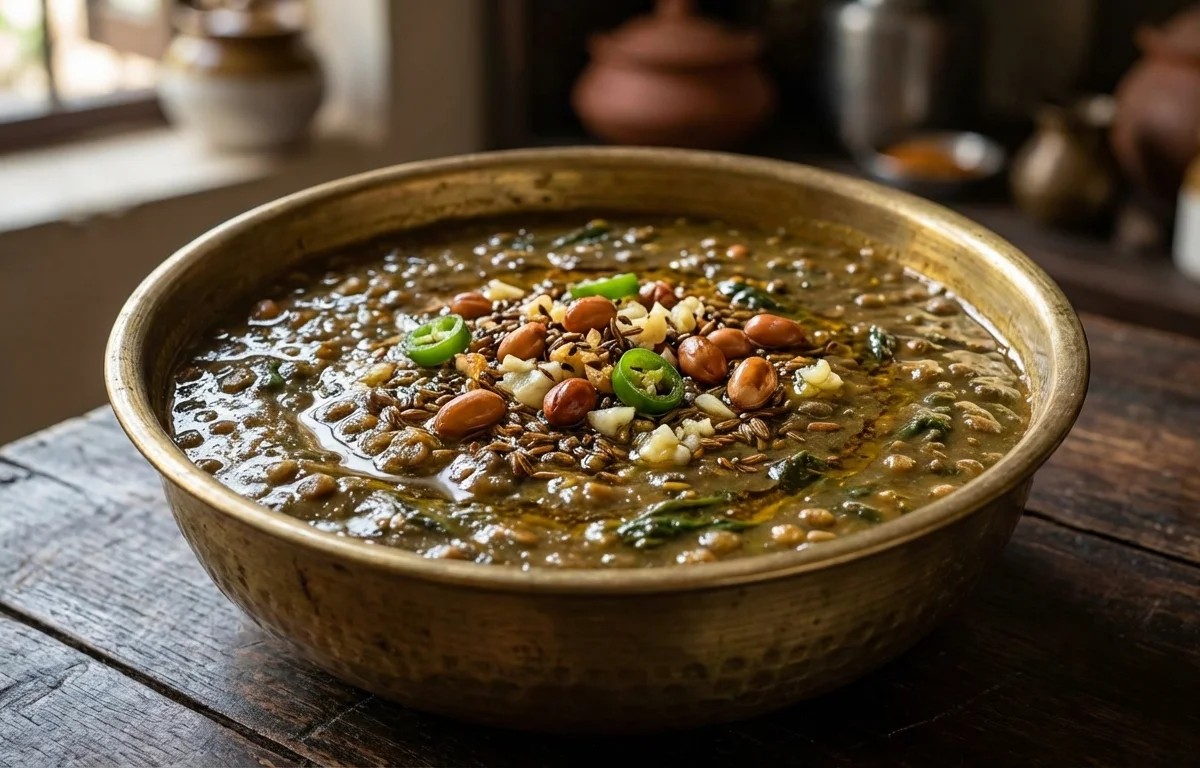
Ambadichi Bhaji
A rustic Maharashtrian-style dry curry made with fresh ambadi (gongura/sorrel) leaves, gently cooked with minimal spices to let their natural tangy flavor shine through. This homestyle bhaji comes together quickly and pairs beautifully with jowar bhakri or steamed rice and a dollop of ghee.
For 4 servings
- prep
Wash and chop the ambadi leaves.
1.Pluck ambadi leaves from the stems and discard any thick stalks.2.Wash the leaves thoroughly in running water to remove any grit.3.Roughly chop the leaves and set aside in a colander to drain. - boil · ~7 min
Cook the leaves until wilted.
Place the chopped ambadi leaves in a saucepan with 2 tablespoons of water. Cover and cook on medium heat for about 5 to 7 minutes, stirring once halfway, until the leaves wilt and soften completely. Drain any excess water and set aside.
- temper · ~3 min
Make the tempering.
1.Heat oil in a kadai or pan over medium heat.2.Add mustard seeds and let them splutter (30 seconds).3.Add cumin seeds and hing, stir briefly until fragrant.4.Add crushed garlic and slit green chilies, sauté until garlic turns light golden. - saute · ~6 min
Cook the bhaji with spices.
1.Add the wilted ambadi leaves to the tempering.2.Sprinkle turmeric powder and salt over the leaves.3.Add grated jaggery if using to balance the tanginess.4.Mix everything well and sauté on medium-low heat for 5 to 6 minutes, stirring occasionally, until the bhaji is dry and flavors meld together. - garnish
Finish with fresh coconut and serve hot.
Turn off the heat. Sprinkle grated fresh coconut on top and give a gentle mix. Serve the ambadichi bhaji hot with jowar bhakri or steamed rice.
TIPThe coconut adds a subtle sweetness that beautifully balances the natural tanginess of ambadi leaves.
What to keep in mind.
6 tips from the recipe — small details that make a real difference to the final dish.
- 1For the best texture, do not overcook the leaves after wilting; sauté until just dry.
- 2Use fresh, tender ambadi leaves for a milder tang and vibrant green color.
- 3Add a pinch more jaggery if the bhaji tastes too sour; adjust to your preference.
- 4Crush the garlic cloves lightly before tempering to release more flavor without burning.
- 5Serve immediately after adding coconut to keep it fresh and crunchy.
- 6Leftover bhaji can be refrigerated for up to two days; reheat gently to avoid bitterness.
Adapt it for your goals.
Low-oil
Reduce oil to 1 teaspoon and dry-roast the seeds and garlic in a non-stick pan before adding the wilted leaves; ideal for calorie-conscious eating.
with peanutsWith peanuts
Add 1 tablespoon of crushed roasted peanuts along with the coconut for a nutty crunch and extra protein.
veganVegan
Omit jaggery or use raw sugar; the recipe is already vegan, but ensure your asafoetida is gluten-free if needed.
spicier versionSpicier version
Increase green chilies to 4 or add a dried red chili to the tempering for those who prefer more heat.
Why this is on our healthy list.
Rich in Iron
Sorrel leaves (ambadi) are a good source of dietary iron, which supports healthy blood and energy levels.
Naturally Low in Calories
With minimal oil and no heavy cream or flour, this bhaji is a light, nutrient-dense side dish.
Digestive Support
Cumin, asafoetida (hing), and mustard seeds are traditionally used to aid digestion and reduce bloating.
Antioxidant Boost
Turmeric and fresh coconut provide antioxidants that help combat oxidative stress and support immunity.
Frequently asked questions
Yes, but thaw frozen leaves fully and squeeze out excess water; dried leaves need to be rehydrated and will have a more concentrated tang.


