
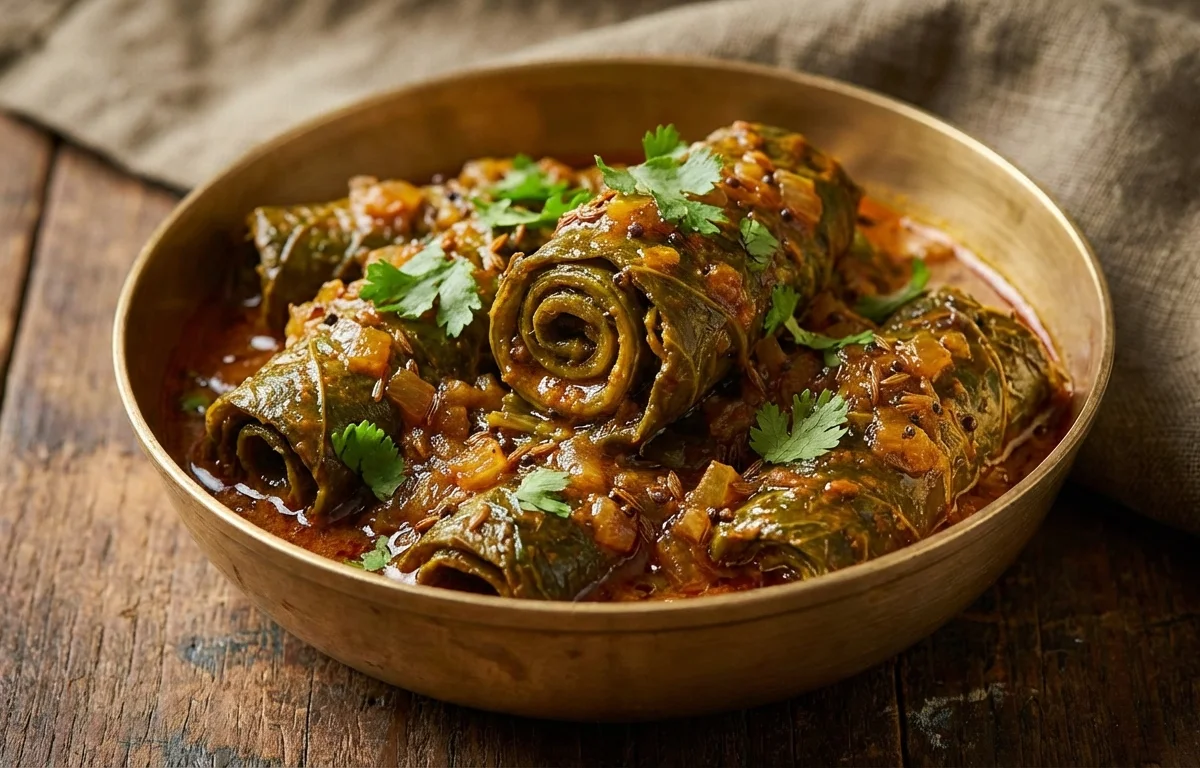
Arbi Patta Sabzi
A unique curried dish made with the giant, heart-shaped leaves of the arbi (taro) plant. The leaves are finely chopped and cooked with a fragrant tempering of cumin, ginger, and green chilies, creating a savory, slightly tangy, and utterly comforting sabzi that's beloved in the Indian states of Uttar Pradesh and Bihar.
For 4 servings
- prep
Prep the arbi leaves.
Wash the arbi leaves thoroughly. Remove the thick central stem and veins from each leaf. Stack a few leaves, roll them tightly, and slice into thin ribbons. Then finely chop the ribbons.
TIPWash leaves after chopping to remove any remaining sap that causes itching. Wear gloves if you have sensitive skin. - steam · ~6 min
Steam the chopped leaves.
1.Place the finely chopped leaves in a steamer or colander set over a pot of boiling water.2.Cover and steam for 5-6 minutes until the leaves wilt and change color to a darker green.3.Remove from heat and set aside. - temper · ~2 min
Make the tempering.
1.Heat 2 teaspoons of oil in a kadhai or pan over medium heat.2.Add cumin seeds and let them splutter for 30 seconds.3.Add a pinch of asafoetida, chopped ginger, and slit green chilies. Sauté for 1 minute until fragrant. - saute · ~12 min
Cook the besan and add the leaves.
1.Add the besan to the pan and stir continuously on low heat for 1-2 minutes until it turns a shade darker and smells nutty.2.Add the steamed arbi leaves to the pan. Mix well to coat them in the besan mixture.3.Sprinkle turmeric powder, coriander powder, and salt. Stir well.4.Add 2 tablespoons of water, cover the pan, and cook on low heat for 10-12 minutes, stirring occasionally.TIPStirring the besan constantly prevents it from burning and helps remove any raw taste. - garnish
Finish with lemon juice and serve.
Turn off the heat. Squeeze fresh lemon juice over the sabzi and give it a final mix. Transfer to a serving bowl.
What to keep in mind.
6 tips from the recipe — small details that make a real difference to the final dish.
- 1Always remove the thick central vein and stems from arbi leaves to avoid a scratchy texture.
- 2Steam the chopped leaves until they turn dark green to neutralize the irritating calcium oxalate crystals.
- 3Roast the besan until it smells nutty and turns a shade darker to eliminate its raw, earthy taste.
- 4Cook the sabzi on low heat after adding water to allow the flavors to meld without drying out.
- 5Add lemon juice only after turning off the heat to preserve its bright tangy flavor.
- 6This sabzi tastes even better the next day as the flavors deepen – store in the fridge for up to 3 days.
Adapt it for your goals.
Oil-free
Skip the oil and dry-roast the cumin and asafoetida in a non-stick pan, then use a splash of water for the tempering. This reduces fat while keeping the flavor intact, ideal for low-oil or Jain diets.
high proteinHigh-protein
Add 1/2 cup of boiled chickpeas or paneer cubes along with the steamed leaves. This boosts protein content, making the sabzi more filling and suitable as a main course.
spicierSpicier
Use 3-4 green chilies or add 1/2 teaspoon of red chili powder along with the coriander powder. Perfect for those who enjoy extra heat in their traditional Bihari sabzis.
with dalWith dal
Stir in 1/2 cup of cooked pigeon pea (toor dal) after adding the leaves for a thicker, more stew-like consistency that pairs beautifully with rice.
Why this is on our healthy list.
Rich in Fiber
Taro leaves and chickpea flour provide dietary fiber that aids digestion and helps maintain steady blood sugar levels.
Good Source of Iron
The combination of arbi leaves and besan contributes iron, which supports healthy red blood cell production and energy levels.
Packed with Vitamin A
Taro leaves are abundant in beta-carotene, which the body converts into vitamin A for healthy vision and immune function.
Anti-Inflammatory Spices
Turmeric, ginger, and asafoetida in this dish offer natural anti-inflammatory and digestive benefits, commonly valued in Ayurvedic cooking.
Frequently asked questions
Steaming neutralizes the calcium oxalate crystals in raw taro leaves, which can cause throat irritation and a scratchy sensation. It also softens the leaves for a silky texture.


