Arhar Dal Fry
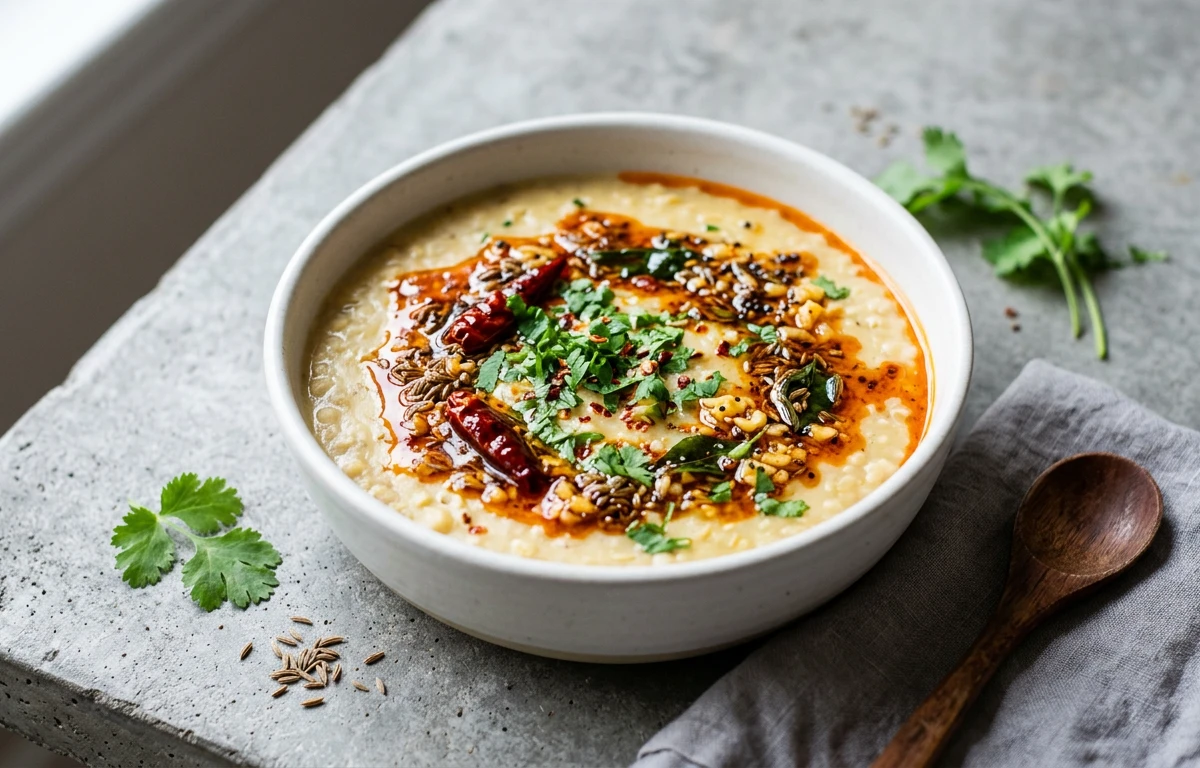
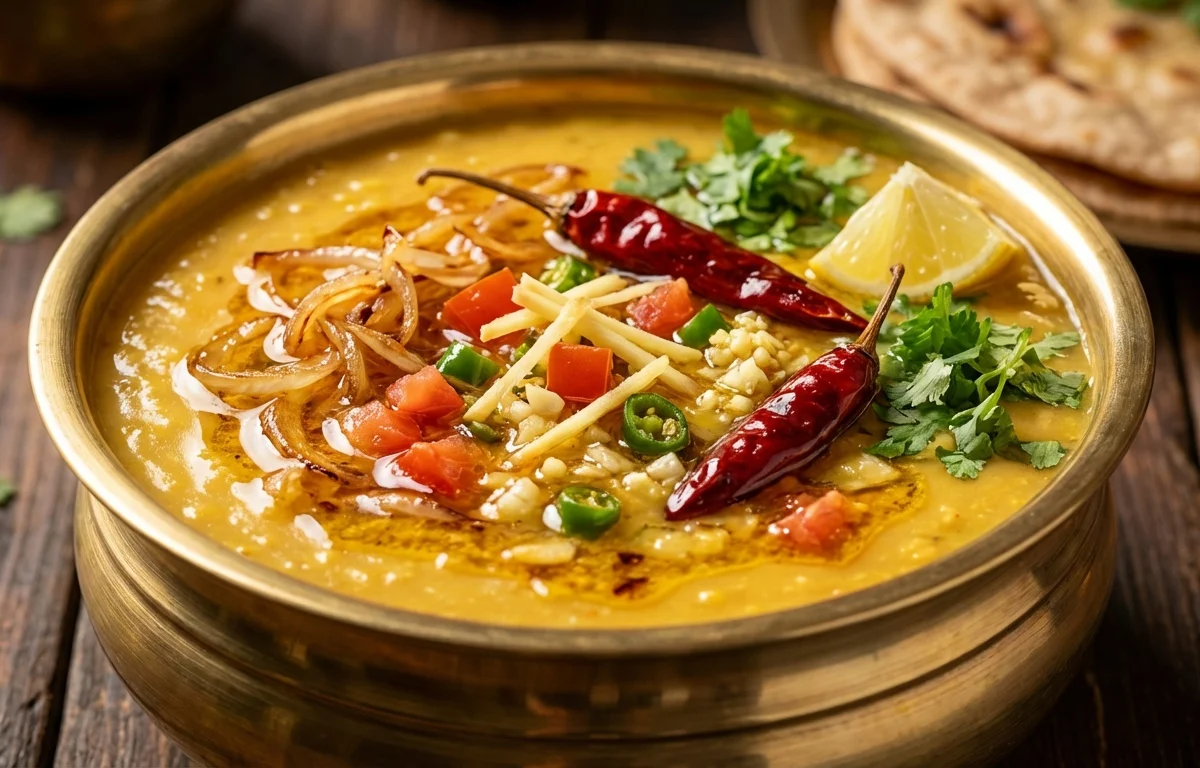
A comforting, everyday dal made with split pigeon peas, simmered to creamy perfection and finished with a crackling tempering of cumin, garlic, and dried red chili. This North Indian staple is light, mildly spiced, and comes together in under 30 minutes — perfect for a simple, nourishing lunch.
For 4 servings
- prep
Wash the dal thoroughly.
Rinse the arhar dal under running water 2-3 times until the water runs clear. Drain and set aside.
- pressure cook · ~15 min
Pressure cook the dal until soft.
1.Add the washed dal, 2.5 cups water, turmeric powder, and salt to the pressure cooker.2.Close the lid and cook on medium-high heat until the first whistle.3.Reduce heat to low and cook for another 3-4 whistles.4.Turn off the heat and let the pressure release naturally. Open the lid and whisk the dal lightly to make it smooth.TIPNatural pressure release makes the dal creamier; don't rush it with a cold-water release. - temper · ~7 min
Prepare the tempering.
1.Heat ghee in a kadhai over medium heat until it shimmers.2.Add cumin seeds and let them crackle and turn golden brown.3.Add finely chopped garlic and sauté until fragrant and light golden.4.Add dried red chilies and stir for a few seconds until they puff up slightly.5.Add chopped onions and sauté until they turn translucent and soft.TIPKeep the heat on medium — garlic burns quickly on high heat and turns bitter. - saute · ~4 min
Cook the tomato and spices.
1.Add chopped tomatoes to the kadhai and cook until they soften and the oil starts to separate, about 3-4 minutes.2.Add red chili powder and garam masala. Stir well and cook for another 30 seconds.3.Add a splash of water if the spices start to stick or burn. - simmer · ~7 min
Combine the dal and tempering, then simmer.
Pour the whisked dal into the kadhai with the tempering. Add up to 0.5 cup of water to reach your desired consistency — it should be pourable but not too thin. Stir well and bring to a gentle boil, then lower the heat and let it simmer for 5-7 minutes so the flavors meld together. Taste and adjust salt if needed.
TIPSimmering is key — it deepens the flavor and gives the dal a velvety texture. - garnish
Finish with lemon juice and fresh coriander.
Turn off the heat. Squeeze lemon juice over the dal and garnish generously with chopped coriander leaves. Serve hot.
What to keep in mind.
7 tips from the recipe — small details that make a real difference to the final dish.
- 1Wash the dal until the water runs clear to remove dust and reduce foam during cooking.
- 2Let the pressure release naturally for a creamier texture; avoid quick-release methods.
- 3Sauté garlic on medium heat until just golden — burnt garlic makes the tadka bitter.
- 4Cook the tomatoes until oil separates from the masala for a deeper, non-raw flavour.
- 5Simmer the dal for 5-7 minutes after combining to let the tadka infuse fully.
- 6Add lemon juice only after turning off the heat to preserve its bright, fresh acidity.
- 7Leftover dal thickens overnight; thin it with a splash of water while reheating.
Adapt it for your goals.
Vegan
Replace ghee with any neutral cooking oil or coconut oil to keep the dal fully plant-based without losing the tempering's sizzle.
high proteinHigh-protein
Stir in a handful of boiled moong beans or paneer cubes after simmering for an extra protein boost while keeping the dal's texture intact.
low oilLow-oil
Use only 1/2 tablespoon of ghee or oil for the tadka, and dry-roast the cumin seeds before adding minimal oil to cut fat without sacrificing aroma.
jainJain
Skip the garlic and onion entirely, and add a pinch of asafoetida (hing) to the tadka for a similar umami depth that adheres to Jain dietary restrictions.
Why this is on our healthy list.
Rich in Plant Protein
Arhar dal is an excellent source of plant-based protein, essential for muscle repair and overall body function.
High in Dietary Fiber
The split pigeon peas provide a good amount of fiber, which supports digestion and helps maintain steady blood sugar levels.
Low in Fat
With only a tablespoon of ghee in the entire dish, this dal is a light, heart-friendly meal option.
Good Source of B Vitamins
Lentils like arhar dal are naturally rich in folate and other B vitamins, which aid energy metabolism and red blood cell formation.
Frequently asked questions
Yes, soak the dal for 30 minutes, then simmer in a pot with 4 cups water for 30-40 minutes until soft, skimming any foam.


.webp)