Ayala Curry
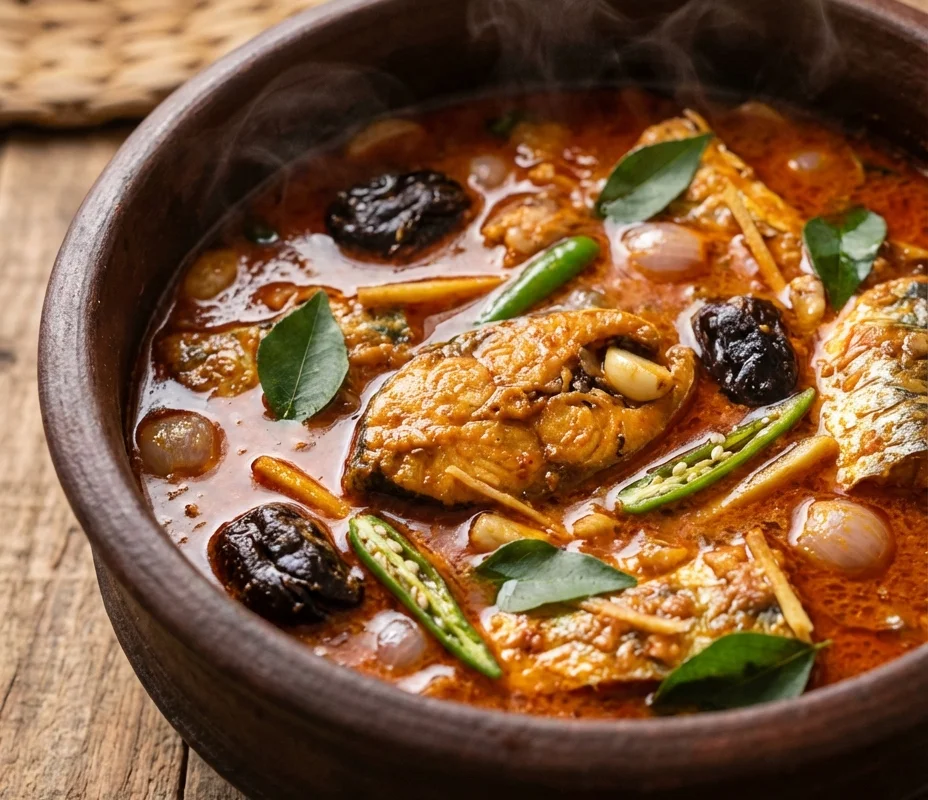
A tangy Kerala-style mackerel curry with coconut, spices, and kodampuli simmered into a rich red gravy. The fish stays tender while the sauce turns deep, flavorful, and perfect with rice.
For 4 servings
- prep · ~10 min
Soak the kodampuli and clean the fish.
1.Rinse the kodampuli and soak it in a little warm water for 10 minutes.2.Wash the mackerel pieces gently and drain well.3.Keep the fish aside while you prepare the curry base.TIPHandle the fish gently so the pieces stay whole while simmering. - mix · ~4 min
Grind the coconut masala.
1.Add grated coconut, 4 shallots, garlic, ginger, turmeric powder, red chili powder, and coriander powder to a grinder.2.Pour in a little water and grind to a smooth paste.3.Keep the masala ready for the curry. - saute · ~6 min
Cook the shallots and spices.
1.Heat coconut oil in a clay pot or wide pan over medium heat.2.Add fenugreek seeds and 1 sprig of curry leaves; cook for a few seconds.3.Add the remaining shallots and sauté until soft and lightly golden.4.Add the green chili and stir for 30 seconds.TIPKeep the heat medium so the fenugreek does not turn bitter. - simmer · ~8 min
Make the curry gravy.
1.Add the ground coconut masala to the pot and rinse the grinder with water.2.Pour in the remaining water and mix well.3.Add soaked kodampuli with its soaking water and salt.4.Bring the curry to a gentle simmer and cook until the raw smell fades. - simmer · ~10 min
Cook the fish in the gravy.
1.Slide the mackerel pieces into the simmering gravy in a single layer.2.Cover and cook on low heat until the fish is just cooked and tender.3.Gently swirl the pot once or twice instead of stirring with a spoon.TIPAvoid stirring after adding the fish or the pieces may break. - garnish · ~1 min
Finish with curry leaves and a little coconut oil.
Add the remaining curry leaves and drizzle a little coconut oil on top. Simmer for 1 minute, then turn off the heat.
- rest · ~10 min
Let the curry rest before serving.
Rest the curry for 10 minutes so the fish absorbs the tangy, spicy flavors and the gravy settles.
- serve
Serve hot with rice.
What to keep in mind.
7 tips from the recipe — small details that make a real difference to the final dish.
- 1Use a clay pot if you have one; it gives the curry a more traditional, rounded sour-spicy flavor.
- 2Do not brown the fenugreek seeds deeply; they should just sizzle briefly or the gravy can turn bitter.
- 3Grind the coconut masala very smooth so the gravy cooks silky and coats the mackerel evenly.
- 4Add the fish only after the raw smell of the masala disappears, or the curry can taste harsh and undercooked.
- 5Once the mackerel goes in, swirl the pot instead of stirring so the delicate pieces stay intact.
- 6This curry tastes even better after a few hours of rest, when the kodampuli and spice flavors deepen into the fish.
- 7If the curry thickens on standing, loosen it with a splash of hot water and reheat very gently to avoid breaking the fish.
Adapt it for your goals.
Low-oil
Reduce the coconut oil in the sauté and skip the final drizzle for a lighter version that still keeps the Kerala-style flavor.
extra spicyExtra-spicy
Increase red chili powder slightly or add one more slit green chili if you prefer a fierier, more assertive fish curry.
tamarind swapTamarind-swap
If kodampuli is unavailable, use a small amount of tamarind for sourness, though the flavor will be less smoky and distinctly Kerala-style.
sardineSardine
Make the same curry with sardines for a stronger, richer fish flavor and a more rustic coastal style.
Why this is on our healthy list.
Rich in Omega-3 Fats
Mackerel is an oily fish known for beneficial fats that fit well into a balanced meal.
Good Source of Protein
The fish provides satisfying protein, making the curry hearty and filling when served with rice.
Contains Aromatic Spices
Ginger, garlic, turmeric, and chili bring flavor depth along with plant compounds from whole spices and herbs.
Frequently asked questions
Yes. A wide, heavy pan works well; just keep the heat gentle and avoid stirring too much after adding the fish.