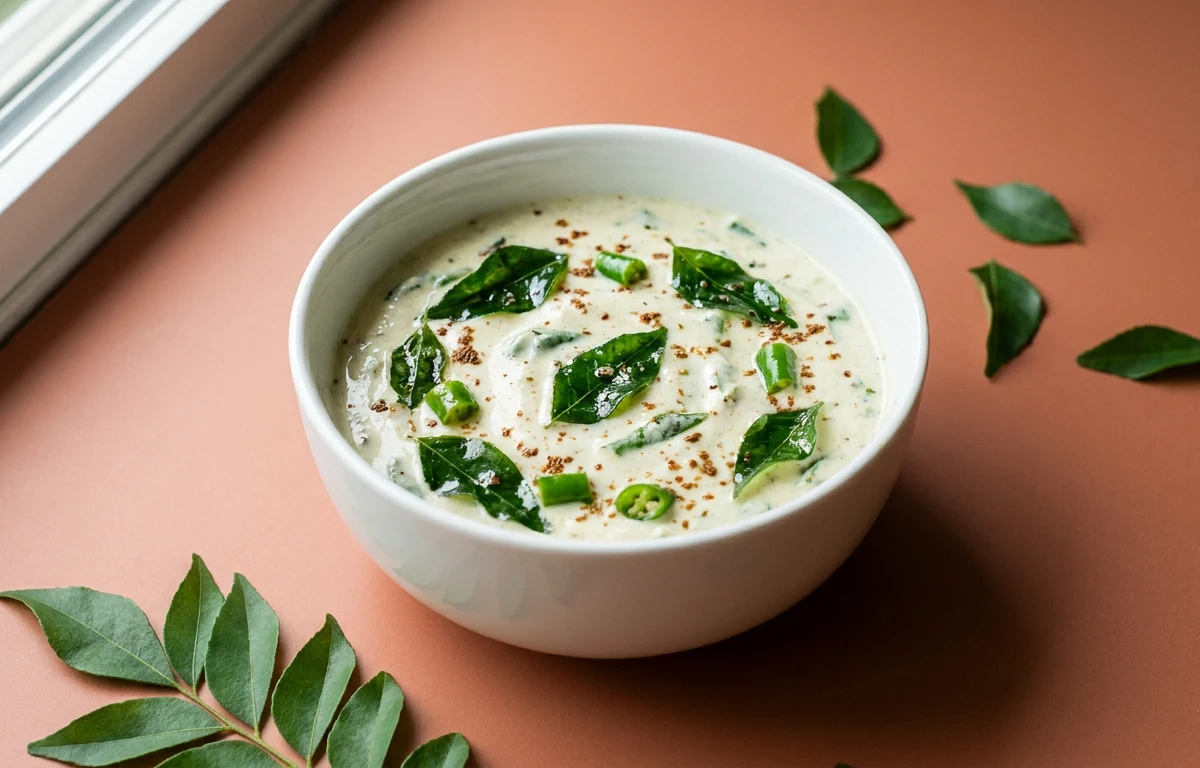
Badane Gassi
A home-style Mangalorean brinjal curry with a silky coconut and tamarind gravy. The eggplant turns tender as it cooks, while roasted spices give the dish a warm, deep flavor that goes beautifully with rice.
For 4 servings
- prep
Prep the eggplant.
Wash the eggplant and cut it into medium wedges. Keep the pieces ready so they can go straight into the gravy once the masala is ground.
- roast · ~9 min
Roast the coconut, onion, and spices.
1.Heat a pan over medium heat and add 1 tsp oil.2.Add the sliced onion and cook until lightly golden, about 4 minutes.3.Add grated coconut, coriander seeds, cumin seeds, fenugreek seeds, and dried red chili.4.Roast, stirring often, until the coconut turns light golden and smells nutty, 4 to 5 minutes.TIPKeep the heat medium and stir often so the coconut browns evenly without turning bitter. - mix
Grind the masala.
Cool the roasted mixture slightly, then transfer it to a grinder with 1 cup water and blend to a smooth paste.
- boil · ~15 min
Cook the eggplant in the gravy.
1.Pour the ground masala into a pot and add the eggplant.2.Add turmeric powder, tamarind paste, jaggery, salt, and the remaining 1 cup water.3.Mix well and bring to a gentle boil over medium heat.4.Lower the heat and cook until the eggplant is tender and the gravy thickens slightly, 12 to 15 minutes.TIPStir gently once or twice so the eggplant keeps its shape and does not break up in the curry. - temper · ~1 min
Make the tempering.
1.Heat the remaining 1 tsp oil in a small pan.2.Add mustard seeds and let them splutter.3.Add curry leaves and cook for a few seconds until fragrant. - assemble
Finish the gassi.
Pour the tempering over the simmering curry and mix gently. Cook for 1 more minute so the flavors come together.
- serve
Serve hot.
What to keep in mind.
7 tips from the recipe — small details that make a real difference to the final dish.
- 1Cut all eggplant wedges to a similar size so they soften evenly without some pieces collapsing.
- 2Roast the coconut only to light golden; dark brown coconut can make Badane Gassi taste bitter.
- 3Let the roasted masala cool slightly before grinding so the paste turns smoother and less greasy.
- 4Keep the simmer gentle after adding eggplant; a hard boil can break the wedges and muddy the gravy.
- 5If the curry thickens too much as it rests, loosen it with a splash of hot water before serving.
- 6This gassi tastes even better after 20 to 30 minutes of resting, when the tamarind and spice flavors settle into the brinjal.
- 7Refrigerate leftovers for up to 2 days and reheat on low heat, stirring gently to keep the eggplant intact.
Adapt it for your goals.
Jain
Skip the onion and roast a little extra coconut with the spices for body; useful for those avoiding onion while keeping the gassi style intact.
spicierSpicier
Increase the dried red chilies or use a hotter variety for a sharper, more traditional heat in the coconut gravy.
mixed vegMixed-veg
Add drumstick pieces or cubed potato along with the eggplant for a heartier curry that still works well with the same masala.
low oilLow-oil
Dry-roast the coconut and spices carefully, then use minimal oil only for the mustard-curry leaf tempering.
Why this is on our healthy list.
Fiber From Eggplant
Eggplant contributes fiber, which makes this curry more satisfying and pairs well with rice for a filling meal.
Spice-Rich and Aromatic
Coriander, cumin, fenugreek, red chili, mustard seeds, and curry leaves add flavor complexity without relying on heavy cream or butter.
Plant-Based Fats From Coconut
Fresh coconut gives the gravy richness and body, making the dish hearty and naturally dairy-free.
Frequently asked questions
Yes. Cut a large eggplant into medium wedges of similar size, and cook gently so the pieces hold their shape in the gravy.