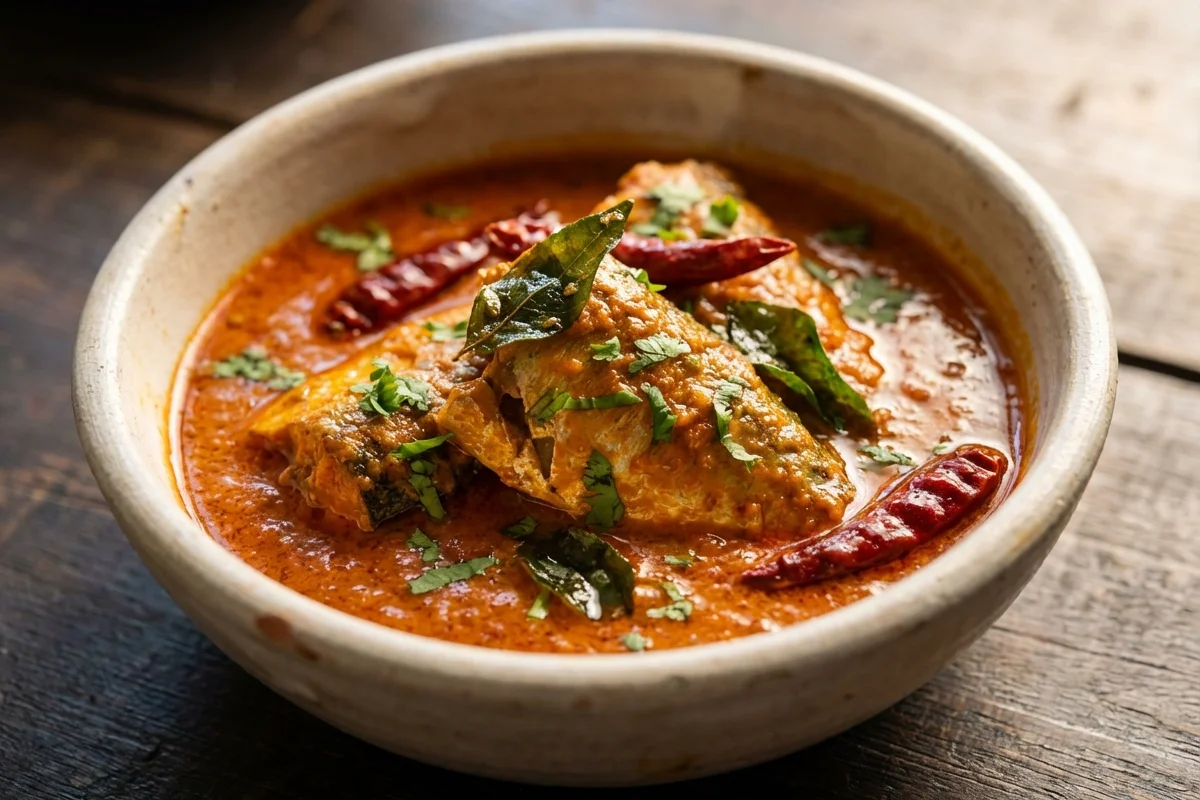
Bangude Gassi
A coastal Mangalorean fish curry made with mackerel simmered in a roasted coconut and tamarind masala. It has a deep red color, gentle heat, and a tangy finish that goes beautifully with steamed rice.
For 4 servings
- prep · ~10 min
Soak the tamarind and clean the fish.
1.Soak the tamarind in a little warm water for 10 minutes.2.Wash the mackerel pieces gently and set them aside.3.Slice the onion and keep the garlic ready. - roast · ~7 min
Roast the coconut and spices.
1.Heat a pan over medium heat and add the grated coconut.2.Roast until lightly golden, stirring often so it does not burn.3.Add dried red chili, coriander seeds, cumin seeds, black peppercorns, and fenugreek seeds.4.Roast for 1 to 2 minutes more until fragrant, then cool slightly.TIPKeep the heat medium. Dark brown coconut can make the curry bitter. - mix · ~3 min
Grind the masala.
Transfer the roasted coconut and spices to a grinder. Add soaked tamarind, turmeric powder, and 1 cup water, then grind to a smooth masala paste.
- saute · ~5 min
Cook the onion base.
1.Heat coconut oil in a clay pot or deep pan over medium heat.2.Add onion, garlic, and curry leaves.3.Cook until the onion softens and turns light golden. - simmer · ~6 min
Simmer the masala with water.
Add the ground masala to the pot along with the remaining water and salt. Mix well and bring to a gentle simmer for 5 to 6 minutes so the raw flavors cook out.
- simmer · ~10 min
Cook the fish in the curry.
Slide in the mackerel pieces and gently swirl the pot. Simmer on low heat for 8 to 10 minutes, until the fish is just cooked and the curry turns rich and aromatic.
TIPDo not stir hard after adding the fish or the pieces may break. - rest · ~5 min
Rest the curry before serving.
Turn off the heat and let the curry rest for 5 minutes so the flavors settle and the fish absorbs the masala.
- serve
Serve hot with rice.
What to keep in mind.
7 tips from the recipe — small details that make a real difference to the final dish.
- 1Roast the coconut only to light golden; deeper browning can make this gassi taste bitter.
- 2Use Byadagi chilies if possible for the classic red color with milder heat.
- 3Grind the masala very smooth so the curry coats the mackerel evenly instead of tasting grainy.
- 4Let the masala simmer before adding fish; this cooks out the raw tamarind and spice notes.
- 5After adding mackerel, swirl the pot instead of stirring to keep the pieces intact.
- 6Rest the curry for a few minutes before serving; Bangude Gassi tastes rounder once the fish absorbs the masala.
- 7This curry often tastes even better the next day; reheat gently on low heat so the fish does not break.
Adapt it for your goals.
Spicier
Add 2 to 4 extra dried red chilies or a few peppercorns for a hotter gassi while keeping the same coconut-tamarind base.
milderMilder
Reduce the dried chilies slightly and lean on Byadagi chilies for color, making it better for those who want less heat.
seer fishSeer-fish
Swap mackerel for firm seer fish if you prefer a less oily fish with cleaner slices that hold shape well in the curry.
prawnPrawn
Use prawns instead of mackerel for a quicker seafood version; shorten the final simmer so the prawns stay tender.
Why this is on our healthy list.
Omega-Rich Fish
Mackerel is a naturally oily fish that provides beneficial fats along with satisfying protein in this curry.
Protein With Satiety
The fish makes the dish filling and nourishing, especially when paired with rice for a complete meal.
Spice-Driven Flavor
Coriander, cumin, pepper, garlic, and curry leaves add strong flavor, so the curry feels rich without needing much oil.
Coconut-Based Body
Fresh coconut gives the gravy texture and fullness while also contributing fiber and natural richness.
Frequently asked questions
Yes, but thaw it fully and pat it dry first. Handle it gently, since softened fish can break more easily in the curry.