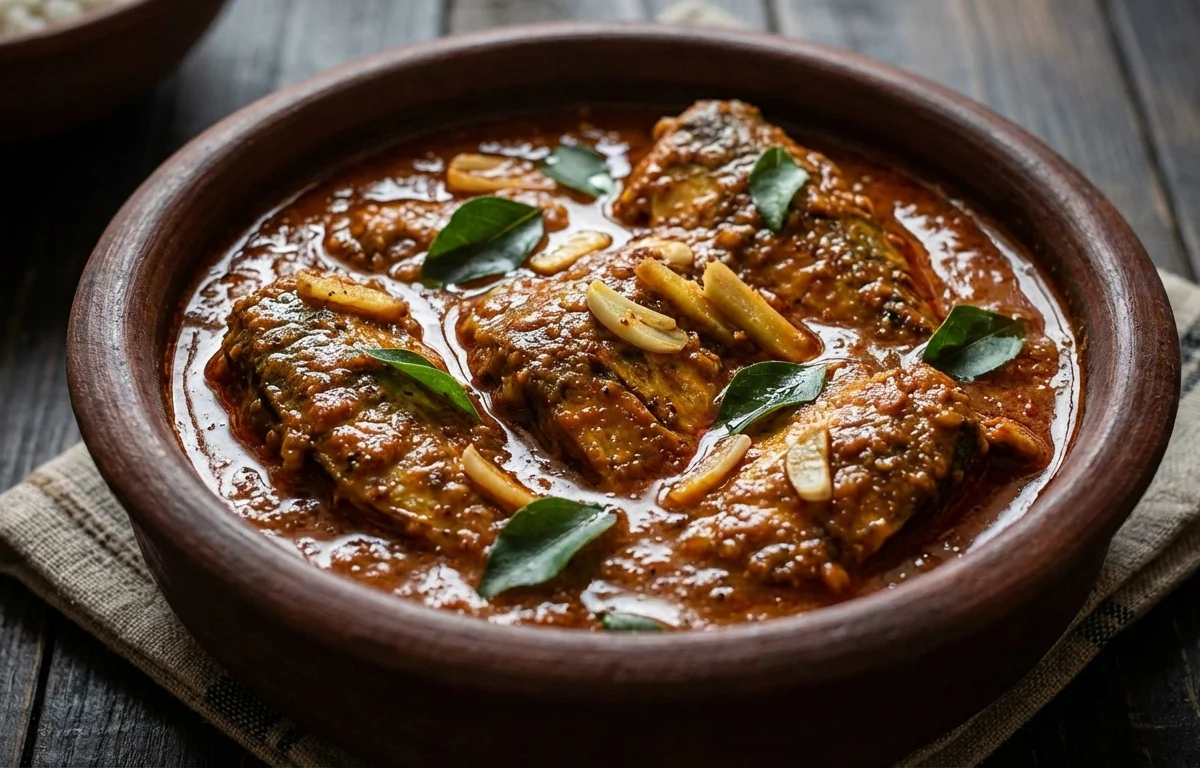
Bangude Pulimunchi
A fiery and tangy Mangalorean mackerel curry where fresh bangda is simmered in a bold red chili, tamarind, and garlic masala. It is sharp, deeply savory, and especially good with plain rice on the side.
For 4 servings
- prep · ~15 min
Soak the chilies and tamarind.
Soak the byadgi red chilies and tamarind separately in a little warm water for 15 minutes so they soften well for grinding.
TIPSoftened chilies grind smoother and give the curry its bright red color without needing extra chili powder. - mix · ~4 min
Grind the pulimunchi masala.
1.Add soaked red chilies, tamarind, garlic, turmeric powder, and a little water to a blender.2.Grind to a very smooth, thick paste.3.Scrape down the sides once or twice so no chili bits remain coarse. - saute · ~3 min
Cook the onion lightly.
Heat coconut oil in a wide pan over medium heat. Add the sliced onion and cook for 2 to 3 minutes until just softened, not deeply browned.
TIPKeep the onion light here so it does not change the sharp, tangy character of the curry. - simmer · ~6 min
Cook the masala base.
1.Add the ground masala to the pan and rinse the blender jar with the remaining water.2.Pour in the rinsed water and add salt.3.Bring the curry to a gentle simmer and cook for 5 to 6 minutes until the raw smell fades. - simmer · ~10 min
Add the fish and finish the curry.
1.Slide the mackerel pieces gently into the simmering curry in a single layer.2.Cover and cook on low heat for 8 to 10 minutes until the fish is just cooked through.3.Swirl the pan once or twice instead of stirring so the fish pieces stay whole.TIPDo not stir with a spoon after adding the fish, or the delicate mackerel may break apart. - rest · ~5 min
Rest the curry briefly.
Turn off the heat and let the curry sit for 5 minutes so the fish absorbs the spicy tamarind masala.
- serve
Serve Bangude Pulimunchi hot.
What to keep in mind.
7 tips from the recipe — small details that make a real difference to the final dish.
- 1Choose a wide, shallow pan so the mackerel can cook in a single layer without breaking.
- 2Grind the soaked Byadgi chilies completely smooth; gritty masala dulls the curry's clean, sharp finish.
- 3Simmer the masala until the raw garlic-chili smell disappears before adding fish, or the curry will taste harsh.
- 4Once the mackerel goes in, only swirl the pan gently; spoon-stirring can split the delicate pieces.
- 5Cook the fish just until it turns opaque and flakes at the bone, since mackerel toughens if overcooked.
- 6This curry tastes even better after a short rest, as the tamarind and chili soak into the fish.
- 7Refrigerate leftovers and reheat very gently on low heat to keep the fish pieces intact.
Adapt it for your goals.
Extra-tangy
Increase the tamarind slightly for a sharper, more puckery curry that pairs especially well with plain steamed rice.
low oilLow-oil
Reduce the coconut oil and soften the onions with a splash of water; useful if you want a lighter everyday version.
sardineSardine
Make it with fresh sardines instead of mackerel for a more traditional coastal-style fish curry with an even bolder flavor.
boneless filletBoneless-fillet
Use firm boneless mackerel fillets if you want easier serving, but shorten the cooking time so the fish does not dry out.
Why this is on our healthy list.
Rich in Omega-3 Fats
Mackerel is an oily fish that provides beneficial fats and makes this curry satisfying and nourishing.
Good Source of Protein
The fish adds high-quality protein, making the dish filling and useful as the main component of a rice meal.
Garlic and Chili Benefits
Garlic and red chilies contribute natural plant compounds along with the dish's strong savory heat.
Frequently asked questions
Yes. Sardines, seer fish, or other firm fish work well, but adjust the cooking time based on the thickness and delicacy of the fish.