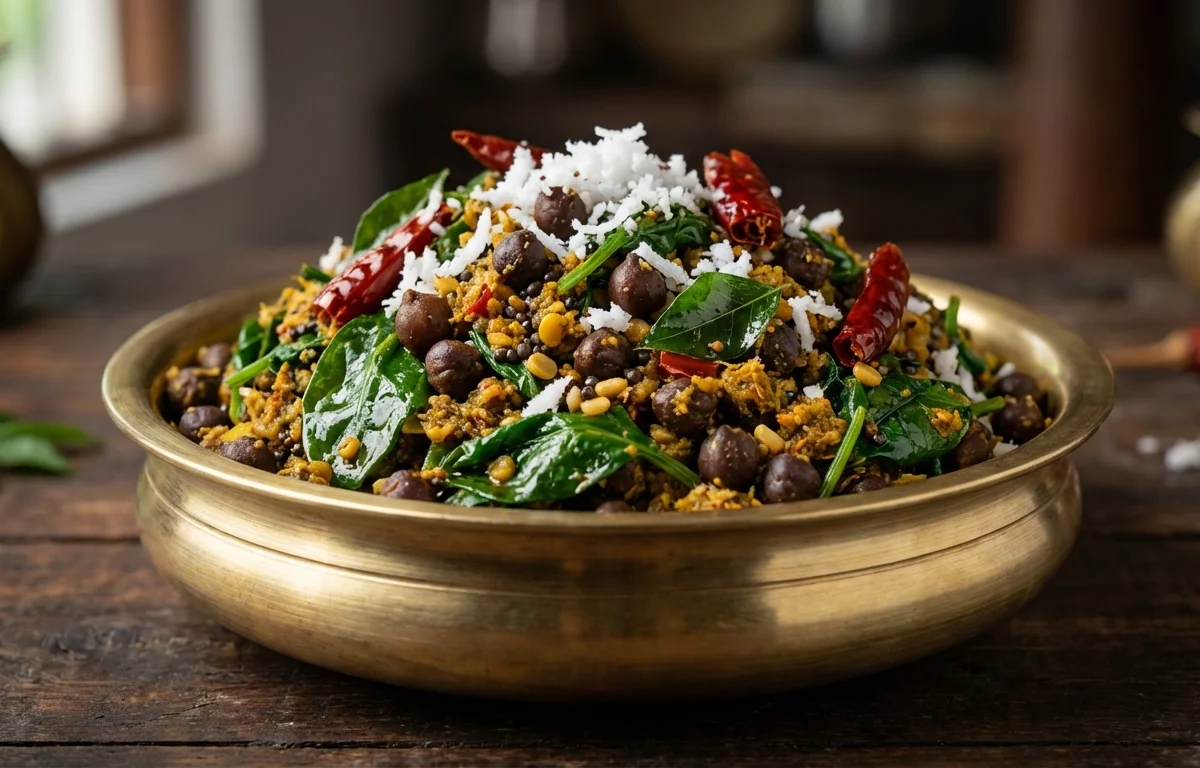
Basale Soppu Ajadina
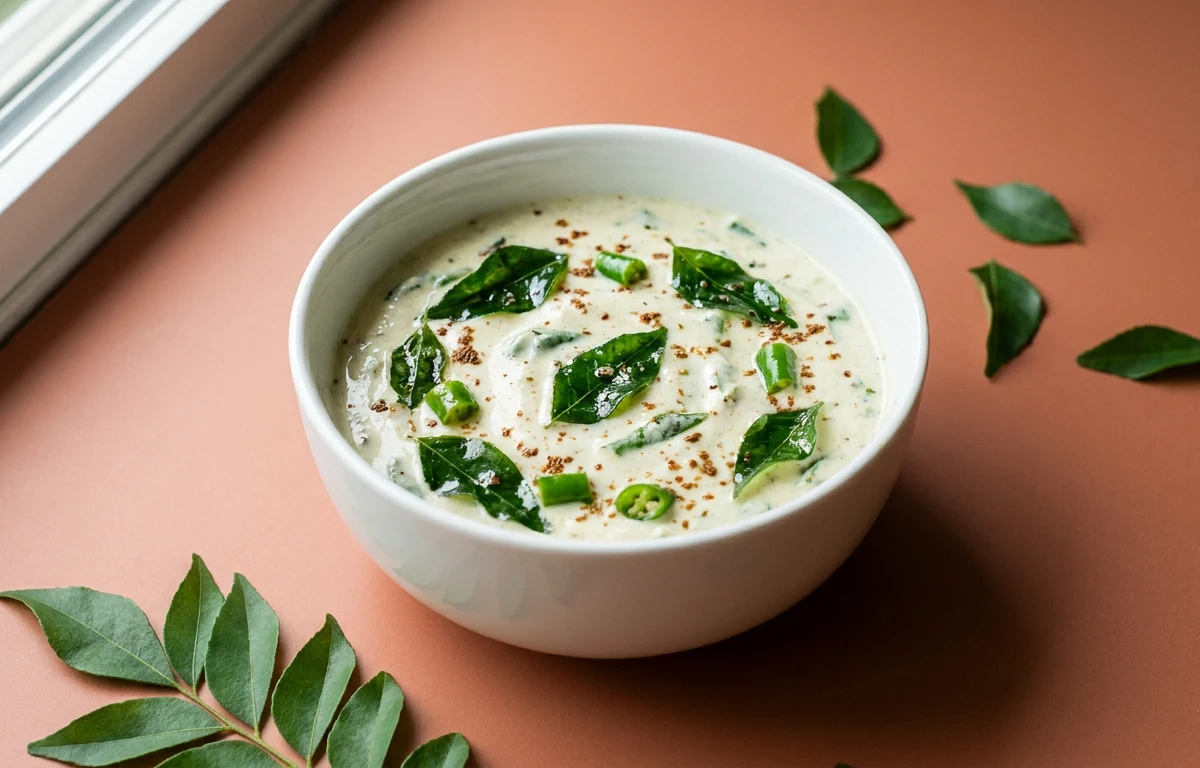
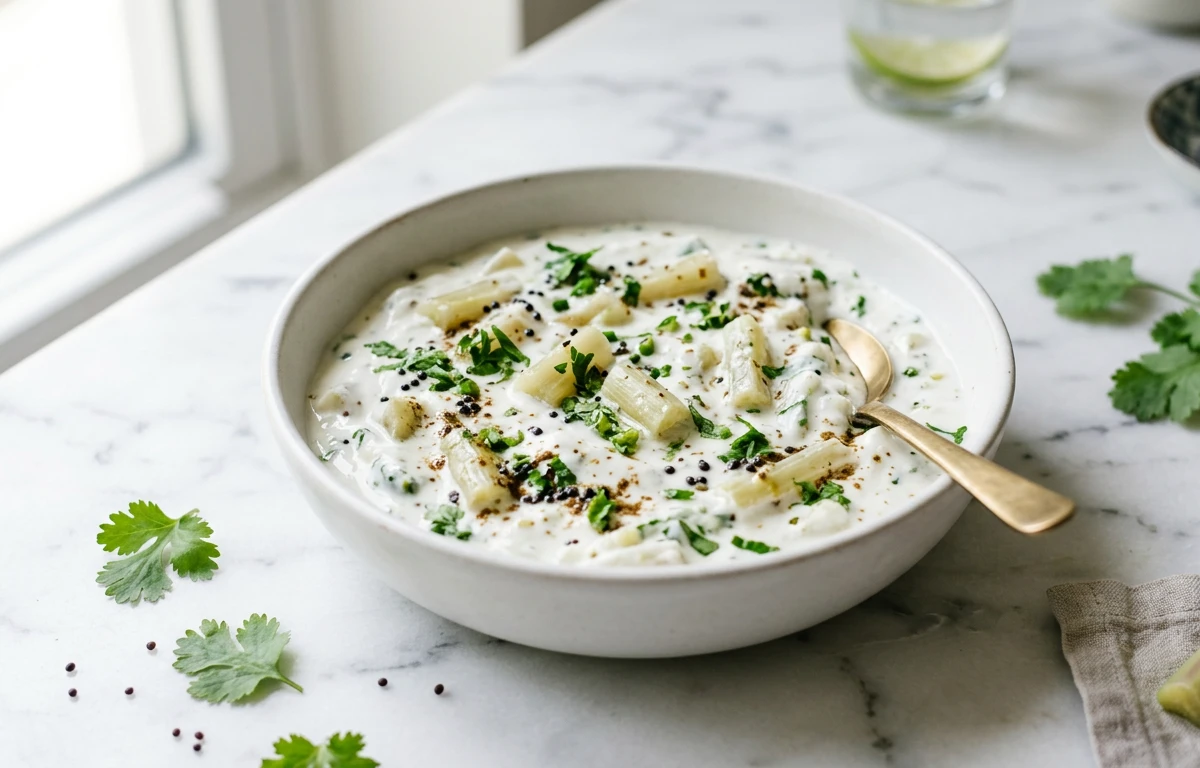
A refreshing and healthy raw salad from Karnataka's Udupi-Mangaluru region, made with tender Malabar spinach leaves tossed in coconut, green chili, and a tangy yogurt-curd dressing. Finished with a fragrant mustard seed and curry leaf tempering, this no-cook dish is bursting with fresh, vibrant flavors.
For 4 servings
- prep
Prepare the malabar spinach.
1.Wash the malabar spinach leaves and tender stems thoroughly in running water.2.Pat dry completely with a clean kitchen towel to remove all moisture.3.Finely chop the leaves and stems together. - mix
Make the coconut-yogurt dressing.
1.In a mixing bowl, combine the freshly grated coconut and whisked yogurt.2.Add finely chopped green chilies, lemon juice, and salt.3.Mix everything into a smooth, cohesive dressing. - mix
Toss the salad together.
Add the chopped malabar spinach to the coconut-yogurt mixture. Using your hands or two spoons, toss gently but thoroughly until every leaf is well coated with the dressing.
TIPUse your hands to mix for a more even, gentle coating without bruising the delicate leaves. - temper · ~2 min
Make the tempering.
1.Heat coconut oil in a small tempering pan over medium heat.2.Add mustard seeds. Wait until they crackle and pop vigorously.3.Immediately add broken dried red chili and fresh curry leaves.4.Sauté for 10-15 seconds until the curry leaves turn crisp and fragrant.5.Turn off the heat instantly.TIPDo not let the curry leaves or chili burn. The sizzle should just reach its peak before you remove it from the heat. - assemble
Pour the hot tempering over the salad.
Immediately pour the sizzling tempering with all the spices and oil directly over the dressed Basale Soppu mixture. The hot oil hitting the cool salad will release a burst of aroma.
- mix
Toss once more and serve immediately.
Give the salad a final gentle toss to incorporate the tempering oil throughout. Serve at once as a fresh side dish.
TIPThis salad is best enjoyed immediately while the leaves are still crisp and the tempering is fragrant. Do not let it sit, as the salt will draw out moisture from the leaves.
What to keep in mind.
7 tips from the recipe — small details that make a real difference to the final dish.
- 1Pat the malabar spinach bone-dry after washing to prevent the dressing from becoming watery.
- 2Use freshly grated coconut for the best texture and flavor — pre-packaged coconut lacks moisture and sweetness.
- 3Whisk the yogurt until completely smooth before mixing to ensure a lump-free dressing.
- 4Add the hot tempering just before serving to keep the leaves crisp and the aroma vibrant.
- 5Toss the salad gently with your hands to coat every leaf evenly without crushing them.
- 6Adjust the number of green chilies based on your heat preference; remove seeds for a milder kick.
- 7Serve immediately after tempering — the salad loses its crunch and becomes soggy if left standing.
Adapt it for your goals.
Vegan
Replace the yogurt with an equal amount of thick coconut yogurt or cashew cream for a fully plant-based version that retains the creamy tang.
low oilLow-oil
Skip the tempering entirely and simply stir in a pinch of asafoetida and crushed black pepper for a light, oil-free salad that still has a warming edge.
protein boostProtein boost
Add a handful of roasted chana dal or crushed peanuts for extra crunch and protein, turning the salad into a more filling side or light lunch.
herb swapHerb swap
Substitute half the malabar spinach with finely chopped fresh fenugreek leaves (methi) for a slightly bitter, earthy twist common in Mangalorean cooking.
Why this is on our healthy list.
Rich in Leafy Greens
Malabar spinach is packed with vitamins A and C, iron, and calcium, supporting immunity and bone health without cooking.
Probiotic Support
The yogurt in the dressing provides live cultures that aid digestion and gut health when eaten fresh.
Good Fats from Coconut
Fresh coconut and coconut oil supply medium-chain triglycerides (MCTs), which are easily metabolized for quick energy.
Low-Calorie & No-Cook
This raw salad requires no heat, preserving the natural nutrients and fiber of the spinach while keeping the dish light and hydrating.
Frequently asked questions
Yes, but regular spinach is more delicate and will release more water. Pat it very dry and serve immediately to avoid a soggy salad.