
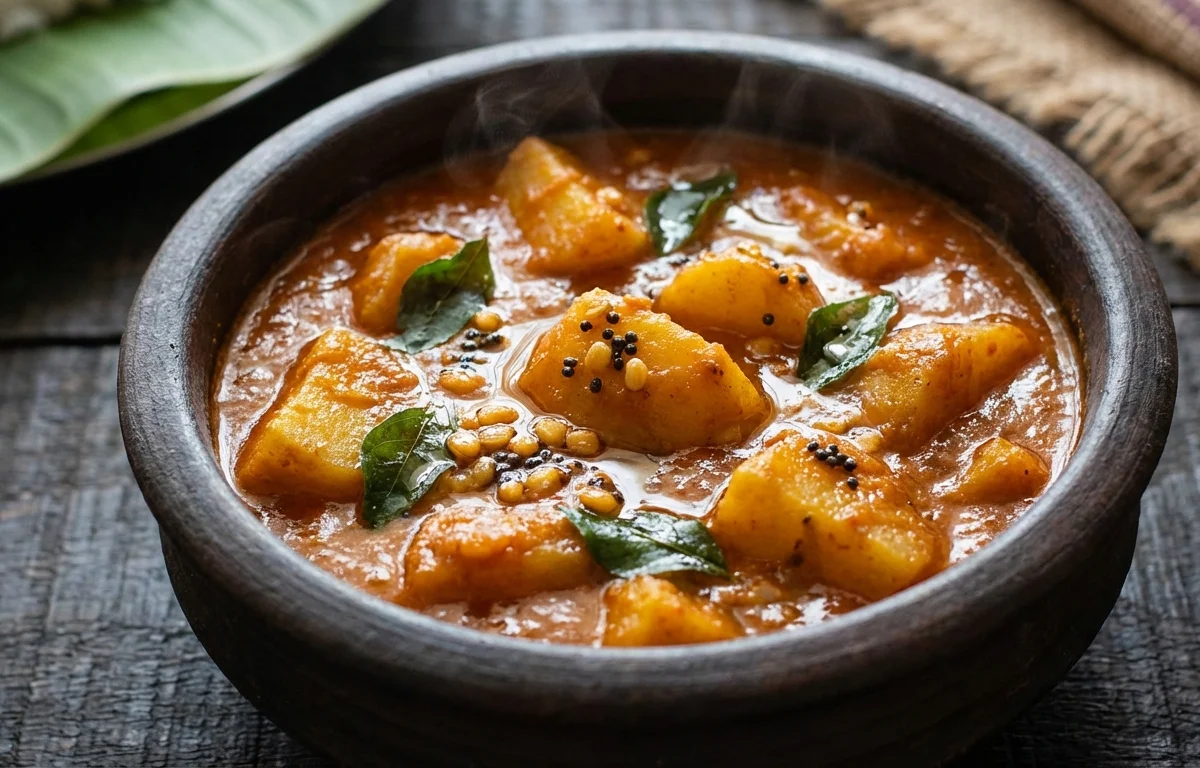
Batate Gassi
A creamy, mildly spiced coconut-based potato curry from Mangalorean cuisine. Tender potatoes soak up the rich roasted coconut gravy, balanced with the subtle tang of tamarind and a gentle crackle of whole spices. This comforting dish pairs beautifully with steamed rice or dosa for a satisfying meal.
For 4 servings
- prep · ~20 min
Boil and prepare the potatoes.
1.Place whole potatoes in a pot, cover with water, and boil until fork-tender (15-20 minutes).2.Drain, cool, peel, and cube into bite-sized pieces. Set aside.TIPUse waxy potatoes like Yukon gold or red potatoes — they hold their shape in the gravy. - roast · ~10 min
Roast the coconut and spices for the masala.
1.Heat a heavy-bottomed pan over low heat. Add grated coconut and roast, stirring constantly, until golden brown (5-7 minutes).2.Add dried red chilies, coriander seeds, cumin seeds, and fenugreek seeds. Continue roasting until fragrant (2-3 minutes).3.Transfer the mixture to a plate and let it cool completely.TIPRoast on medium-low heat and stir continuously — coconut burns quickly and turns bitter. - mix · ~5 min
Grind the coconut masala paste.
1.Soak tamarind in 3 tablespoons of warm water for 10 minutes. Extract thick juice and discard pulp.2.Add the roasted coconut-spice mix, tamarind extract, and turmeric powder to a blender jar.3.Add ½ cup water and grind to a very smooth, thick paste. Set aside.TIPBlend on high speed for longer than you think — a coarse gravy ruins the silky texture of authentic gassi. - temper · ~5 min
Make the tempering.
1.Heat coconut oil in a deep pan or earthen pot over medium heat.2.Add mustard seeds and let them splutter completely (30 seconds).3.Add curry leaves and sauté until crisp and fragrant (20 seconds).4.Add sliced onion and crushed garlic. Sauté until onions turn translucent (3-4 minutes). - simmer · ~12 min
Simmer the gravy with potatoes.
1.Pour the ground coconut paste into the pan with the tempering. Add ½ cup water to the blender jar, swirl, and add that too.2.Add salt and mix well. Bring the gravy to a gentle boil over medium heat.3.Reduce heat to low, add the potato cubes, and let it simmer uncovered for 8-10 minutes, stirring occasionally.TIPSimmer on low heat — high heat will split the coconut gravy and release excess oil. - rest · ~5 min
Rest and let the flavors meld.
Turn off the heat. Cover the pan and let the Batate Gassi rest for 5 minutes. This allows the potatoes to absorb the coconut gravy flavors.
TIPThe curry thickens as it cools. If serving later, add a splash of warm water when reheating to adjust consistency. - serve
Serve the Batate Gassi hot.
Gently ladle into a serving bowl. Serve hot with steamed rice, dosa, or neer dosa. Drizzle a few drops of raw coconut oil on top just before serving if you love the aroma.
What to keep in mind.
6 tips from the recipe — small details that make a real difference to the final dish.
- 1Roast the coconut on medium-low heat and stir continuously to prevent burning and bitterness.
- 2Use waxy potatoes like Yukon gold or red potatoes—they hold their shape in the gravy.
- 3Blend the coconut masala to a very smooth paste; a coarse gravy ruins the silky texture.
- 4Simmer the curry on low heat only; high heat will split the coconut gravy and release oil.
- 5Let the gassi rest for 5 minutes off the heat so potatoes absorb the coconut flavors fully.
- 6The curry thickens as it cools; add a splash of warm water when reheating to adjust consistency.
Adapt it for your goals.
Vegan
This recipe is already vegan—just ensure the coconut oil is plant-based. No changes needed.
low oilLow-oil
Toast the coconut without oil in a dry pan, and skip the tempering step (just add mustard seeds and curry leaves directly into the gravy) to reduce fat.
jainJain
Omit onion, garlic, and tamarind. Use asafoetida (hing) in the tempering and substitute tamarind with dry mango powder (amchur) for sourness.
high proteinHigh-protein
Add boiled chickpeas or pan-fried tofu cubes along with the potatoes for a protein boost without altering the core flavor.
Why this is on our healthy list.
Rich in Healthy Fats
Coconut and coconut oil provide medium-chain triglycerides (MCTs), which are easily metabolized and support energy.
Good Source of Dietary Fiber
Potatoes with skin and coconut flesh add fiber, aiding digestion and promoting satiety.
Contains Anti-inflammatory Spices
Turmeric and fenugreek seeds have natural anti-inflammatory properties, beneficial for joint and gut health.
Low in Saturated Fat
Despite the coconut, this dish uses minimal oil and is cholesterol-free, making it heart-friendly.
Frequently asked questions
Yes, frozen grated coconut works well—thaw it completely before roasting. Canned coconut milk is not a substitute; it will make the gravy too thin and lose the roasted flavor.



.webp)

.webp)