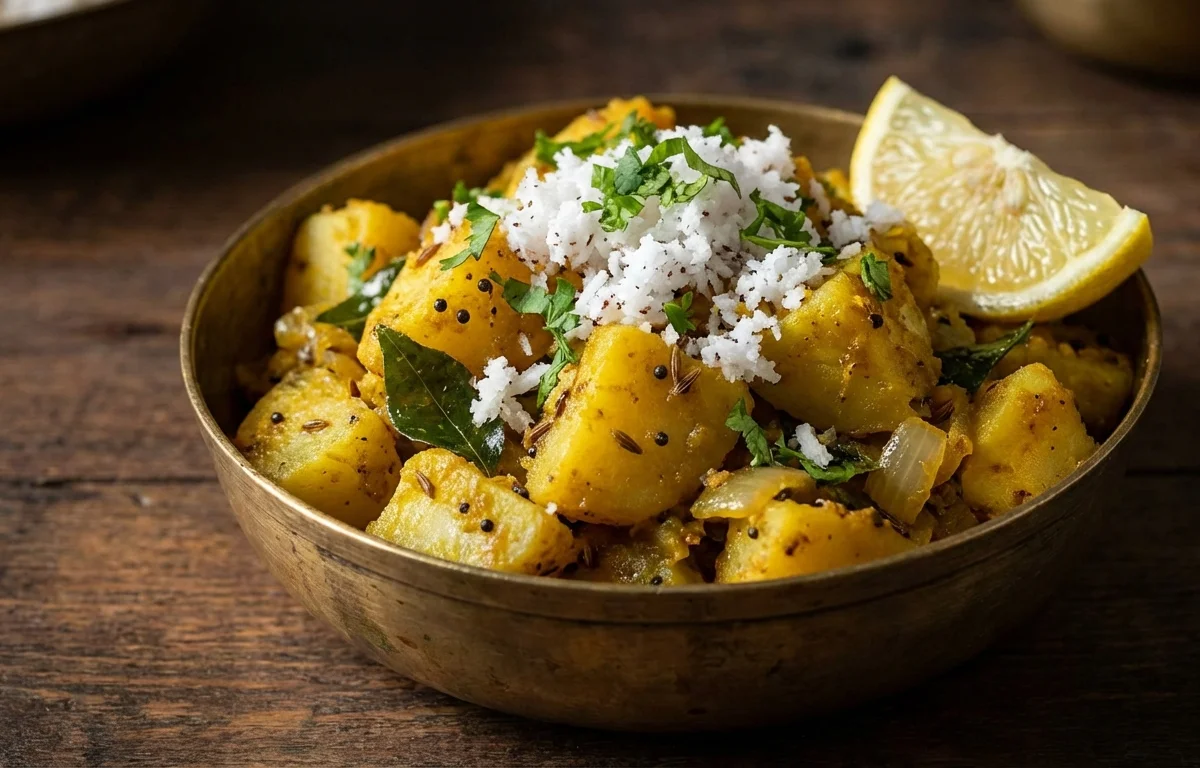
Batate Sukkha
Tender cubes of potato coated in a fragrant, slightly spicy coconut masala. A classic Konkani-style dry curry from coastal Karnataka, this Batate Sukkha pairs beautifully with steamed rice and dal or serves as a delicious filling for dosas. The freshly ground coconut-spice paste gives it that unmistakable homemade taste and aroma.
For 4 servings
- prep · ~15 min
Boil the potatoes.
Peel and cube the potatoes into bite-sized pieces. Place in a pot with enough water to cover, add a pinch of salt, and boil until just fork-tender but not mushy. Drain and set aside.
TIPCook potatoes until just tender — they will absorb the masala better and hold their shape during stir-frying. - roast · ~3 min
Dry roast the spices.
Heat a small pan over low-medium heat. Add coriander seeds and cumin seeds. Dry roast until fragrant, about 1-2 minutes. Transfer to a plate. In the same pan, dry roast the dried red chilies for 30 seconds until they turn slightly crisp. Let everything cool.
TIPKeep the heat low while roasting — burnt spices turn bitter and ruin the masala. - mix · ~3 min
Grind the coconut masala paste.
Squeeze the soaked tamarind in the water to extract pulp, discard the fiber. In a mixer grinder jar, add the roasted coriander, cumin, dried red chilies, fresh grated coconut, tamarind pulp, and jaggery. Add 2-3 tablespoons of water and grind to a coarse, thick paste. Do not make it too smooth.
TIPKeep the paste slightly coarse for authentic texture — this is not a smooth chutney. - temper · ~2 min
Make the tempering.
1.Heat coconut oil in a wide kadai or pan over medium heat.2.Add mustard seeds and let them splutter fully (30 sec).3.Add urad dal and sauté until golden (20 sec).4.Add curry leaves and asafoetida, stir for a few seconds until fragrant. - saute · ~4 min
Sauté the onions.
Add the chopped onion to the tempering and sauté until soft and translucent, about 3-4 minutes. Sprinkle the turmeric powder and stir well.
- saute · ~4 min
Add the ground coconut masala.
Lower the heat and add the ground coconut-spice paste to the pan. Stir continuously and cook for 3-4 minutes until the raw smell disappears and the mixture releases its aroma. The masala will start to dry out slightly and turn a shade darker.
TIPCook on low heat and stir constantly to prevent the coconut from scorching. - mix · ~4 min
Fold in the boiled potatoes.
Add the drained potato cubes and salt to the pan. Gently toss everything together so each potato piece gets evenly coated with the masala. Cook for 3-4 minutes on low heat, stirring occasionally, letting the flavors meld and any excess moisture evaporate.
TIPUse a gentle folding motion — vigorous stirring will break the potatoes. - garnish
Garnish with fresh coriander and serve hot.
Turn off the heat. Sprinkle chopped coriander leaves over the top and give a final gentle toss. Transfer to a serving bowl and serve immediately.
What to keep in mind.
7 tips from the recipe — small details that make a real difference to the final dish.
- 1Use waxy potatoes like Yukon Gold or red potatoes to prevent them from breaking apart during stirring.
- 2Freshly grated coconut is essential – dried or desiccated coconut will not yield the same moist, aromatic masala.
- 3Do not skip roasting the coriander and cumin seeds; toasting deepens their flavor significantly.
- 4If using Byadgi dried chilies, the dish will be mildly spicy and richly colored; adjust the number for heat preference.
- 5Let the boiled potatoes cool slightly before adding to the masala so they absorb the flavors without turning mushy.
- 6For make-ahead, prepare the coconut masala paste and refrigerate for up to 3 days; finish the dish fresh.
- 7Serve immediately after garnishing – Batate Sukkha is best enjoyed warm when the masala is fragrant and potatoes are tender.
Adapt it for your goals.
Vegan
This recipe is already vegan, but for a richer texture, replace coconut oil with a neutral oil or use a bit of cashew cream alongside the coconut. Perfect for plant-based meals.
low oilLow-oil
Reduce coconut oil to 1 teaspoon and use a non-stick pan. The coconut masala adds enough moisture and flavor, making this a lighter version without sacrificing taste.
high proteinHigh-protein
Add 1 cup of boiled and cubed paneer or firm tofu along with the potatoes for an extra protein boost. The coconut masala coats both beautifully for a hearty dish.
jainJain
Omit onion and asafoetida, and use hing (asafoetida) only if allowed by Jain dietary practices. Replace onion with a pinch of asafoetida and a few chopped green beans for crunch.
gluten freeGluten-free
This dish is naturally gluten-free – ensure your asafoetida is labelled gluten-free (some brands contain wheat flour). Serve with rice or gluten-free rotis.
Why this is on our healthy list.
Rich in Dietary Fiber
Potatoes with skin (if used) and coconut provide fiber that supports digestion and helps maintain steady energy levels. The fiber from coconut also promotes gut health.
Good Source of Healthy Fats
Coconut and coconut oil supply medium-chain triglycerides (MCTs), which are easily metabolized for energy and may support brain health.
Packed with Antioxidant Spices
Turmeric, curry leaves, and dried red chilies are rich in antioxidants like curcumin and flavonoids, which help combat oxidative stress.
Naturally Gluten-Free and Vegan
Batate Sukkha contains no animal products or gluten-containing grains, making it suitable for a variety of dietary preferences.
Frequently asked questions
Yes, thawed frozen coconut works well, but freshly grated coconut gives the best texture and aroma. Avoid desiccated coconut as it is too dry.