
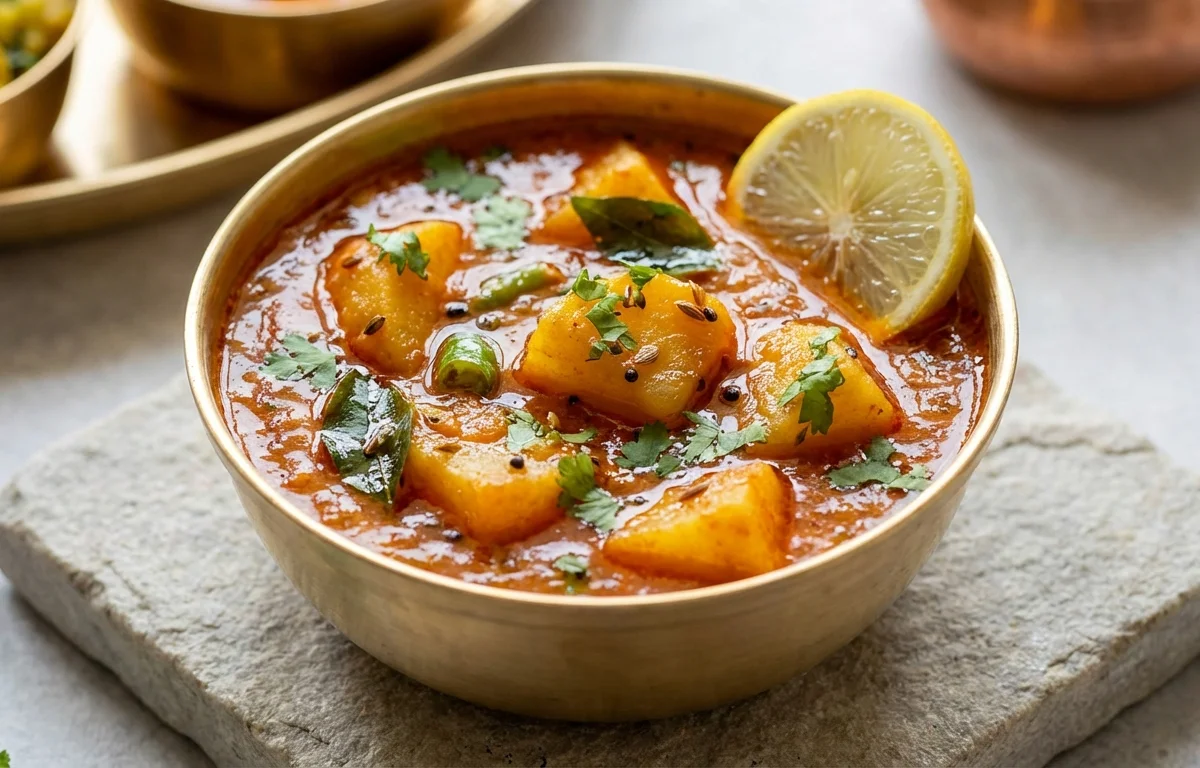
Bateta nu Rasavalu Shaak
A comforting Gujarati potato curry with tender cubed potatoes simmered in a thin, tangy-sweet gravy. Lightly spiced with green chilies, ginger, and a hint of jaggery, this everyday shaak comes together in under 30 minutes. Best enjoyed with soft rotis or steamed rice.
For 4 servings
- prep
Prep the potatoes.
Peel the potatoes and cut them into medium-sized cubes. Rinse well under cold water and set aside.
- temper · ~2 min
Make the tempering.
1.Heat oil in a kadai or heavy-bottomed pan over medium heat.2.Add mustard seeds and let them splutter completely (30 sec).3.Add cumin seeds and asafoetida; stir briefly until fragrant (10 sec).4.Add slit green chilies, ginger, and curry leaves; sauté for 30 sec. - saute · ~3 min
Sauté potatoes with turmeric.
Add the cubed potatoes and turmeric powder to the pan. Stir well to coat all the pieces evenly. Sauté for 2-3 minutes, letting the potatoes absorb the tempering flavors.
TIPDon't skip this step — sautéing the potatoes before adding water seals the outer surface and helps them hold their shape in the gravy. - simmer · ~15 min
Simmer the curry.
1.Pour in the water and add salt and jaggery.2.Stir once, then bring to a rolling boil.3.Lower the heat to medium-low, cover partially, and simmer until the potatoes are fork-tender (12-15 min).4.Stir gently 2-3 times during cooking; add a splash more water if the gravy thickens too much.TIPThe gravy should remain thin and flowing — like a light soup. Gujarati shaak is meant to be rasavalu (with liquid). - garnish
Finish with lemon and coriander.
Turn off the heat. Stir in the lemon juice and taste for salt, adding more if needed. Garnish generously with chopped coriander leaves and serve hot.
TIPAdd lemon juice only after turning off the heat — cooking it further dulls its bright tang. - serve
Serve hot with roti or rice.
Ladle the shaak into katoris. The thin, tangy-sweet gravy pairs beautifully with soft rotis, bhakri, or steamed basmati rice. A side of papad and pickle completes the meal.
What to keep in mind.
7 tips from the recipe — small details that make a real difference to the final dish.
- 1Cut all potato cubes to the same size (about 1.5 cm) so they cook evenly in the thin gravy.
- 2Sauté the potatoes for the full 2-3 minutes to lightly seal the surface and prevent them from turning mushy.
- 3If you prefer a more pronounced tang, add a pinch of raw mango powder (amchur) along with the lemon juice.
- 4For a deeper jaggery flavor, use dark, unrefined jaggery instead of sugar — it adds complexity to the sweet-sour balance.
- 5The gravy should remain thin and spoonable; if it gets too thick, splash in a little hot water while simmering.
- 6Gujarati households often add a pinch of garam masala at the end for a warm, aromatic finish — optional but lovely.
- 7Let the curry rest for 5 minutes after turning off the heat — the flavors meld and the potatoes absorb the gravy better.
Adapt it for your goals.
Low-oil
Reduce oil to 1 teaspoon and dry-roast the mustard and cumin seeds before adding a splash of water to deglaze — cuts the fat without sacrificing tempering flavor.
high proteinHigh-protein
Add 1 cup of boiled chickpeas (chana) along with the water for a heartier, fiber-rich shaak that turns a side dish into a satisfying one-pot meal.
jainJain
Omit garlic and onions (already absent) and skip the asafoetida if it is mixed with wheat flour; use pure hing instead. Replace curry leaves with a pinch of dried fenugreek leaves (kasuri methi) for similar fragrance.
veganVegan
This recipe is already vegan — just ensure the jaggery is truly plant-based (some jaggery is processed with bone char; look for organic or unrefined).
tomato tangyTomato-tangy
Swap half the water for pureed ripe tomatoes for a richer, more robust gravy — add a pinch of sugar to balance the acidity.
Why this is on our healthy list.
Rich in Resistant Starch
Potatoes, when cooked and cooled, contain resistant starch that supports healthy gut bacteria — this shaak leftovers (reheated or cold) are especially gut-friendly.
Anti-Inflammatory Spices
Turmeric, ginger, and asafoetida all contain compounds that may reduce inflammation and aid digestion — a hallmark of Gujarati vegetarian cooking.
Good Source of Vitamin C
Fresh lemon juice and coriander leaves add a dose of immune-supporting vitamin C to this dish.
Naturally Low in Fat
With only 2 teaspoons of oil for four servings, this oil-free method relies on water simmering to keep the dish light and digestible.
Frequently asked questions
Yes, substitute with an equal amount of brown sugar or coconut sugar — the dish will still have the sweet-sour balance, though the depth of flavor will be slightly different.


.webp)
.webp)
.webp)