
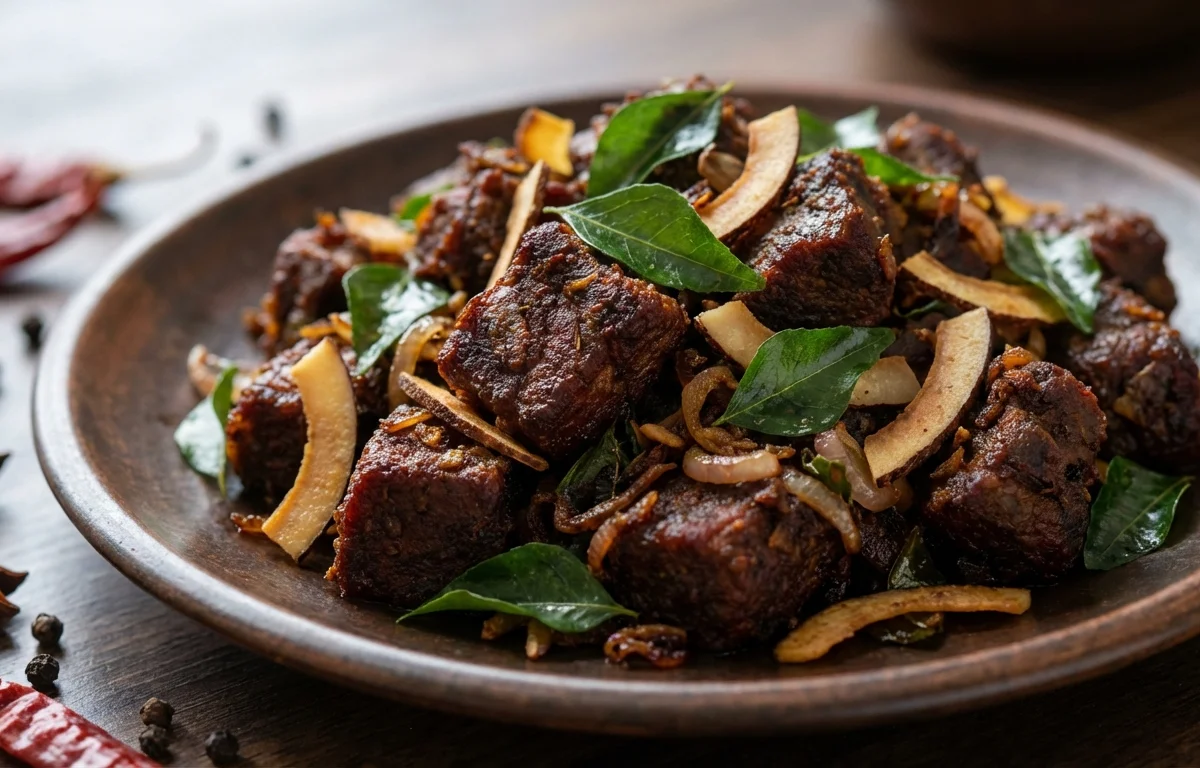
Beef Ularthiyathu
A Kerala favorite made with beef, coconut slivers, black pepper, curry leaves, and warm spices. The meat is pressure cooked until tender, then slow-roasted with onions until dark, fragrant, and richly coated.
For 4 servings
- prep
Prep the beef and aromatics.
1.Wash the beef and drain well.2.Cut the beef into small bite-size cubes if not already cut.3.Slice the onion, shallot, green chili, ginger, garlic, and coconut.4.Keep half the curry leaves aside for the final roast. - pressure cook · ~30 min
Pressure cook the beef with spices.
1.Add beef, red chili powder, turmeric powder, coriander powder, fennel seeds, cloves, cinnamon, salt, half the curry leaves, and water to a pressure cooker.2.Mix well so the spice coating is even.3.Cook on medium heat until the beef turns tender, about 20 minutes after the first whistle.4.Let the pressure drop naturally, then open the cooker.TIPIf there is too much liquid left, simmer it briefly before the next step so the roast turns dark and dry instead of stewy. - saute · ~10 min
Cook the onion base.
1.Heat coconut oil in a wide pan over medium heat.2.Add onion, shallot, ginger, garlic, green chili, and the remaining curry leaves.3.Cook until the onions soften and start turning golden.4.Add the sliced coconut and cook until lightly toasted. - roast · ~15 min
Roast the beef until dark and fragrant.
1.Add the cooked beef along with any thick masala from the cooker to the pan.2.Sprinkle in black pepper and garam masala.3.Cook on medium-low heat, stirring often, until the masala clings to the beef and the edges turn deep brown.4.Roast for a few more minutes until the dish looks semi-dry and glossy.TIPUse a wide pan and do not rush this step; slow roasting gives Beef Ularthiyathu its signature dark color and intense flavor. - serve
Serve hot.
What to keep in mind.
7 tips from the recipe — small details that make a real difference to the final dish.
- 1Use a wide heavy pan for the final roast so the masala dries and browns instead of steaming.
- 2Pressure-cook only until just tender; the beef should finish cooking during the slow roast without shredding.
- 3If the cooker has excess liquid, reduce it first so the ularthiyathu turns semi-dry and dark.
- 4Toast the coconut slivers until lightly golden before adding the beef for better nuttiness and texture.
- 5Stir often in the last 10 minutes, scraping the pan lightly to coat the beef with the browned masala.
- 6Rest the dish for 10 minutes before serving; the pepper, curry leaves, and coconut oil aroma settle beautifully.
- 7This tastes even better the next day after the spices permeate the beef; reheat in a pan, not the microwave.
Adapt it for your goals.
Extra-peppery
Increase the crushed black pepper at the final roast for a hotter, more traditional Kottayam-style edge.
dry roastDry-roast
Reduce the leftover cooker liquid completely before roasting for a more intensely browned, almost crisp masala coating.
with potatoWith-potato
Add parboiled potato cubes during the final roast to stretch the dish and soak up the spicy beef masala.
boneless liver mixBoneless-liver-mix
Use part beef liver with the beef for a stronger, richer Kerala-style fry; add liver only during the final roast so it stays tender.
Why this is on our healthy list.
Protein-Rich Main Dish
Beef provides substantial protein, making this a filling dish that pairs well with lighter sides like appam or vegetables.
Aromatic Spice Support
Ginger, garlic, black pepper, fennel, and curry leaves add flavor depth while contributing beneficial plant compounds.
Lower-Carb Preparation
This roast-style beef dish is made without flour or sugary sauces, so the focus stays on meat, spices, onion, and coconut.
Frequently asked questions
Usually the beef released too much liquid or the pan is too crowded. Reduce the cooker liquid first and use a wide pan for the final roast.


