
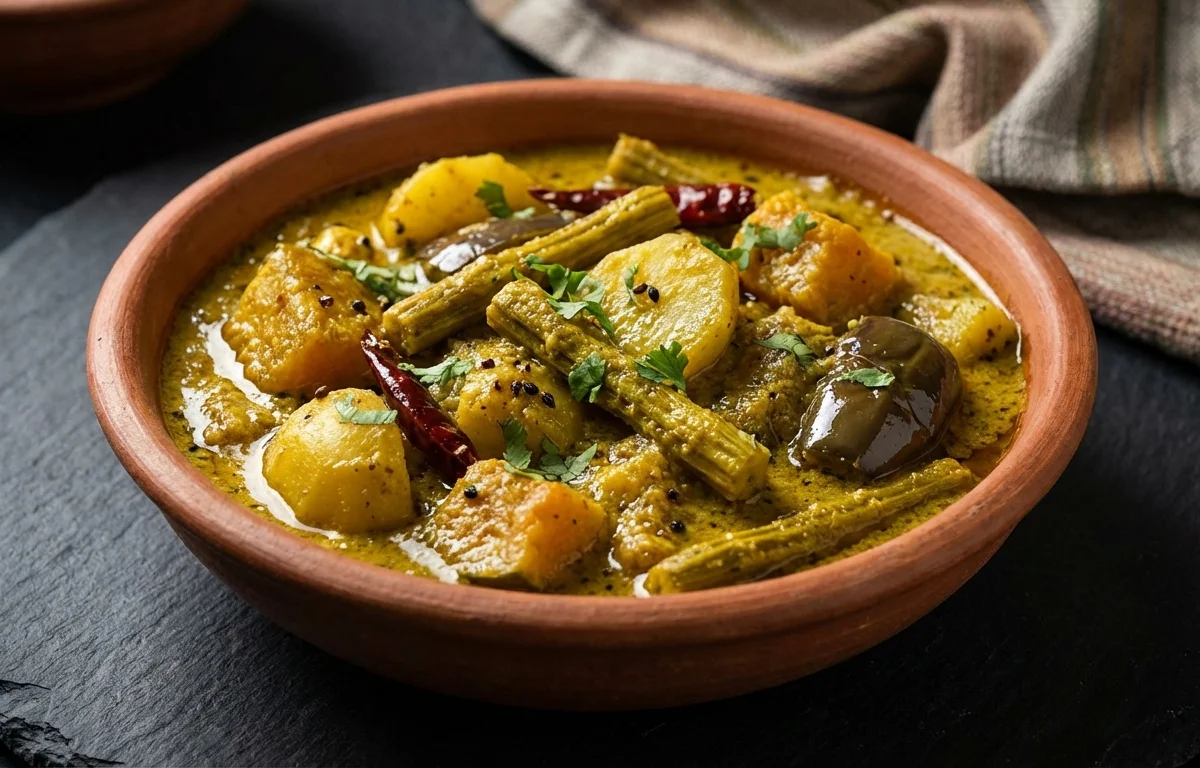
Besara Tarkari
A fragrant mixed-vegetable curry from Odisha where mustard paste does all the heavy lifting. Seasonal vegetables simmer in a pungent, golden mustard-cumin sauce until tender, finished with a crackling panch phoron tempering. Earthy, sharp, and deeply comforting — best spooned over hot steamed rice.
For 4 servings
- prep · ~30 min
Soak mustard seeds and prep vegetables.
1.Soak mustard seeds in 4 tbsp water for 30 minutes.2.Peel pumpkin, potato, and radish. Cube pumpkin, potato, brinjal, and slice radish.TIPSoaking mustard seeds reduces bitterness and helps grind to a smooth paste. - prep · ~2 min
Grind the mustard paste.
1.Drain soaked mustard seeds and add to a grinder.2.Add cumin seeds, green chilies, garlic, and 2 tbsp water.3.Grind to a smooth, thick paste. Set aside.TIPAdd a pinch of salt while grinding to keep the paste vibrant yellow and curb bitterness. - boil · ~10 min
Boil the vegetables.
1.Place all cubed vegetables in a heavy-bottom pan with 1.5 cups water, turmeric, and salt.2.Bring to a boil, then reduce heat to medium and cook until vegetables are just tender (8-10 minutes).TIPDon't overcook — the vegetables will simmer further in the mustard gravy. - simmer · ~12 min
Add mustard paste and simmer.
1.Reduce heat to low. Stir the ground mustard paste into the pan with the boiled vegetables and their cooking water.2.Simmer gently for 10-12 minutes, stirring occasionally, until the raw mustard smell mellows and the gravy thickens slightly.TIPKeep the heat low — high heat can make the mustard paste turn bitter and grainy. - temper · ~2 min
Make the panch phoron tempering.
1.Heat mustard oil in a small pan over medium heat until it reaches smoking point, then cool slightly.2.Add panch phoron and let it splutter (15-20 seconds).3.Add broken dried red chilies and cumin seeds, fry until fragrant (10 seconds).TIPHeating mustard oil to smoking and then cooling it removes its raw pungency and makes it nutty. - mix · ~5 min
Finish the curry.
1.Immediately pour the hot tempering over the simmering curry.2.Stir well to combine. Cover and let it rest for 5 minutes off the heat. - garnish
Garnish with fresh coriander and serve hot with steamed rice.
What to keep in mind.
6 tips from the recipe — small details that make a real difference to the final dish.
- 1Soak mustard seeds for at least 30 minutes to reduce bitterness and ensure a smooth paste.
- 2Grind the mustard paste with a pinch of salt to keep it vibrant yellow and curb bitterness.
- 3Boil vegetables only until just tender—they will cook further in the mustard gravy.
- 4Simmer the mustard paste on low heat; high heat can make it turn bitter and grainy.
- 5Heat mustard oil to its smoking point, then cool slightly, to remove raw pungency and develop nutty flavor.
- 6Let the finished curry rest off heat for 5 minutes after tempering for flavors to meld.
Adapt it for your goals.
Low-oil
Replace the final tempering of mustard oil with a dry tempering of panch phoron and cumin in a non-stick pan using just 1 tsp oil. Reduces fat while retaining the characteristic spice crackle.
veganVegan
This recipe is naturally vegan as written. No modifications needed.
high proteinHigh-protein
Add 1 cup of boiled chickpeas or paneer cubes (if not vegan) along with the vegetables. Boosts protein content without overpowering the mustard sauce.
jainJain
Omit garlic and radish. Replace radish with extra pumpkin or bottle gourd. Use asafoetida (hing) in the tempering for a garlicky aroma. Suitable for Jain dietary restrictions.
summer vegetableSummer vegetable
Swap pumpkin and radish for seasonal summer vegetables like zucchini, ridge gourd, or raw banana. Adjust water slightly as these release more moisture during cooking.
Why this is on our healthy list.
Rich in Fiber
Pumpkin, potato, brinjal, and radish provide dietary fiber, supporting healthy digestion and prolonged satiety.
Antioxidant-Rich Vegetables
Pumpkin and brinjal are good sources of beta-carotene and anthocyanins, respectively, which help combat oxidative stress.
Low in Calories
This vegetable-forward curry is naturally low in calories, making it a wholesome choice for weight management.
Mustard's Anti-Inflammatory Properties
Ground mustard seeds contain compounds like selenium and glucosinolates, which may offer anti-inflammatory benefits.
Frequently asked questions
Freshly ground mustard seeds are essential for the authentic pungent flavor and creamy texture. Store-bought paste often contains vinegar and preservatives that alter the taste.


