Bharli Paplet
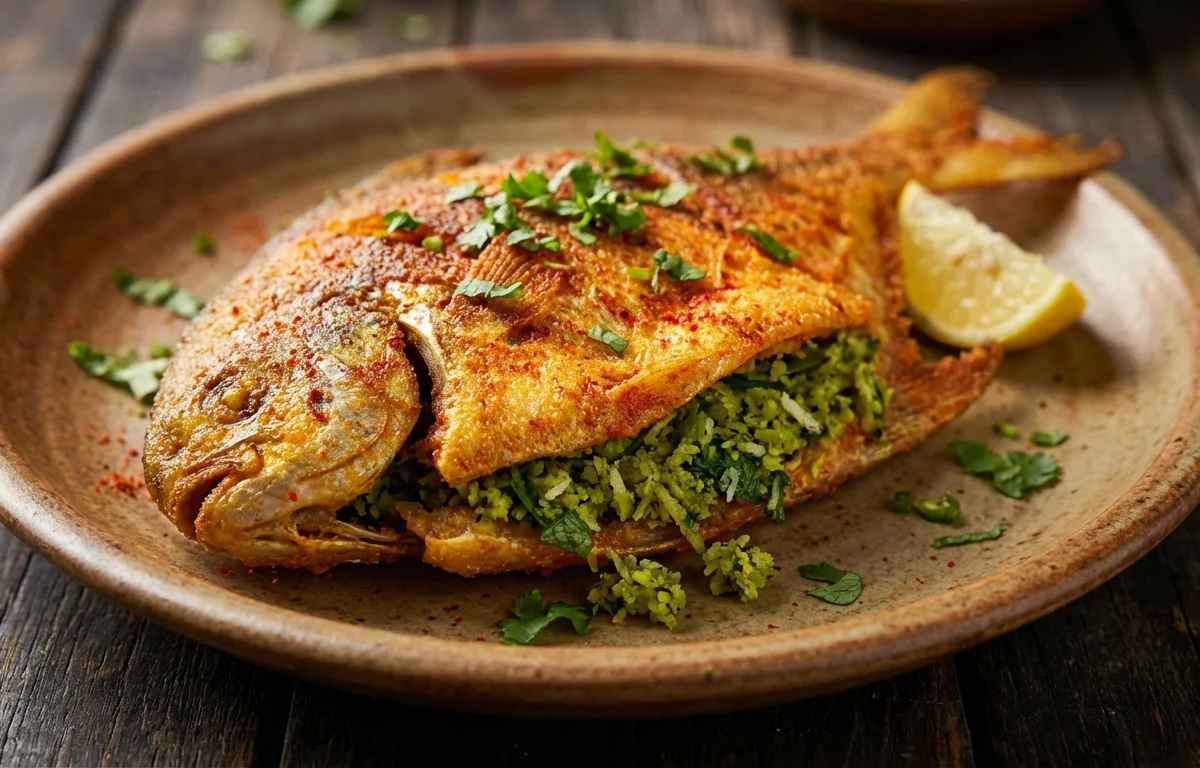
Whole pomfret fish stuffed with a vibrant, tangy-spiced coconut and coriander masala, then pan-fried until the skin turns beautifully crisp and golden. This iconic Maharashtrian coastal delicacy brings together fresh seafood flavors with the warmth of traditional Goda masala, best enjoyed with steamed rice and a squeeze of lime.
For 4 servings
- prep
Prepare the pomfret.
Clean the pomfret fish thoroughly and pat dry. Make deep slits along the length of each fish on both sides, ensuring you don't cut through the bone. Set aside.
TIPAsk your fishmonger to slit the pomfret for stuffing if you prefer not to do it yourself. - mix · ~5 min
Make the coconut masala stuffing.
1.In a mixing bowl, combine the grated coconut, chopped coriander leaves, chopped green chilies, ginger, and garlic.2.Add tamarind paste, turmeric powder, red chili powder, goda masala, and salt.3.Mix everything together thoroughly with your hands mashing slightly to release flavors.TIPSqueeze the mixture gently with your fingers as you mix; this helps release the oils from the coconut and herbs. - prep · ~5 min
Stuff the fish.
1.Divide the coconut masala into four equal portions.2.Stuff each pomfret generously into the slits and the belly cavity, pressing gently to fill completely.3.Sprinkle rice flour evenly over both sides of each stuffed fish. This helps create a crispy crust.TIPDon't overstuff; the filling will expand slightly while cooking. Seal the edges gently. - fry · ~12 min
Pan-fry the stuffed pomfret.
1.Heat 2 tablespoons of oil in a large non-stick pan over medium heat.2.Carefully place two stuffed pomfret in the pan and cook for 6 to 7 minutes until the underside is golden brown and crisp.3.Gently flip the fish using a spatula and cook for another 5 to 6 minutes until fully cooked through.TIPResist the urge to move the fish too much; letting it sit undisturbed develops a flawless golden crust. - fry · ~12 min
Fry the remaining fish.
1.Transfer the cooked fish to a serving plate.2.Add the remaining 2 tablespoons of oil to the pan and repeat the frying process for the other two stuffed pomfret. - serve
Serve hot with lemon wedges.
Arrange the Bharli Paplet on a platter and serve immediately with fresh lemon wedges on the side. Pair with steamed rice and a simple salad.
TIPA squeeze of fresh lemon juice right before eating brightens up all the rich coastal flavors.
What to keep in mind.
6 tips from the recipe — small details that make a real difference to the final dish.
- 1Use fresh, not frozen, pomfret for the best texture and sweet flavor.
- 2Pat the fish extremely dry before stuffing to ensure the skin crisps up.
- 3Don't skip the rice flour coating; it's the secret to the crunchy golden crust.
- 4Cook the fish over medium heat—too high and the masala will burn before the fish cooks through.
- 5Let the fish rest for a minute after frying before serving to let the juices redistribute.
- 6Make the stuffing a few hours ahead and refrigerate to deepen the flavors.
Adapt it for your goals.
Pan-seared fillet version
Substitute whole pomfret with thick fillets of kingfish or seabass; slit the fillets lightly and spread the masala on top before pan-frying for a quicker, boneless meal.
Baked versionBaked version
Place the stuffed fish on a parchment-lined baking sheet, brush with oil, and bake at 200°C for 18-20 minutes for a hands-off, less oily preparation.
Low oil variationLow-oil variation
Use a well-seasoned cast-iron pan and reduce oil to just 1 tablespoon per batch; the rice flour will still crisp up nicely.
Why this is on our healthy list.
Rich in Omega-3s
Pomfret is a natural source of omega-3 fatty acids, which support heart and brain health.
Good Source of Dietary Fiber
Freshly grated coconut provides fiber that aids digestion and promotes gut health.
Packed with Antioxidants
Turmeric and coriander leaves supply anti-inflammatory compounds that help protect cells.
Low in Saturated Fat
When pan-fried with minimal oil, this dish uses mostly unsaturated fats from coconut and cooking oil.
Frequently asked questions
Yes, try small whole mackerel, butterfish, or tilapia with similar cooking times; adjust slits to fit the fish's thickness.

.webp)