Boothai Pulimunchi
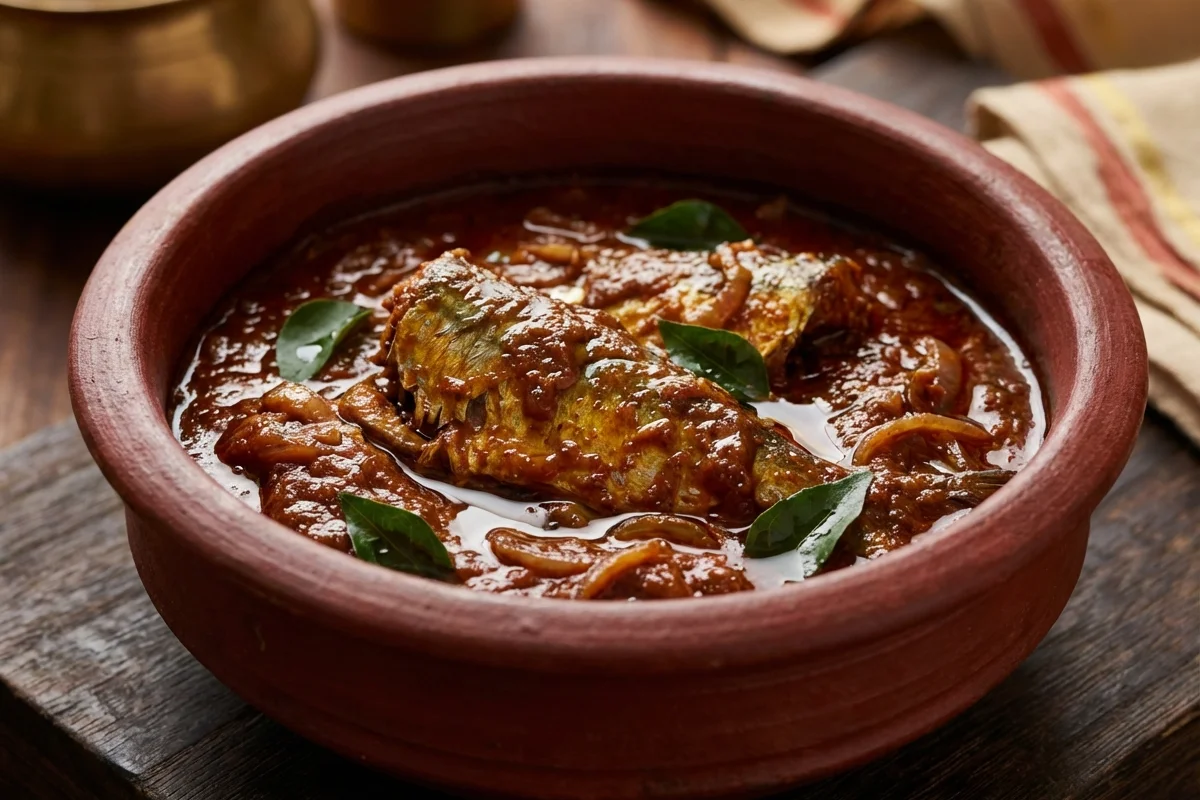
A fiery coastal fish curry from the Mangalorean belt, made with boothai fish simmered in a sharp red chili and tamarind masala. It is bold, tangy, and beautifully balanced with garlic and a light coconut oil finish.
For 4 servings
- prep · ~15 min
Soak the chilies and tamarind.
Soak the dried red chilies and tamarind separately in a little warm water for 15 minutes to soften them for grinding.
TIPUse byadgi chilies for deep color and balanced heat. - mix · ~4 min
Grind the pulimunchi masala.
1.Add soaked dried red chilies to a grinder jar.2.Add tamarind, garlic, cumin seeds, turmeric powder, and salt.3.Pour in a little soaking water as needed.4.Grind to a very smooth, thick red paste. - assemble · ~2 min
Combine the fish and masala.
Place the boothai fish pieces in a wide pan. Add the ground masala and 2 cups water, then swirl the pan gently to coat the fish without breaking the pieces.
- simmer · ~10 min
Cook the curry gently.
1.Set the pan over medium heat and bring the curry to a gentle simmer.2.Lower the heat and cook 8 to 10 minutes until the fish is just cooked through.3.Shake the pan once or twice instead of stirring with a spoon.4.Taste and adjust with a little more water if the gravy is too thick.TIPDo not stir vigorously after adding fish or the pieces may break apart. - garnish · ~2 min
Finish with coconut oil.
Drizzle the coconut oil over the hot curry and let it sit for 2 minutes so the flavors settle.
- serve
Serve the Boothai Pulimunchi hot.
What to keep in mind.
7 tips from the recipe — small details that make a real difference to the final dish.
- 1Grind the chili-tamarind masala very smooth so the gravy tastes sharp but not gritty.
- 2Use a wide, shallow pan so the fish cooks in one layer and the pieces stay intact.
- 3Shake the pan gently instead of stirring once the fish goes in; boothai breaks easily.
- 4Stop cooking as soon as the fish turns opaque and flakes lightly, or it will toughen.
- 5Let the finished curry rest for a few minutes after the coconut oil drizzle; the tang and heat settle noticeably.
- 6This curry often tastes even better after 30 minutes, once the fish absorbs the pulimunchi masala.
- 7If the tamarind is especially sour, add a splash more water before simmering to keep the balance.
Adapt it for your goals.
Extra-tangy
Increase the tamarind slightly for a sharper, more assertive pulimunchi if you like a distinctly sour coastal style.
milder heatMilder-heat
Use fewer dried chilies or blend hot chilies with more byadgi chilies for color with gentler spice.
sardine versionSardine-version
Make the same masala with small sardines or similar oily fish for a richer, more traditional seaside flavour.
thicker gravyThicker-gravy
Reduce the water a little for a more intense, clingy curry that pairs especially well with hot rice.
Why this is on our healthy list.
Fish-Based Protein
Boothai fish provides quality protein that makes this curry filling while keeping the ingredient list simple.
Garlic and Spice Rich
Garlic, red chilies, cumin, and turmeric add strong flavour along with plant compounds from whole spices and aromatics.
Light on Added Fat
The recipe uses only a small finishing drizzle of coconut oil, so most of the body comes from the masala rather than heavy frying.
Frequently asked questions
Yes. Use firm, flavorful fish like sardines, mackerel, or similar small coastal fish that can handle a tangy masala.