Brinjal Gosthu
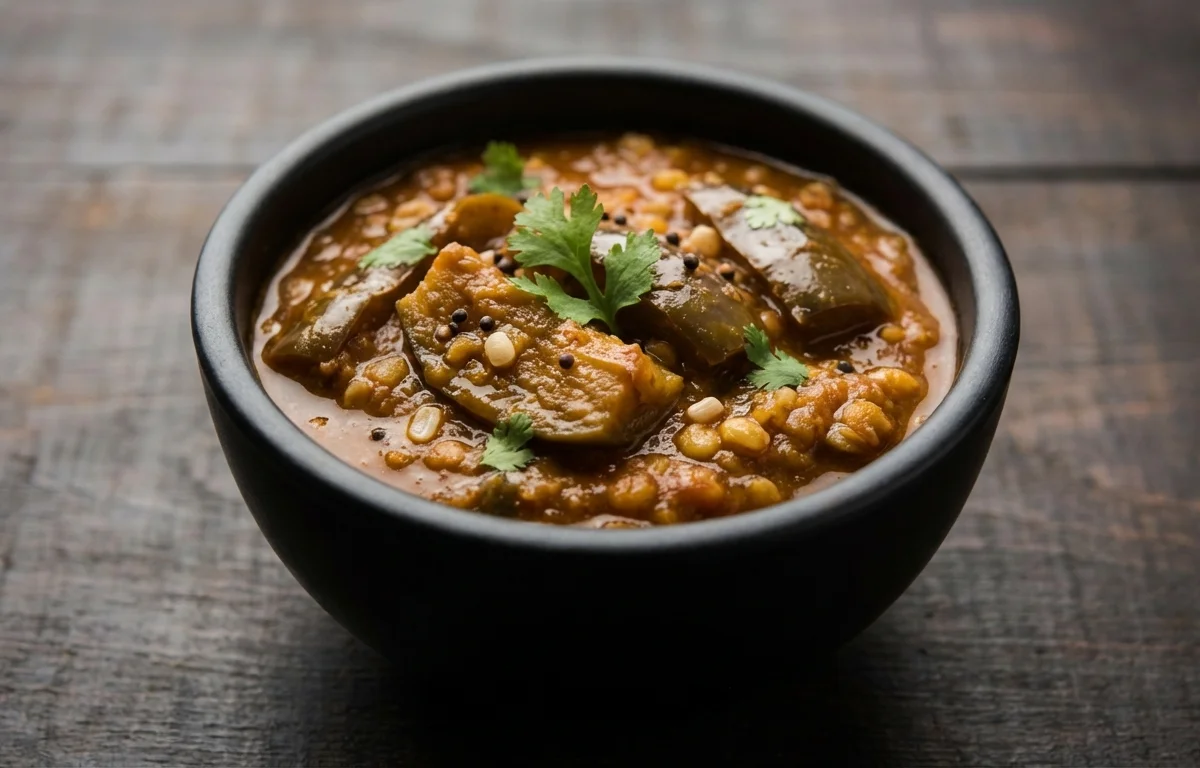
A tangy South Indian brinjal gravy made with soft cooked eggplant, tamarind, and a simple spice tempering. It is comforting, lightly spiced, and especially good with idli, dosa, pongal, or plain rice.
For 4 servings
- prep · ~10 min
Soak the tamarind and prep the brinjal.
1.Soak tamarind in a little warm water for 10 minutes.2.Wash the brinjal and quarter it into medium pieces.3.Chop the onion, tomatoes, green chilies, and ginger. - temper · ~2 min
Make the tempering.
1.Heat oil in a kadai over medium heat.2.Add mustard seeds and let them splutter.3.Add urad dal and cook until lightly golden.4.Add curry leaves and asafoetida for a few seconds.TIPKeep the heat medium so the urad dal turns golden without burning. - saute · ~9 min
Cook the onion, ginger, and tomatoes.
1.Add onion, green chilies, and ginger to the pan.2.Cook until the onion turns soft and lightly translucent, about 4 minutes.3.Add tomatoes and cook until they break down and turn pulpy.4.Stir in turmeric powder and sambar powder. - boil · ~7 min
Cook the brinjal in the gravy.
1.Squeeze the soaked tamarind and extract the pulp into the pan.2.Add water, salt, and jaggery, then mix well.3.Add the brinjal pieces and bring the mixture to a boil.4.Reduce the heat once it starts bubbling. - simmer · ~15 min
Simmer until the brinjal is soft.
Cover loosely and simmer until the brinjal turns very soft and the gravy slightly thickens, about 12 to 15 minutes. Gently mash a few pieces into the gravy for the classic gosthu texture.
TIPDo not stir too much early on or the brinjal can break before it cooks through. - garnish
Finish with coriander leaves.
- serve
Serve hot with idli, dosa, pongal, or rice.
What to keep in mind.
7 tips from the recipe — small details that make a real difference to the final dish.
- 1Keep the quartered brinjals in water after cutting so they do not darken before cooking.
- 2Let the mustard fully splutter before adding urad dal, or the tempering can taste raw.
- 3Cook the tomatoes until completely pulpy; this removes any sharpness in the final gravy.
- 4Simmer the brinjal gently and stir only occasionally so the pieces soften without collapsing too soon.
- 5Mash only a few cooked brinjal pieces at the end to get the classic gosthu body while keeping some chunks.
- 6If the tamarind is very strong, start with a little less extract and adjust after the brinjal cooks.
- 7Gosthu tastes even better after resting 15 to 20 minutes, when the tamarind and sambar powder settle into the gravy.
Adapt it for your goals.
No-onion
Skip onion for a simpler temple-style version; increase tomato slightly for body and keep the same tangy-spiced profile.
jainJain
Omit onion and ginger, and rely on tomato, tamarind, curry leaves, and asafoetida for a clean, light gravy.
spicierSpicier
Add one extra green chili or a little more sambar powder if you want the gosthu to pair boldly with plain pongal or rice.
mixed vegetableMixed-vegetable
Add a small amount of drumstick or yellow pumpkin with the brinjal for extra texture and a more sambar-like homestyle variation.
Why this is on our healthy list.
Vegetable-Forward Dish
Brinjal, onion, tomato, ginger, and curry leaves make this a wholesome gravy built mostly from vegetables and aromatics.
Naturally Vegan
The recipe uses plant-based ingredients throughout, making it suitable for those looking for a dairy-free South Indian side.
Light Yet Satisfying
With a modest amount of oil and a water-based gravy, this dish feels comforting without being heavy.
Frequently asked questions
The pieces should turn very soft and yield easily to a spoon, but a few should still hold shape before you mash some into the gravy.