Chamadumpa Fry
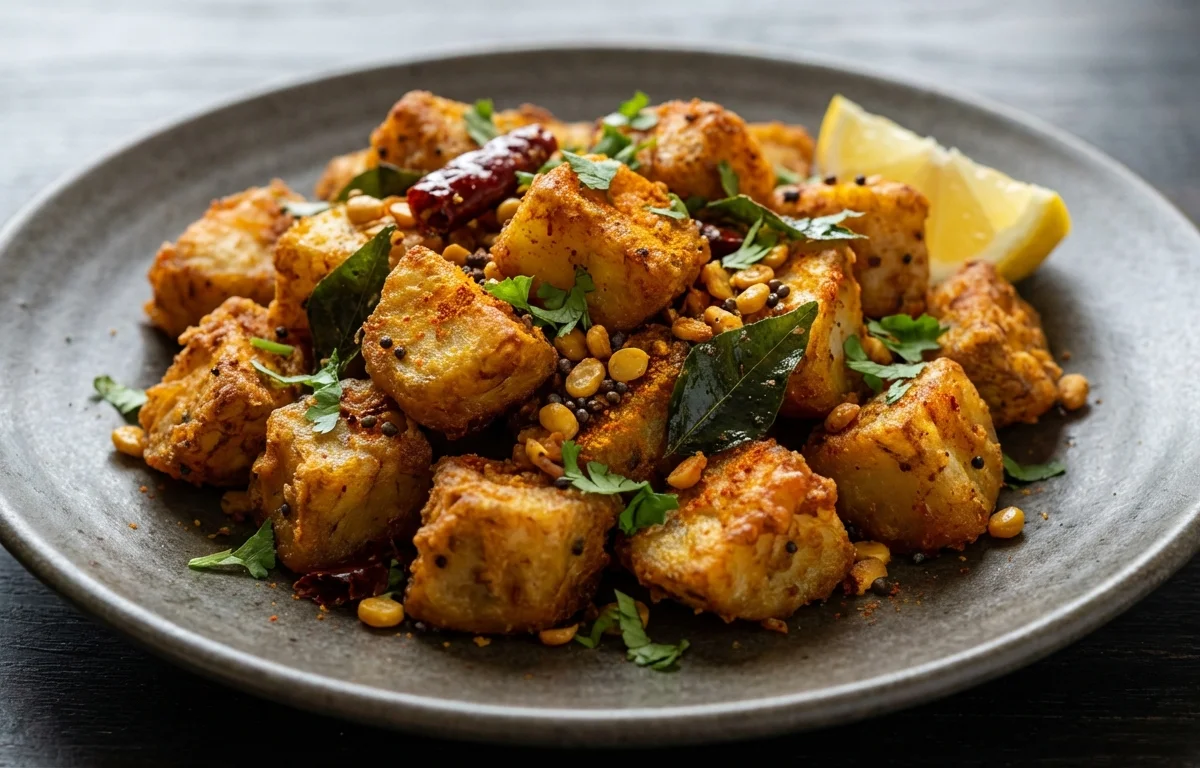
Crispy, golden pan-fried taro root with a spicy, tangy seasoning that clings to every piece. This Andhra-style stir-fry transforms humble arbi into an addictive snack or side dish that pairs perfectly with steamed rice and dal.
For 4 servings
- pressure cook · ~10 min
Pressure cook the taro root.
Wash the taro root thoroughly. Place in a pressure cooker with enough water to cover. Cook for 2-3 whistles or until just tender. Do not overcook; they should hold their shape. Let the pressure release naturally, then drain and cool.
TIPSlightly undercook the taro so it doesn't turn mushy while frying. - prep · ~5 min
Peel and slice the taro.
Once cool enough to handle, peel the taro roots. Slice them into 1/4-inch thick rounds. Pat them completely dry with a kitchen towel to remove excess moisture; this is key to getting them crispy.
- fry · ~10 min
Pan-fry the taro slices until golden and crisp.
Heat 2 tablespoons of oil in a heavy-bottomed pan over medium heat. Arrange the taro slices in a single layer. Fry for 3-4 minutes on each side until golden brown and crisp. Remove and set aside on a paper towel.
TIPDon't crowd the pan; fry in batches if needed for maximum crispiness. - temper · ~5 min
Make the tempering.
1.Heat the remaining 1 tablespoon oil in the same pan over medium heat.2.Add mustard seeds and let them splutter for 30 seconds.3.Add cumin seeds, dried red chili pieces, and curry leaves. Sauté for 30 seconds until fragrant.4.Add the slit green chilies and finely chopped onion. Cook until the onion turns translucent. - saute · ~2 min
Bloom the spice powders.
1.Add the ginger-garlic paste to the pan and sauté for 1 minute until the raw smell disappears.2.Lower the heat, then add turmeric powder, red chili powder, and coriander powder.3.Stir continuously for 20-30 seconds to toast the spices without burning them.TIPKeep the heat low when adding dry spice powders to prevent them from turning bitter. - mix · ~2 min
Toss the fried taro in the spiced mixture.
Add the fried taro slices to the pan along with salt and dry mango powder. Gently toss everything together so the taro is evenly coated with the spice mixture. Cook for 2 more minutes, stirring gently, until the taro is well-incorporated and warm.
- garnish
Garnish with fresh coriander leaves and serve hot.
Transfer to a serving bowl, sprinkle with chopped coriander leaves, and serve immediately with steamed rice and dal.
What to keep in mind.
6 tips from the recipe — small details that make a real difference to the final dish.
- 1Do not overcook the taro in the pressure cooker—2 to 3 whistles is enough; they should be just tender, not mushy.
- 2After peeling and slicing, pat the taro rounds completely dry with a kitchen towel to ensure they turn golden and crisp while frying.
- 3Fry the taro in a single layer without crowding the pan—work in batches if needed for even browning on every slice.
- 4When blooming the spice powders in step 5, keep the heat low and stir continuously for just 20–30 seconds to avoid bitterness.
- 5Add the dry mango powder (amchur) only at the end to preserve its bright tangy flavor without cooking it off.
- 6Serve the chamadumpa fry immediately while it's still hot and crispy—it softens quickly as it cools.
Adapt it for your goals.
Low-oil air-fry version
Skip pan-frying: lightly brush or spray the boiled taro slices with oil, air-fry at 200°C for 12-15 minutes (flip halfway), then toss with the tempering. Reduces oil significantly while still getting a crisp texture.
veganVegan
This recipe is already vegan (no dairy or animal products). Confirm oil is plant-based and serve as-is.
no onion no garlic (sattvic)No-onion no-garlic (sattvic)
Omit the onion and ginger-garlic paste. Increase the curry leaves and add a pinch of asafoetida (hing) with the cumin seeds to maintain depth without alliums.
extra crunchy coatingExtra-crunchy coating
Toss the sliced taro with a tablespoon of rice flour before frying—this adds a thin, delicate extra-crackle layer to the exterior.
Why this is on our healthy list.
Natural source of complex carbs
Taro root provides slow-digesting carbohydrates and dietary fiber, which help sustain energy and support digestive health.
Rich in potassium
Taro offers a good amount of potassium, a mineral that helps maintain fluid balance and healthy blood pressure levels.
Contains resistant starch
When taro is cooked and then cooled (as after pressure-cooking and before frying), it forms resistant starch, which acts as a prebiotic and supports gut health.
Curry leaves for antioxidants
Fresh curry leaves are packed with antioxidants and plant compounds that may aid digestion and support healthy hair and skin.
Frequently asked questions
Yes. Pressure-cook and slice the taro as directed, then air-fry the slices at 200°C (400°F) for 12-15 minutes, flipping halfway. Toss with the prepared tempering at the end.



.webp)