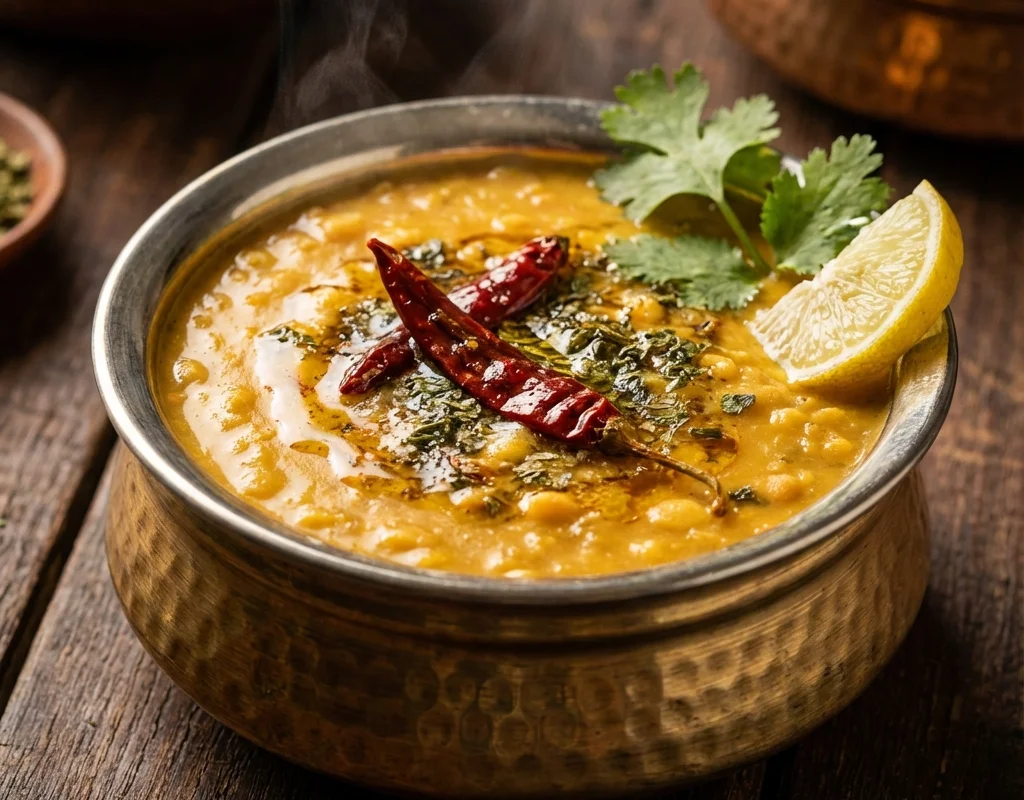
Chana Dal Fry
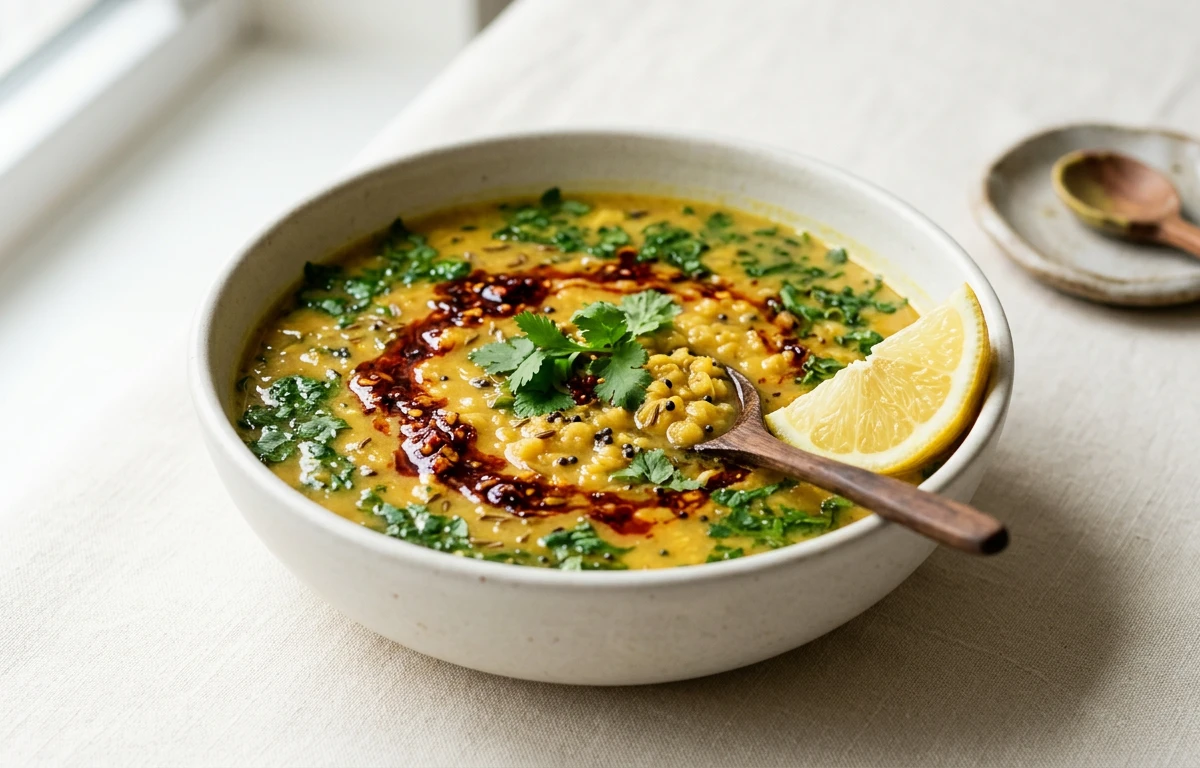
A homestyle yellow lentil dish with soft yet slightly textured chana dal, cooked with onion, tomato, ginger, garlic, and a simple tempering. It is hearty, comforting, and fits beautifully with roti or rice.
For 4 servings
- prep · ~30 min
Wash and soak the chana dal.
Rinse the chana dal well until the water runs clearer. Soak it in fresh water for 30 minutes, then drain.
TIPSoaking helps the dal cook faster and keeps the grains tender without turning mushy. - pressure cook · ~20 min
Pressure cook the dal.
1.Add soaked chana dal, 3 cups water, turmeric powder, and salt to a pressure cooker.2.Close the cooker and cook on medium heat for 4 to 5 whistles.3.Let the pressure release naturally.4.Open and check that the dal is cooked through but still holds its shape lightly. - saute · ~7 min
Cook the onion and spices.
1.Heat oil in a pan over medium heat.2.Add 1 tsp cumin seeds and let them sizzle for a few seconds.3.Add onion and cook until light golden, 5 to 6 minutes.4.Add ginger, garlic, and green chili and cook for 1 minute until fragrant.TIPKeep the heat medium so the garlic cooks sweet and fragrant instead of browning too fast. - saute · ~6 min
Make the masala base.
1.Add tomato and cook until soft and pulpy, 4 to 5 minutes.2.Add red chili powder, coriander powder, and garam masala.3.Mix well and cook for 1 minute so the spices bloom in the oil. - simmer · ~8 min
Combine the dal and simmer.
1.Add the cooked chana dal to the pan.2.Pour in 1 cup water to adjust the consistency.3.Mix well and gently mash a small portion of the dal with the back of a spoon.4.Simmer for 6 to 8 minutes until the flavors come together.TIPMash only a little dal so the fry stays creamy while still keeping the classic chunky texture. - temper · ~1 min
Make the final tempering.
1.Heat ghee in a small pan.2.Add 0.5 tsp cumin seeds and dried red chili.3.Cook for a few seconds until fragrant.4.Pour the hot tempering over the simmering dal. - garnish
Finish with cilantro and lemon juice.
- serve
Serve the chana dal fry hot.
What to keep in mind.
7 tips from the recipe — small details that make a real difference to the final dish.
- 1Soak the chana dal for the full 30 minutes so the grains cook evenly and stay pleasantly textured, not hard at the center.
- 2After pressure cooking, the dal should press easily between your fingers but still look separate; overcooked dal will lose the signature chunky bite.
- 3Cook the onion only to light golden, not deep brown, so the fry tastes mellow and lets the dal remain the star.
- 4Let the tomatoes turn fully soft and pulpy before adding the cooked dal; this prevents a raw, sharp tomato taste in the final dish.
- 5Mash just 2 to 3 spoonfuls of dal during simmering to thicken the gravy naturally without turning it into a smooth puree.
- 6Pour the final ghee tempering over the dal right before serving so the cumin and red chili aroma stays bright and noticeable.
- 7If reheating leftovers, add a splash of hot water first because chana dal thickens considerably as it sits.
Adapt it for your goals.
Vegan
Skip the final ghee and use oil for the tempering. You keep the same texture and spice profile while making the dish fully plant-based.
jainJain
Omit onion and garlic, then increase ginger, tomato, and cumin slightly for a cleaner but still comforting dal fry.
no onion no garlicNo-onion-no-garlic
Leave out onion and garlic for a sattvic-style version; cook the tomato masala a bit longer for depth.
spicierSpicier
Add an extra green chili or a little more red chili powder if you want the dal to pair especially well with plain rice.
Why this is on our healthy list.
Rich in Plant Protein
Chana dal provides plant-based protein, making this a satisfying everyday dish, especially when served with rice or roti.
Good Source of Fiber
Split chickpeas contribute fiber that helps make the meal filling and supports steady digestion.
Contains Beneficial Spices
Turmeric, cumin, ginger, and garlic add more than flavor and are commonly used in home cooking for their nourishing qualities.
Frequently asked questions
Yes. Simmer the soaked dal in a covered pot until tender but not mushy; it will take longer than pressure cooking and may need extra water.