Chana Dal Tadka
A comforting, everyday North Indian lentil dish made with protein-rich split Bengal gram, cooked until soft and creamy, then finished with a sizzling tempering of cumin, garlic, and red chilies in ghee. Simple, earthy, and deeply flavorful — a soulful staple that pairs perfectly with steamed rice or roti.
For 4 servings
- prep
Wash and soak the chana dal.
1.Wash 1 cup chana dal under cold water until the water runs clear.2.Drain and soak the dal in fresh water for 30 minutes. Drain before cooking.TIPSoaking helps the dal cook evenly and reduces cooking time. - pressure cook · ~10 min
Pressure cook the dal until soft.
1.Transfer the soaked and drained chana dal to a pressure cooker.2.Add 3 cups of water, turmeric powder, and salt.3.Close the lid and cook on medium heat. After the first whistle, reduce heat to low and cook for 8-10 minutes.4.Let the pressure release naturally. Open the lid and mash the dal lightly with a ladle.TIPChana dal should be completely soft but still hold its shape somewhat. Over-mashing can make it gluey. - temper · ~3 min
Make the tempering.
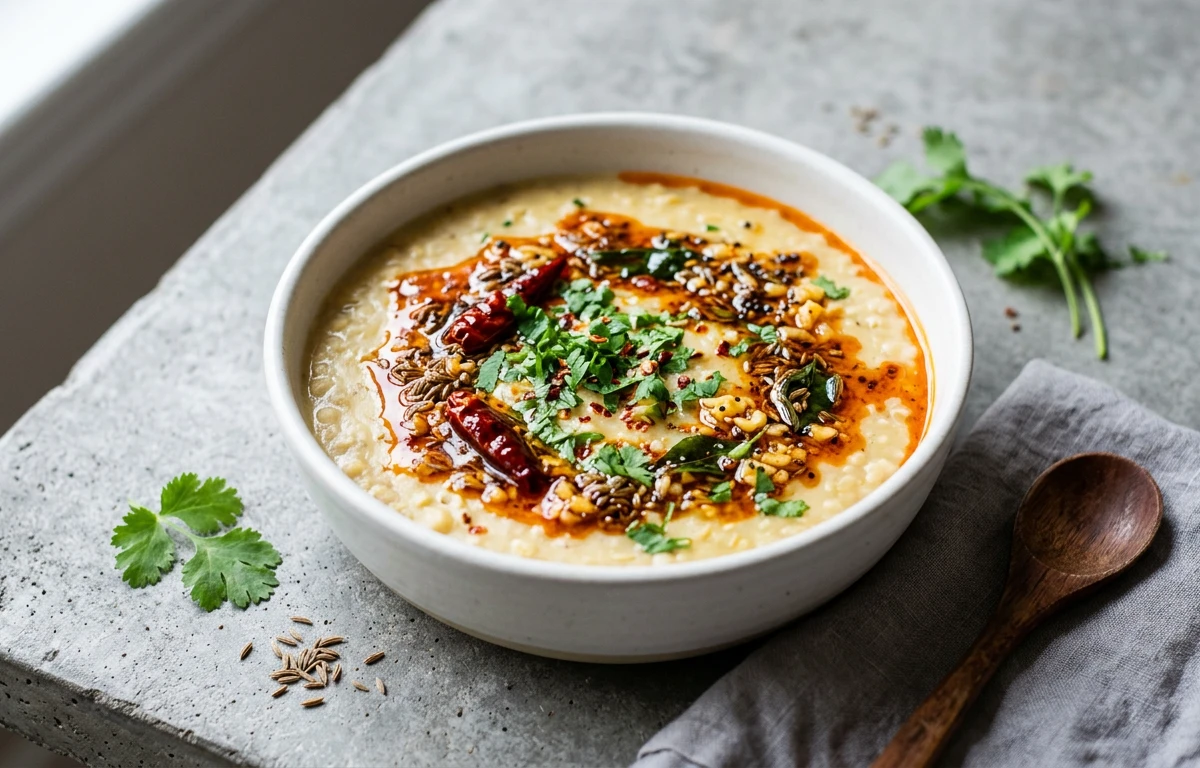
1.In a small tadka pan, heat 2 tablespoons of ghee over medium heat until it shimmers.2.Add cumin seeds and let them sizzle and crackle for about 30 seconds.3.Add sliced garlic and sauté until it turns light golden brown.4.Add broken dried red chilies and red chili powder. Sauté for 10 seconds just until fragrant.5.Quickly add the chopped tomato and cook until they soften completely, about 2 minutes.TIPBe careful not to burn the garlic or chili powder — a bitter tempering ruins the dal. Keep the heat at medium. - mix · ~4 min
Pour the tempering over the dal and simmer.
Immediately pour the sizzling tempering over the cooked dal in the pressure cooker. Stir well, bring to a gentle simmer on low heat for 3-4 minutes so the flavors meld together.
- garnish
Garnish with coriander and serve hot.
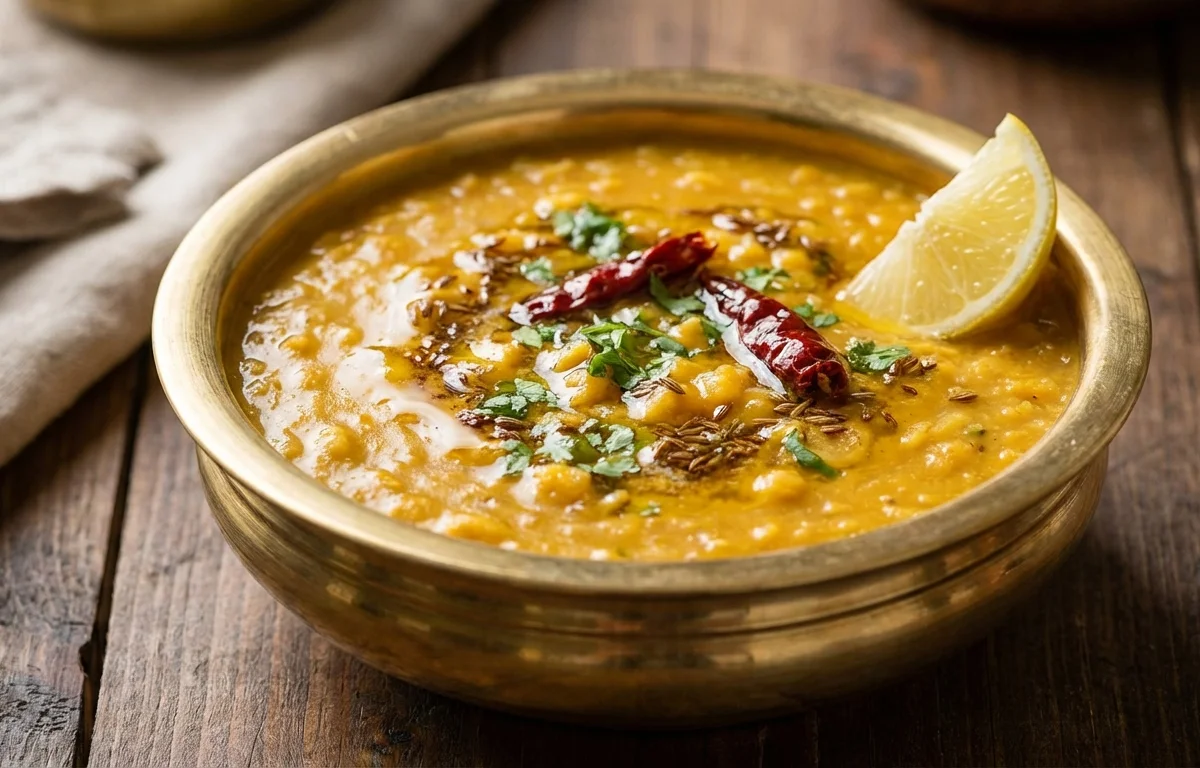
Transfer the Chana Dal Tadka to a serving bowl, sprinkle generously with fresh chopped coriander leaves, and serve hot.
What to keep in mind.
7 tips from the recipe — small details that make a real difference to the final dish.
- 1Soak the chana dal for at least 30 minutes to ensure even cooking and a creamy texture.
- 2After pressure cooking, mash the dal lightly with a ladle — it should be soft but not completely smooth.
- 3Watch the garlic closely while tempering; golden brown is perfect, burnt garlic will make the dish bitter.
- 4Add the red chili powder off the heat or after removing the pan from the flame to prevent it from scorching.
- 5Let the tempered dal simmer for 3–4 minutes so the ghee and spices infuse every spoonful.
- 6Chana dal thickens as it cools, so keep it slightly thinner when you finish cooking.
- 7For deeper flavor, use homemade ghee or a good-quality store-bought brand.
Adapt it for your goals.
Low-oil
Replace ghee with 1 tablespoon of oil for the tempering. The flavor will be lighter, but you still get the aromatic spices. Ideal for those reducing saturated fats.
high proteinHigh-protein
Stir in 1/2 cup of cooked, shredded chicken or paneer cubes along with the tempering. Adds protein without overpowering the dal's earthy flavor.
veganVegan
Substitute ghee with coconut oil or a neutral vegetable oil. Coconut oil adds a subtle sweetness that complements the cumin and garlic.
jainJain
Skip the garlic and onion-family ingredients entirely. Instead, add a pinch of asafoetida (hing) to the tempering for a similar savory depth. Also omit the tomato if preferred.
spicySpicy
Add 1-2 fresh green chilies (slit) to the tempering along with the garlic, or stir in 1/2 teaspoon of extra red chili powder. Great for heat lovers.
Why this is on our healthy list.
High in Plant Protein
Chana dal (split Bengal gram) is a rich source of plant-based protein, supporting muscle repair and satiety.
Rich in Dietary Fiber
The lentils provide soluble and insoluble fiber, which aids digestion and helps maintain steady blood sugar levels.
Good Source of Iron
Chana dal contains iron, essential for oxygen transport in the blood; pairing with vitamin C from the tomato enhances absorption.
Anti-Inflammatory Spices
Turmeric and cumin in this dish have natural anti-inflammatory properties, supporting joint and immune health.
Frequently asked questions
Yes, cook the soaked dal in a pot with 4 cups of water over medium heat. Simmer for 30-40 minutes, stirring occasionally, until soft. Add more water if needed.



.webp)