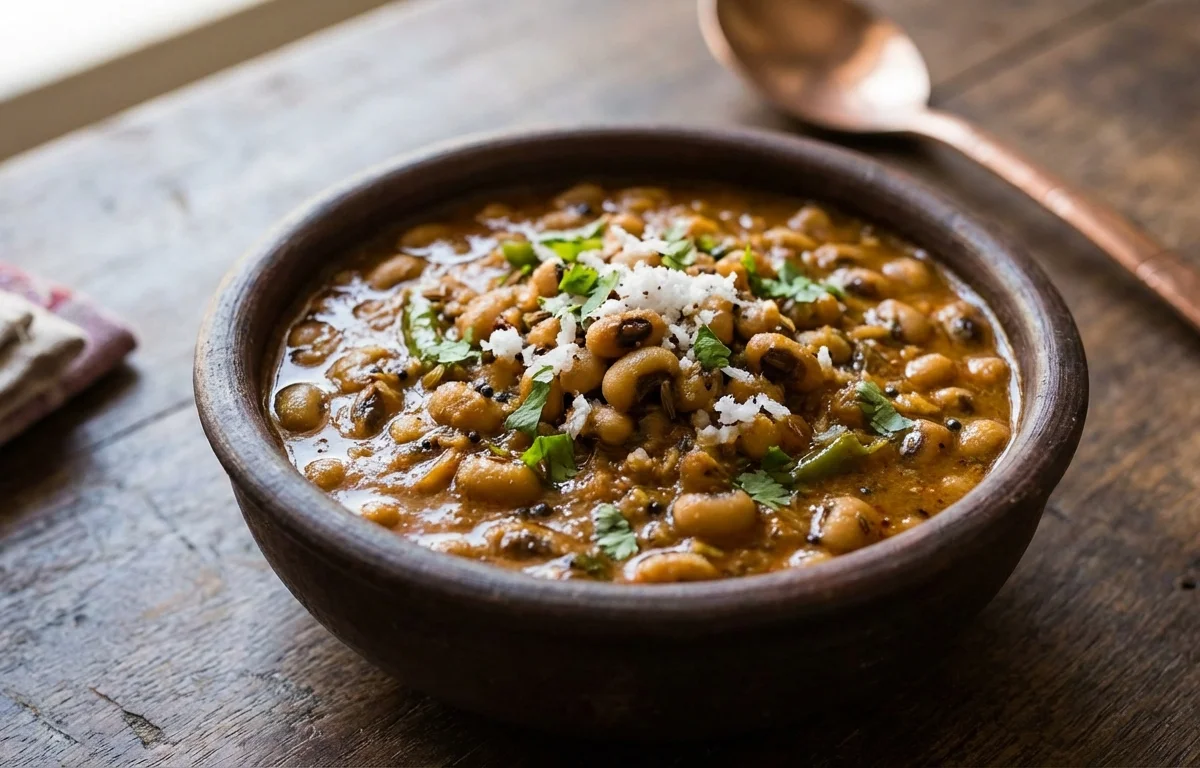
Chawlichi Usal
A comforting Maharashtrian usal made with black-eyed peas simmered in a lightly spiced onion-coconut masala. It is hearty, homey, and perfect with bhakri, chapati, or a simple bowl of rice.
For 4 servings
- prep · ~480 min
Soak the black-eyed peas.
Wash the black-eyed peas well and soak them in enough water overnight or for 8 hours. Drain before cooking.
TIPA full soak helps the peas cook evenly and hold their shape in the usal. - pressure cook · ~20 min
Pressure cook the black-eyed peas.
Add the soaked black-eyed peas and 3 cups water to a pressure cooker. Cook until tender but not mushy, about 4 to 5 whistles. Let the pressure drop naturally.
- saute · ~10 min
Cook the coconut masala base.
1.Heat 1 tsp oil in a pan over medium heat.2.Add the grated coconut and cook until lightly fragrant and just starting to turn pale golden, about 2 minutes.3.Add half of the chopped onion and sauté until soft, about 3 minutes.4.Add the tomato and cook until softened, about 3 to 4 minutes.5.Cool slightly, then grind to a smooth paste with a splash of the cooked pea water.TIPDo not brown the coconut deeply or the masala will taste bitter. - temper · ~2 min
Make the tempering.
1.Heat the remaining oil in a pan over medium heat.2.Add mustard seeds and let them splutter.3.Add cumin seeds, asafoetida, curry leaves, and green chili.4.Stir for a few seconds until fragrant. - saute · ~7 min
Cook the onion and aromatics.
1.Add the remaining chopped onion and cook until light golden, about 5 to 6 minutes.2.Add crushed ginger and garlic.3.Sauté until the raw smell disappears, about 1 minute.4.Add turmeric powder, red chili powder, and goda masala.TIPKeep the heat medium so the spices bloom without burning. - simmer · ~10 min
Simmer the usal.
1.Add the ground coconut masala and cook for 2 minutes.2.Add the cooked black-eyed peas along with 1 to 1.5 cups of their cooking liquid.3.Add salt and jaggery, then mix well.4.Bring to a gentle simmer and cook until the flavors come together and the usal thickens slightly, about 8 to 10 minutes. - garnish · ~1 min
Finish with lemon juice and cilantro.
Turn off the heat and stir in the lemon juice. Sprinkle cilantro on top.
- serve · ~1 min
Serve the chawlichi usal hot.
Serve hot with chapati, bhakri, or steamed rice.
What to keep in mind.
7 tips from the recipe — small details that make a real difference to the final dish.
- 1Soak the black-eyed peas fully overnight so they cook evenly and stay intact after simmering in the masala.
- 2Let the pressure release naturally; quick release can split the peas and make the usal look rough.
- 3Toast the coconut only until pale golden and fragrant, not brown, or the masala can turn bitter.
- 4Use some reserved pea cooking liquid while grinding the masala for a silkier, more integrated gravy.
- 5Cook the second batch of onion to light golden before adding spices; that sweetness balances the chili and goda masala.
- 6Add lemon juice only after switching off the heat so the usal keeps its bright finish without turning harsh.
- 7This usal thickens as it rests, so loosen with a splash of hot water before reheating if needed.
Adapt it for your goals.
No-garlic
Skip the garlic for a lighter, satvik-leaning version; increase ginger slightly to keep the aromatics lively.
spicierSpicier
Add an extra green chili or a little more red chili powder if you want the usal hotter with bhakri or rice.
thin rassa styleThin-rassa-style
Use more reserved cooking liquid for a looser, brothier usal that pairs especially well with steamed rice.
dry ishDry-ish
Simmer longer for a thicker usal with less gravy, ideal for serving alongside chapati or as part of a thali.
Why this is on our healthy list.
Good Plant Protein Base
Black-eyed peas make this usal hearty and satisfying while contributing plant-based protein and staying filling.
Fiber-Rich Meal
The black-eyed peas, onion, tomato, and coconut together add fiber that helps make the dish more sustaining.
Aromatic Digestive Spices
Ginger, garlic, cumin, asafoetida, and curry leaves bring flavor while traditionally supporting easier digestion in bean dishes.
Frequently asked questions
Yes. Simmer the soaked black-eyed peas in a pot until tender, then proceed with the masala and final simmer as written.


.webp)