
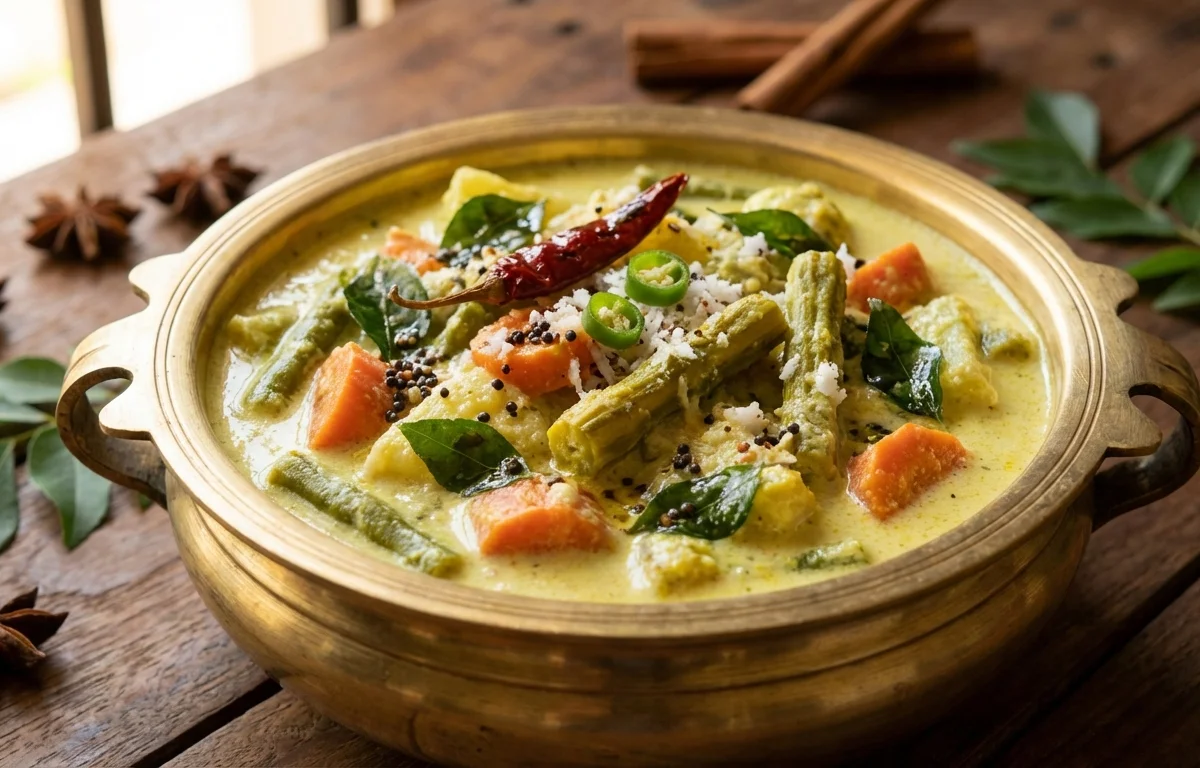
Chettinad Aviyal
A vibrant, coconut-rich mixed vegetable stew from the Chettinad region, known for its bold use of spices and tangy finish. Fresh vegetables are simmered in a ground coconut and green chili paste, then finished with raw coconut oil and curry leaves for an irresistible aroma.
For 4 servings
- prep
Cut all the vegetables into thick, uniform strips.
Peel and cut white pumpkin, carrot, raw banana, and yam into finger-length strips about 1/4 inch thick. Cut drumsticks into 3-inch pieces. Keeping uniform size ensures even cooking.
TIPSoak cut raw banana and yam in water to prevent discoloration. - prep
Grind coconut, green chili, and cumin to a coarse paste.
1.In a grinder, add freshly grated coconut and cumin seeds.2.Add slit green chilies and a splash of water (about 2 tablespoons).3.Grind to a coarse paste—not a fine smooth paste. The texture is key.TIPA coarse paste adds body to the stew. Don't over-grind into a smooth chutney. - boil · ~6 min
Cook the vegetables with turmeric and salt.
1.In a wide pan, add the harder vegetables first: raw banana, yam, and drumstick.2.Add 0.5 cup water, turmeric powder, and salt.3.Cover and cook on medium heat for 5-6 minutes until they start to soften.TIPAdd vegetables in order of their hardness. Softer ones like white pumpkin and carrot cook faster. - simmer · ~5 min
Add softer vegetables and cook until just tender.
1.Add white pumpkin and carrot to the pan.2.Stir gently, cover and cook for another 4-5 minutes until all vegetables are fork-tender.3.There should be a little water remaining in the pan. Do not drain.TIPDon't overcook. The vegetables should retain their shape and not turn mushy. - mix · ~2 min
Fold in the coconut paste and curd.
1.Lower the heat to the minimum.2.Add the ground coconut-green chili paste to the cooked vegetables.3.Gently fold everything together without mashing the vegetables.4.Pour in the whisked curd and stir lightly. Simmer for 1-2 minutes.TIPKeep the heat low after adding curd to prevent curdling. - temper · ~2 min
Make the tempering with coconut oil.
1.In a small tadka pan, heat coconut oil over medium heat.2.Add mustard seeds and let them splutter for 30 seconds.3.Add dried red chilies and curry leaves. Fry until fragrant, about 20 seconds.4.Immediately pour the sizzling tempering over the aviyal.TIPUse only coconut oil for the authentic Chettinad aroma. No substitutes here. - garnish
Drizzle raw coconut oil and serve.
For the final authentic touch, drizzle 1 teaspoon of raw coconut oil on top. Give a gentle mix. Serve hot with steamed rice and a drizzle of ghee.
TIPThat final drizzle of raw coconut oil is a classic Chettinad signature—don't skip it.
What to keep in mind.
6 tips from the recipe — small details that make a real difference to the final dish.
- 1Soak cut raw banana and yam in water immediately to prevent browning.
- 2Grind the coconut paste coarsely — a smooth paste will make the aviyal lose its characteristic body.
- 3Add vegetables in order of hardness: yam and banana first, then softer ones like pumpkin and carrot.
- 4Keep the heat low after adding curd to prevent it from splitting or curdling.
- 5Reserve a little water from cooking the vegetables — it adds natural body to the stew.
- 6Use only virgin coconut oil for tempering and the final drizzle for authentic aroma.
Adapt it for your goals.
Vegan
Replace the curd with thick plant-based yogurt (coconut or soy) to keep the tangy finish while making the dish fully plant-based.
low carbLow-carb
Skip the raw banana and yam, and double the white pumpkin and drumsticks for a lower-carb version that still delivers the same coconut-rich texture.
extra spicyExtra-spicy
Increase green chilies to 5 and add a pinch of red chili powder to the coconut paste for those who crave more heat.
protein boostProtein boost
Add cooked chana dal or fresh paneer cubes along with the softer vegetables for a more filling, protein-rich meal.
Why this is on our healthy list.
Rich in Fiber
Mixed vegetables like yam, drumstick, and raw banana provide a good amount of dietary fiber for healthy digestion.
Packed with Vitamins
Carrots contribute vitamin A, while drumsticks offer vitamin C and iron, supporting immunity and skin health.
Healthy Fats from Coconut
Fresh coconut and raw coconut oil supply medium-chain triglycerides (MCTs), which are a quick source of energy.
Probiotic Benefits
The curd in aviyal adds live cultures that support gut health, especially when served fresh.
Frequently asked questions
Fresh vegetables are strongly recommended for the best texture and flavor. Frozen vegetables release too much water and turn mushy.


