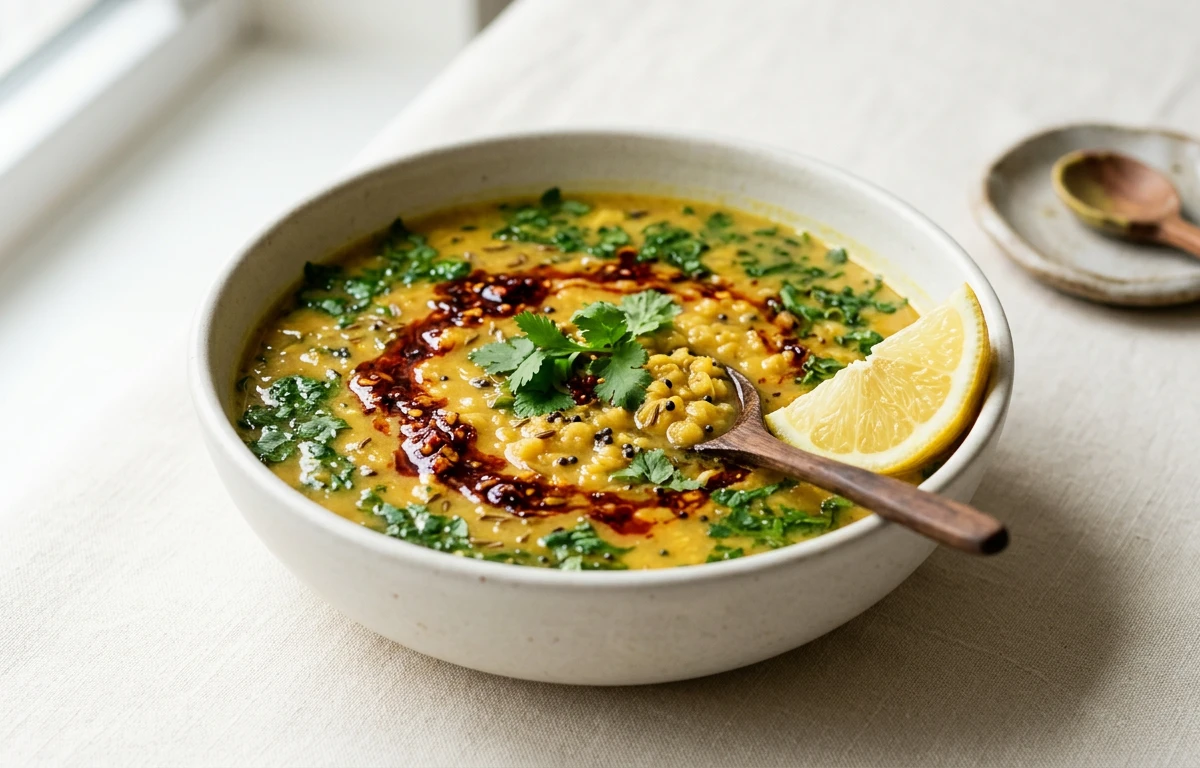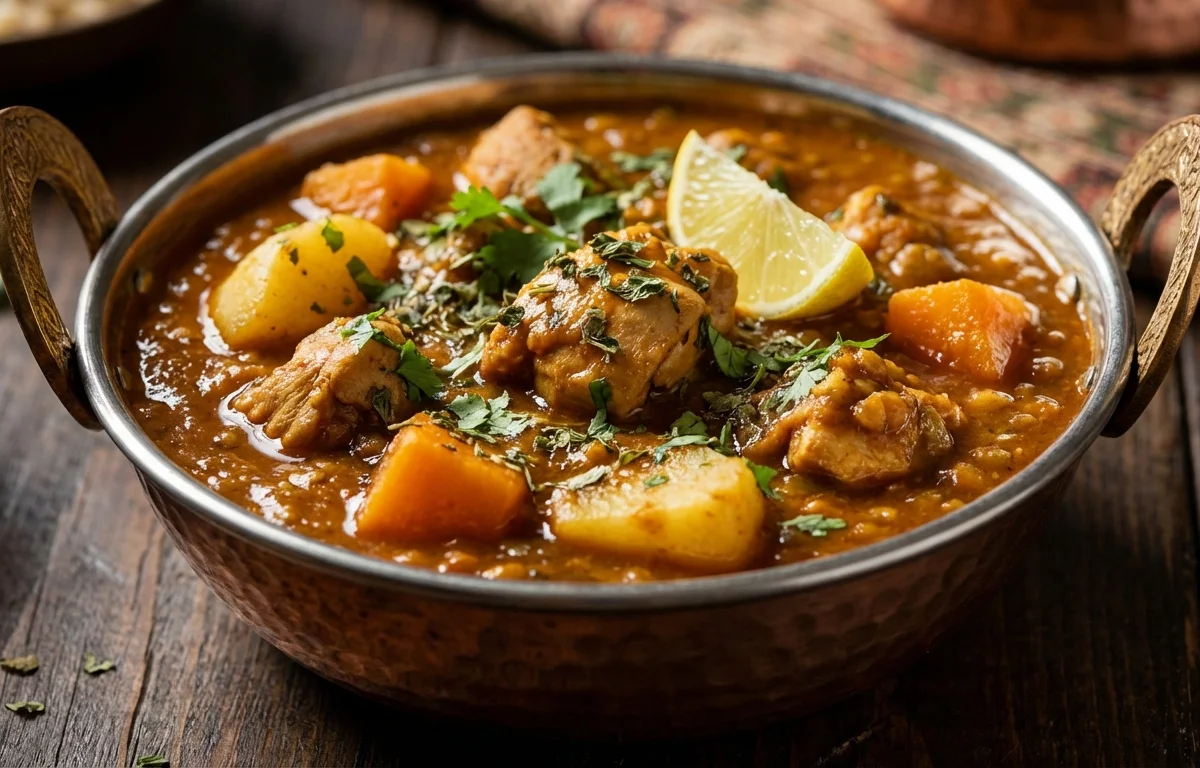
Chicken Dhansak
A comforting Parsi curry that brings together chicken, lentils, vegetables, and warm spices in one pot. It turns rich and gently tangy, with a thick gravy that tastes even better after the flavors settle.
For 4 servings
- prep · ~30 min
Prep the lentils, vegetables, and chicken.
1.Wash and soak the toor dal and masoor dal in water for 30 minutes.2.Cube the pumpkin, eggplant, and potato into small even pieces.3.Slice the onions, chop the tomatoes, ginger, and garlic, and slit the green chilies.4.Clean the chicken pieces and keep them ready.TIPSmall, even vegetable pieces break down faster and give dhansak its thick texture. - pressure cook · ~20 min
Cook the lentils and vegetables.
1.Add soaked lentils, pumpkin, eggplant, potato, 2 cups water, turmeric powder, and 0.25 tsp salt to a pressure cooker.2.Cook on medium heat for 4 whistles until the lentils and vegetables are very soft.3.Let the pressure drop naturally before opening the cooker. - mix · ~3 min
Blend the cooked lentil mixture.
Mash or blend the cooked lentils and vegetables into a thick, smooth puree. Keep it aside for the curry base.
- saute · ~9 min
Cook the whole spices and onions.
1.Heat oil in a heavy pan over medium heat.2.Add cumin seeds, cinnamon, cloves, and bay leaf and cook until fragrant (30 seconds).3.Add sliced onions and cook until golden brown (6-8 minutes).TIPDo not rush the onions; their deep color gives dhansak a fuller, sweeter base. - saute · ~7 min
Build the masala base.
1.Add ginger, garlic, and green chilies and sauté until the raw smell fades (1 minute).2.Add tomatoes and cook until soft and pulpy (4-5 minutes).3.Stir in red chili powder, coriander powder, cumin powder, and the remaining 0.25 tsp salt. - saute · ~8 min
Cook the chicken with the masala.
Add the chicken pieces and stir well so they are coated in the masala. Cook for 6-8 minutes until the chicken changes color and starts releasing its juices.
TIPCook on medium heat so the spices do not scorch before the chicken releases moisture. - simmer · ~18 min
Add the lentil puree and simmer the dhansak.
1.Pour in the lentil and vegetable puree along with the remaining 1 cup water.2.Mix well and bring the curry to a gentle simmer.3.Cover loosely and cook for 15-18 minutes, stirring once or twice, until the chicken is tender. - simmer · ~4 min
Finish with tamarind, jaggery, and garam masala.
Stir in tamarind paste, jaggery, and garam masala. Simmer for 3-4 minutes more until the gravy tastes balanced, rich, and lightly tangy.
- garnish
Garnish with coriander leaves.
- serve
Serve the chicken dhansak hot.
What to keep in mind.
7 tips from the recipe — small details that make a real difference to the final dish.
- 1Mash the cooked dal and vegetables while still hot for the smoothest, thickest dhansak base.
- 2Brown the onions deeply but not bitter; that color gives the curry its signature rich sweetness.
- 3Use bone-in chicken as listed, since the bones add body and deeper flavor to the lentil gravy.
- 4Add tamarind and jaggery only at the end so the chicken and lentils soften properly first.
- 5If the curry thickens too much after simmering, loosen it with a splash of hot water, not cold.
- 6This dish tastes even better the next day after the lentils, chicken, and spices have time to meld.
- 7Stir the pot once or twice during the final simmer so the thick dal base does not catch at the bottom.
Adapt it for your goals.
Mutton
Swap chicken for mutton or goat for a heartier, more traditional-feeling dhansak; increase cooking time until the meat turns fully tender.
bonelessBoneless
Use boneless chicken thighs if you want easier serving, though the gravy will be slightly less rich than with bone-in pieces.
vegetarianVegetarian
Skip the chicken and add extra pumpkin, eggplant, and potato for a comforting dal-and-vegetable dhansak-style curry.
spicierSpicier
Increase green chilies or red chili powder if you prefer a hotter curry without changing the sweet-tangy profile.
Why this is on our healthy list.
Protein-Rich Main Dish
Chicken plus two kinds of lentils make this curry especially satisfying and help turn it into a complete one-pot meal.
Fiber From Lentils and Vegetables
Toor dal, masoor dal, pumpkin, eggplant, tomato, and potato add fiber that makes the dish more filling and hearty.
Contains Diverse Plant Ingredients
The mix of lentils, vegetables, spices, ginger, garlic, and herbs brings a broader range of nutrients and flavors to one pot.
Moderate Oil Cooking
The recipe uses a small amount of oil, while most of the body and richness come from lentils, vegetables, and slow-cooked onions.
Frequently asked questions
Yes. Simmer the lentils and vegetables in a covered pot until very soft, then mash or blend them before adding to the chicken.