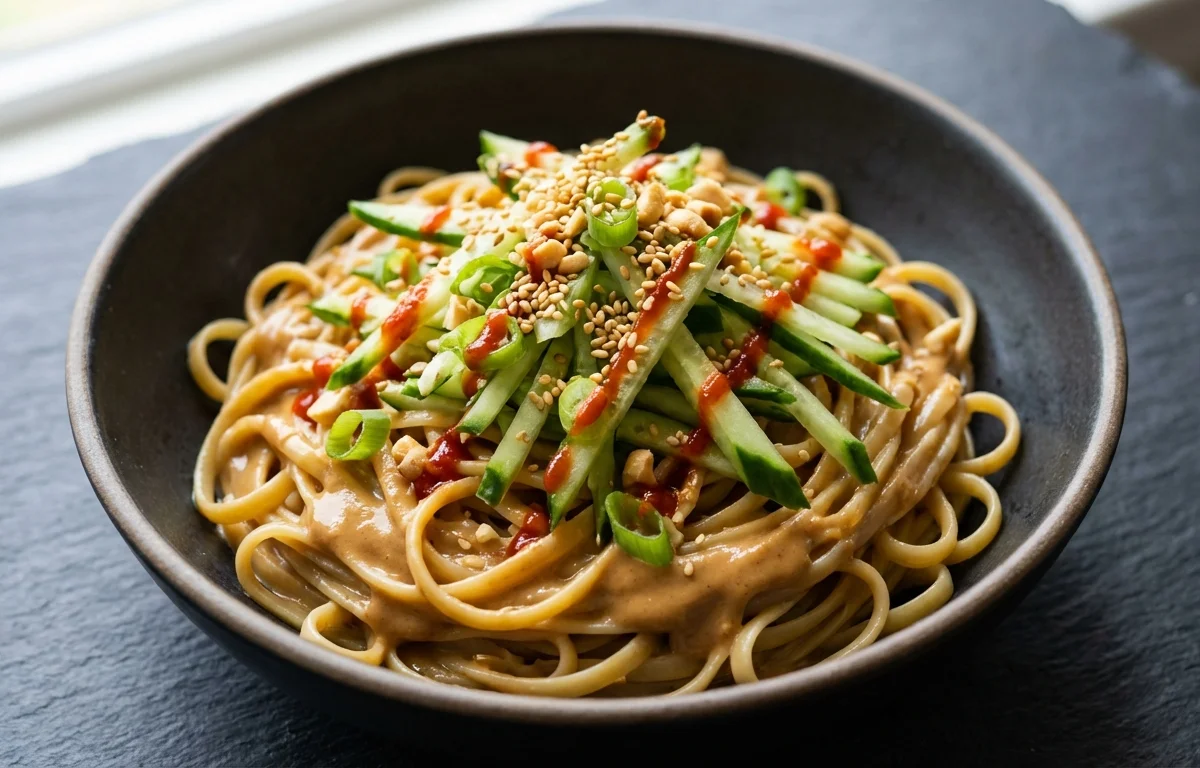
Cold Sesame Noodles
Chewy noodles tossed in a creamy, nutty sesame-peanut sauce with a gentle kick of heat. Served chilled or at room temperature, these noodles make the perfect refreshing lunch or light dinner on warm days.
For 4 servings
- boil · ~10 min
Cook the noodles.
Bring a large pot of water to a rolling boil. Add spaghetti and cook until just al dente according to package directions. Drain and rinse under cold water until completely cool. Toss with 1 tablespoon sesame oil to prevent sticking.
TIPDon't overcook — the noodles will soften further as they absorb the sauce. - mix · ~5 min
Make the sesame-peanut sauce.
1.In a medium bowl, whisk together peanut butter, soy sauce, rice vinegar, honey, and remaining 0.5 tablespoon sesame oil until smooth and creamy.2.Add minced garlic, grated ginger, red chili powder, and salt. Whisk again to combine.3.If the sauce seems too thick, add 1-2 tablespoons cold water and whisk until pourable.TIPUse room-temperature peanut butter — it blends more smoothly than cold. - mix · ~2 min
Toss noodles with sauce.
Place the cooled noodles in a large mixing bowl. Pour the sesame-peanut sauce over them. Use tongs to toss thoroughly until every strand is evenly coated.
- assemble · ~1 min
Add the vegetables.
Add julienned cucumber, julienned carrot, and sliced green onion to the noodle bowl. Toss gently to distribute the vegetables throughout the noodles.
- rest · ~20 min
Chill the noodles.
Cover the bowl and refrigerate for at least 20 minutes to let the flavors meld. The noodles can be chilled up to overnight.
TIPCold sesame noodles taste better after a rest — the sauce penetrates the noodles and flavors deepen. - garnish
Garnish with sesame seeds and cilantro, then serve.
Just before serving, sprinkle toasted sesame seeds and chopped cilantro over the noodles. Serve chilled or at room temperature.
What to keep in mind.
6 tips from the recipe — small details that make a real difference to the final dish.
- 1Rinse the noodles under cold water immediately after draining to stop carryover cooking and remove excess starch.
- 2Use warm water to thin the sauce if needed, adding 1 tablespoon at a time until it reaches a creamy, pourable consistency.
- 3Let the noodles chill for at least 20 minutes — the resting time allows the sauce to fully absorb into the pasta.
- 4Toast sesame seeds in a dry pan over medium heat for 1-2 minutes until fragrant and lightly golden for maximum nuttiness.
- 5Slice cucumbers just before serving to keep them crunchy and prevent them from releasing water into the dish.
- 6For make-ahead, store the sauce and noodles separately up to 2 days, then toss together before serving.
Adapt it for your goals.
Low-oil
Reduce the sesame oil to 1 tablespoon total and replace the rest with a splash of water or low-sodium broth to cut fat while keeping the nutty flavor.
high proteinHigh-protein
Add shredded cooked chicken, firm tofu cubes, or edamame to turn these noodles into a heartier meal with more protein.
veganVegan
Swap honey with maple syrup or agave nectar — the sweetness stays balanced and no animal products are used.
gluten freeGluten-free
Use gluten-free spaghetti or rice noodles, and substitute soy sauce with tamari or coconut aminos to keep it safe for celiacs.
spicy sesameSpicy-sesame
Add 1 teaspoon chili oil or sriracha to the sauce, or garnish with sliced fresh red chili for an extra heat kick.
Why this is on our healthy list.
Healthy Fats from Sesame Oil
Toasted sesame oil provides beneficial unsaturated fats that support heart health.
Protein from Peanut Butter
Creamy peanut butter adds plant-based protein to help keep you full and satisfied.
Vitamins from Fresh Vegetables
Cucumber, carrot, and green onion supply vitamins A and C, plus fiber for digestion.
Antioxidants from Ginger and Garlic
Fresh ginger and garlic contribute natural anti-inflammatory compounds to support immune function.
Frequently asked questions
Yes, lo mein noodles, udon, or fresh ramen noodles work well — just cook them to al dente and rinse well.