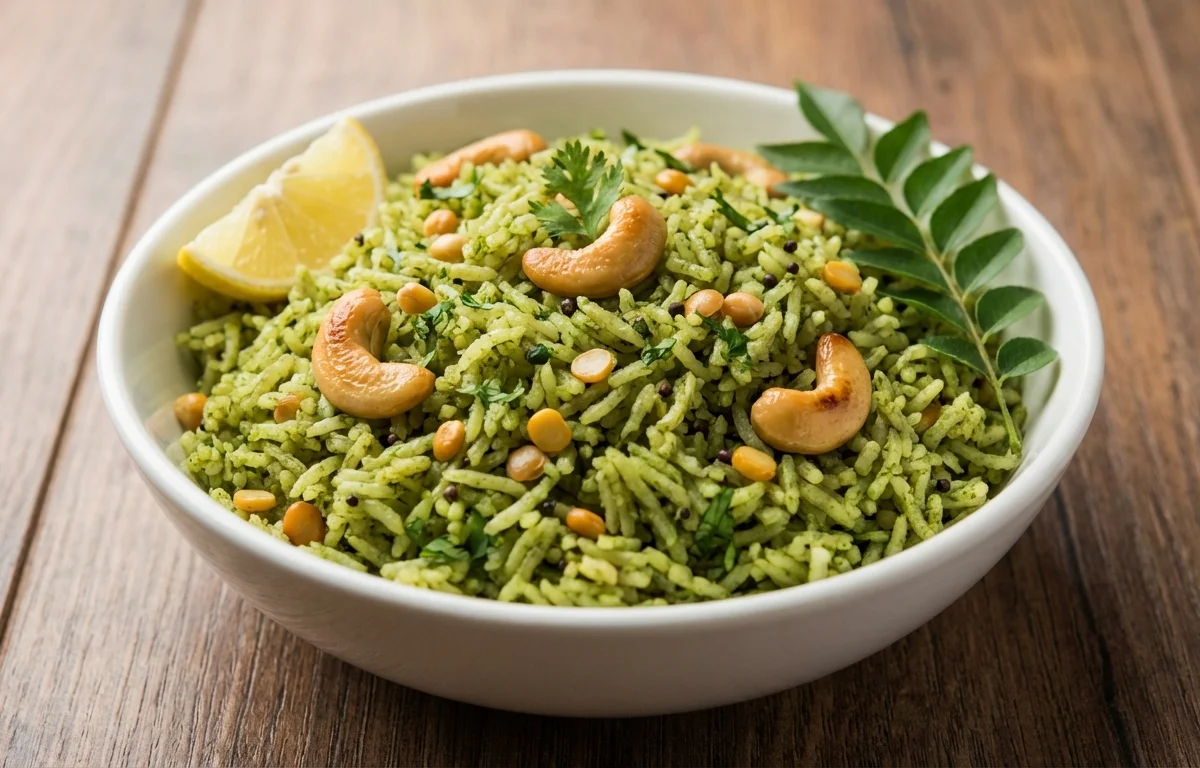
Coriander Rice
Fluffy basmati rice tossed with a vibrant ground coriander-coconut paste and tempered with mustard seeds, curry leaves, and dal. This South Indian one-pot dish comes together in under 30 minutes, filling the kitchen with an herby, nutty aroma. Perfect for tiffin boxes or a quick weeknight meal.
For 4 servings
- prep · ~15 min
Wash and soak the rice.
Wash basmati rice under running water until water runs clear. Soak in fresh water for 15 minutes, then drain completely.
- boil · ~10 min
Cook the rice.
Bring 3 cups of water to a boil. Add the drained rice and salt. Cook on medium heat until rice is 80% done — grains should still have a slight bite. Drain excess water and spread the rice on a plate to cool slightly.
TIPSlightly undercooking the rice prevents mushiness when mixing with the paste later. - mix · ~2 min
Grind the coriander paste.
In a mixer grinder, combine coriander leaves, grated coconut, green chili, and ginger. Add 2 tablespoons of water and grind to a smooth paste. Set aside.
TIPDo not add too much water — a thick paste coats the rice better. - temper · ~4 min
Make the tempering.
1.Heat oil in a kadai over medium heat until shimmering.2.Add mustard seeds and let them splutter completely (30 sec).3.Add urad dal and chana dal. Sauté until golden (1 min).4.Add peanuts and cashew nuts. Fry until light brown (1 min).5.Add dried red chili, curry leaves, asafoetida, and turmeric. Sauté for 30 seconds until fragrant.TIPKeep the heat at medium — the dals and nuts burn quickly if the oil is too hot. - saute · ~4 min
Cook the coriander paste.
Add the ground coriander paste to the kadai. Sauté for 3-4 minutes on low heat until the raw smell disappears and the paste thickens slightly. Stir continuously to prevent sticking.
TIPThe paste should lose its bright green raw color and turn a deeper olive green — that is when it is cooked. - mix · ~3 min
Combine rice with the coriander mixture.
Add the cooked rice to the kadai. Gently fold the coriander paste into the rice until each grain is evenly coated. Be careful not to break the rice grains. Drizzle lemon juice over the top and fold once more.
TIPUse a light hand — a spatula works better than a spoon for folding rice. - rest · ~5 min
Rest the rice.
Turn off the heat, cover the kadai with a lid, and let the rice rest for 5 minutes. This allows the flavors to meld.
- serve
Fluff and serve hot.
Gently fluff the rice with a fork. Serve hot with raita, papad, or plain yogurt.
What to keep in mind.
7 tips from the recipe — small details that make a real difference to the final dish.
- 1Soak basmati rice for exactly 15 minutes to get separate, non-sticky grains.
- 2Cook rice only till 80% done — it will finish cooking when mixed with the paste.
- 3Grind the coriander paste thick with minimal water so it coats each grain well.
- 4Sauté the paste until it turns a deep olive green to remove raw aroma.
- 5Fold the rice gently with a spatula to keep grains intact and fluffy.
- 6Let the rice rest covered for 5 minutes so flavors meld beautifully.
- 7Store leftovers in an airtight container in the fridge for up to 2 days.
Adapt it for your goals.
High-protein
Add 1/2 cup of cooked chickpeas or paneer cubes along with the rice. This boosts protein content and turns the dish into a more substantial meal.
veganVegan
The recipe is naturally vegan as written. Omit ghee if using, and replace yogurt raita with a plant-based alternative.
low oilLow-oil
Reduce oil to 1 tablespoon and dry-roast the dals and nuts on low heat before adding to the tempering. Lower calorie without losing crunch.
mint corianderMint-coriander
Replace half the coriander leaves with fresh mint leaves. Mint adds a cooling, bright note that pairs well with the coconut and curry leaves.
Why this is on our healthy list.
Rich in Antioxidants
Fresh coriander leaves are packed with antioxidants like quercetin and kaempferol, which help fight inflammation and oxidative stress.
Good Source of Healthy Fats
Fresh coconut provides medium-chain triglycerides (MCTs), a type of healthy fat that may support sustained energy and brain function.
Protein from Dals and Nuts
Urad dal, chana dal, peanuts, and cashews contribute plant-based protein, making the dish more satiating.
Digestive Support
Curry leaves and asafoetida are traditionally used in Indian cooking to aid digestion and reduce bloating.
Frequently asked questions
Yes, but the texture will be softer and less distinct. Reduce water slightly and adjust cooking time based on the rice variety.