Corned Ham
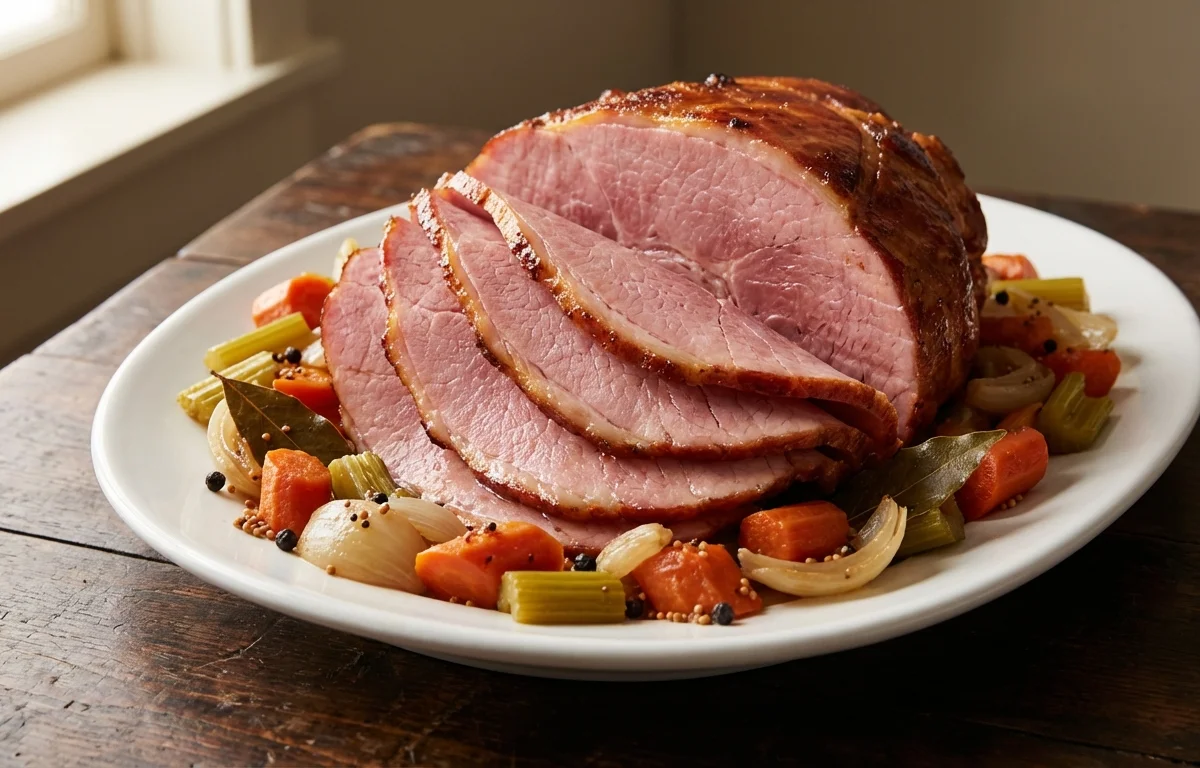
A classic New England specialty, this corned ham cures in a sweet-spiced brine before simmering to juicy, tender perfection. The gentle sweetness of honey and brown sugar balances the savory pork, while mustard and clove give it that unmistakable holiday-table aroma. Slice it warm for sandwiches or serve as the centerpiece of a hearty dinner.
For 12 servings
- prep · ~20 min
Make the brine.
In a large non-reactive stockpot, combine 2 liters water, kosher salt, brown sugar, honey, pink curing salt, mustard seeds, peppercorns, cloves, bay leaves, cinnamon stick, ginger, and garlic. Bring to a boil over high heat, stirring to dissolve salts and sugar. Remove from heat and let cool completely, then refrigerate until cold.
- prep
Brine the ham.
Submerge the fresh ham in the cold brine, placing a plate on top to keep it fully submerged. Cover and refrigerate for 5–7 days, turning the ham once daily to ensure even curing.
TIPA longer brine gives deeper flavor, but don't go beyond 7 days — the texture can become too salty. - prep · ~120 min
Rinse and soak the ham.
Remove the ham from brine and discard the brine. Rinse the ham under cold running water, then place in a large pot with fresh cold water to cover. Soak for 2 hours, changing the water once halfway through, to draw out excess salt.
TIPDon't skip the soaking step — it mellows the saltiness and ensures a balanced flavor. - simmer · ~180 min
Simmer the ham.
Drain the soaking water and place the ham in a clean large pot. Add 3 liters fresh water, onion, carrot, and celery. Bring to a gentle boil, then reduce heat to low. Cover and simmer gently for about 2.5 to 3 hours, until the internal temperature reaches 165°F at the thickest part.
TIPKeep the water at a gentle bubble — a rolling boil will toughen the meat. - prep · ~5 min
Preheat the oven and make the glaze.
Preheat oven to 375°F. In a small bowl, mix brown sugar, Dijon mustard, and honey into a smooth paste.
- prep · ~10 min
Trim and score the ham.
Carefully remove the ham from the cooking liquid and place on a rack in a roasting pan. Using a sharp knife, trim away the skin, leaving a thin layer of fat. Score the fat in a crosshatch diamond pattern about 1/2 inch deep. Stud each diamond intersection with a whole clove.
TIPThe scoring helps the glaze penetrate and creates that classic presentation look. - roast · ~30 min
Glaze and roast the ham.
Brush the glaze generously over the scored fat. Roast in the preheated oven for 25–30 minutes, basting once with pan juices halfway through, until the glaze is bubbly and deep golden brown.
TIPWatch the glaze closely in the last 5 minutes — the sugar can burn quickly. - rest · ~15 min
Rest the ham before slicing.
Transfer the ham to a cutting board, tent loosely with foil, and let rest for 15 minutes. Slice across the grain into thin pieces and serve warm.
TIPResting redistributes juices throughout the meat — skip it and you'll lose moisture on the cutting board.
What to keep in mind.
5 tips from the recipe — small details that make a real difference to the final dish.
- 1Use a non-reactive pot (stainless steel or enamel) for the brine to avoid metallic off-flavors.
- 2Weigh down the ham with a plate and a heavy can so it stays fully submerged during the 5–7 day brine.
- 3After brining, rinse thoroughly and soak in fresh water for 2 hours to prevent the ham from being too salty.
- 4Simmer at a gentle bubble, not a rolling boil, or the meat will become tough and dry.
- 5Let the ham rest for a full 15 minutes after roasting so the juices redistribute evenly before slicing.
Adapt it for your goals.
Spiced Maple Glaze
Replace the brown sugar and honey in the glaze with 1/4 cup maple syrup and 1 tablespoon apple cider vinegar for a New England twist — the maple adds a woodsy sweetness that pairs beautifully with clove and mustard.
Low Sodium VersionLow-Sodium Version
Reduce the kosher salt in the brine to 3/4 cup and skip the pink curing salt, then shorten the brine to 3–4 days. The ham will be paler but less salty; you can add a teaspoon of liquid smoke to the simmer for a smoky note.
Herb Crusted FinishHerb-Crusted Finish
After glazing, press 2 tablespoons of finely chopped fresh thyme and rosemary into the fat before roasting. This adds an earthy, aromatic layer that cuts through the sweetness and complements the clove.
Why this is on our healthy list.
Rich in Protein
Pork shoulder is a high-quality protein source, providing all essential amino acids needed for muscle repair and satiety.
Contains Iron and B Vitamins
Pork is naturally rich in heme iron and B vitamins like thiamine and B12, which support energy metabolism and red blood cell health.
Lower Fat Than Commercial Ham
This homemade version uses a fresh ham and a simple glaze, avoiding the added fillers and preservatives found in many store-bought hams, letting you control the fat content by trimming the skin.
Frequently asked questions
Pink curing salt (sodium nitrite) preserves the meat's pink color, inhibits bacterial growth, and gives corned ham its characteristic flavor. Do not omit it or substitute with table salt.