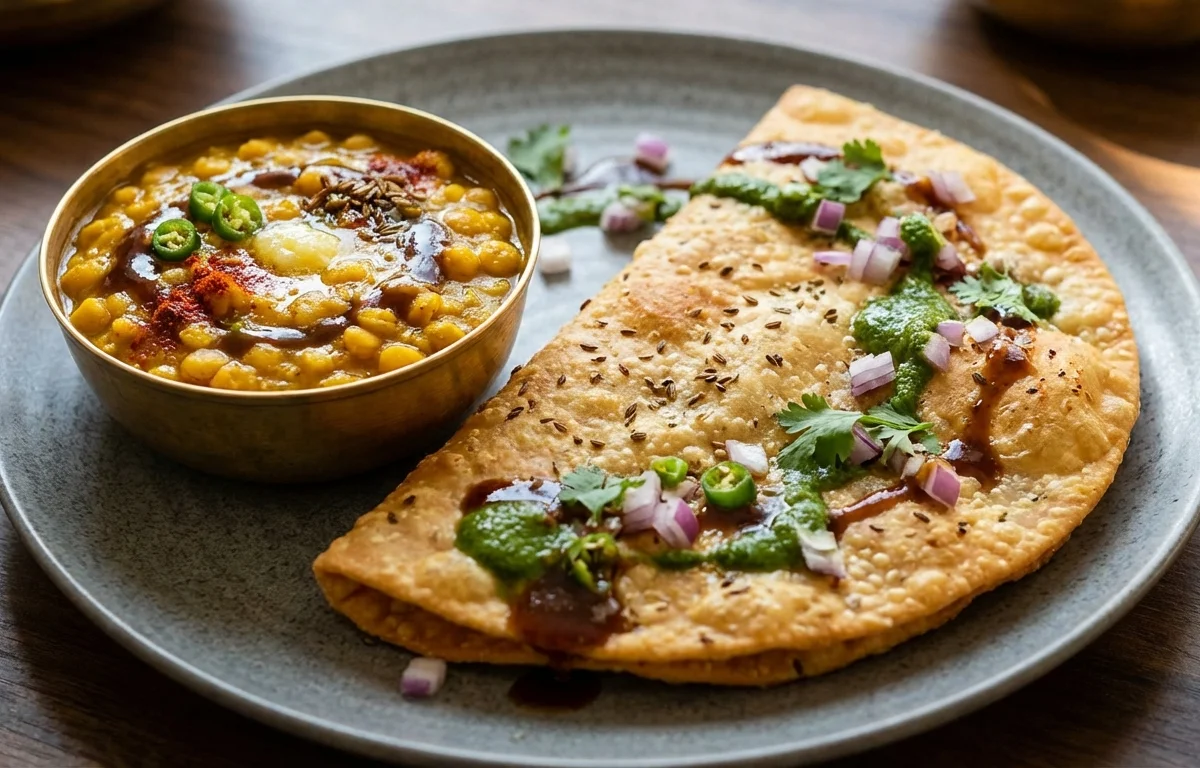
Dal Pakwan
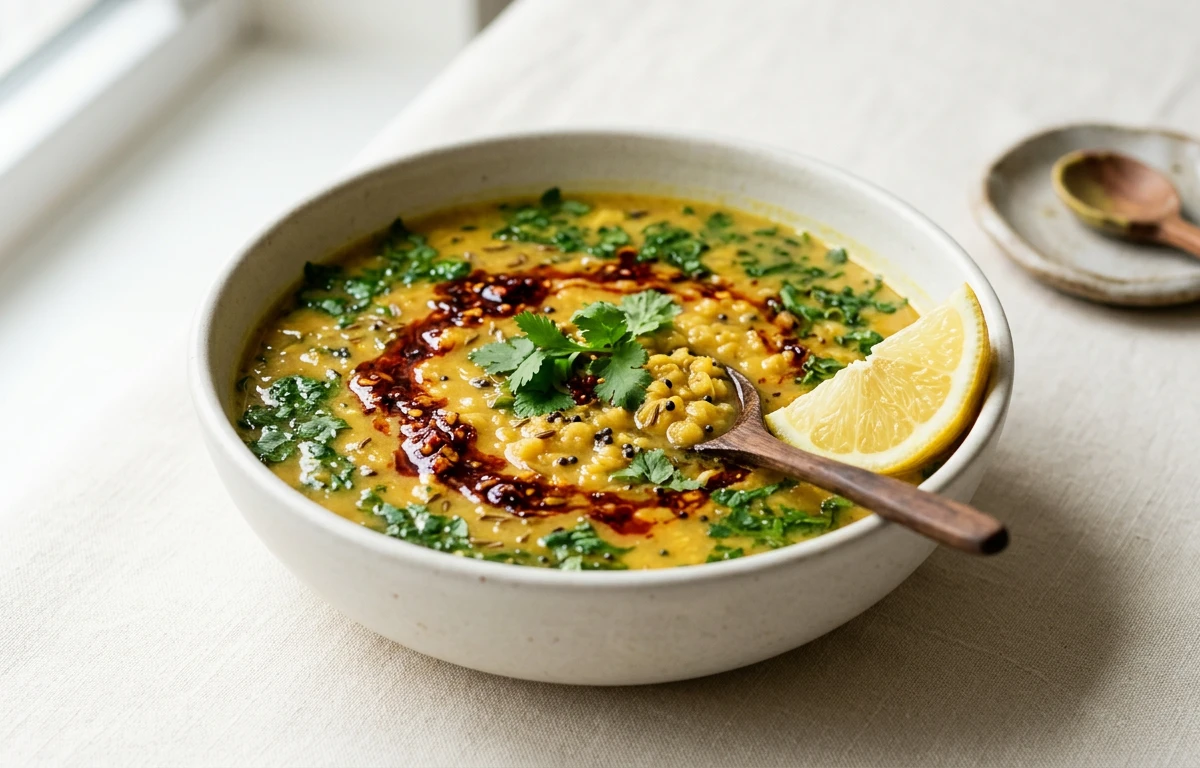
A much-loved Sindhi breakfast of chana dal topped with onions, chutneys, and herbs, served with crisp fried pakwan. The contrast of creamy lentils, tangy toppings, and flaky crunch makes every bite exciting.
For 4 servings
- prep · ~480 min
Soak the chana dal.
Wash the chana dal well and soak it in enough water overnight. Drain before cooking.
TIPA long soak helps the dal cook evenly while still holding its shape. - pressure cook · ~25 min
Cook the dal until tender.
1.Add soaked chana dal, 3 cups water, turmeric powder, and half of the salt to a pressure cooker.2.Cook on medium heat for 4 to 5 whistles until the dal is tender but not mushy.3.Let the pressure drop naturally, then open the cooker and lightly mash a small portion to thicken it.TIPDal Pakwan tastes best when the dal is soft yet still slightly grainy, not fully pureed. - knead · ~8 min
Knead the pakwan dough.
1.Mix all-purpose flour, semolina, carom seeds, crushed cumin seeds, black pepper, and the remaining salt in a bowl.2.Rub in 2 tablespoons oil until the flour looks slightly sandy.3.Add 0.5 cup water little by little and knead into a stiff dough.TIPKeep the dough firm so the pakwan fries crisp and does not puff like puri. - rest · ~15 min
Rest the dough.
Cover the dough and let it rest for 15 minutes so it rolls out more easily.
- prep · ~10 min
Roll and prick the pakwan.
1.Divide the dough into 4 equal portions.2.Roll each portion into a thin disc.3.Prick all over with a fork so the pakwan stays flat and crisp while frying. - fry · ~15 min
Fry the pakwan until crisp.
1.Heat the oil for deep frying in a wide pan over medium heat.2.Slide in one rolled disc at a time and fry on both sides until golden and crisp.3.Drain well and repeat with the remaining discs.TIPUse medium heat throughout; very hot oil browns the pakwan before it turns crisp inside. - temper · ~3 min
Make the dal tempering.
1.Heat 1 tablespoon oil in a small pan.2.Add cumin seeds and let them sizzle for a few seconds.3.Add half of the chopped green chili, red chili powder, dry mango powder, and garam masala.4.Pour this tempering over the cooked dal and mix well.TIPAdd the powdered spices briefly and pour at once so they bloom without burning. - simmer · ~4 min
Simmer the dal briefly.
Return the dal to low heat and simmer for 3 to 4 minutes until slightly thick and spoonable. Stir in lemon juice.
- assemble · ~3 min
Assemble the dal pakwan.
1.Place one pakwan on each plate.2.Spoon the hot dal over or beside the pakwan.3.Top with chopped onion, the remaining green chili, coriander leaves, tamarind chutney, and green chutney. - serve
Serve right away.
What to keep in mind.
8 tips from the recipe — small details that make a real difference to the final dish.
- 1Soak the chana dal fully overnight so the grains cook evenly yet stay distinct.
- 2Lightly mash only a small portion of the cooked dal; too much mashing makes it pasty.
- 3Keep the pakwan dough stiff and roll it thin, or it will puff and lose its signature snap.
- 4Prick each disc thoroughly with a fork so the pakwan stays flat while frying.
- 5Fry pakwan on medium heat until deeply golden; rushing on high heat leaves the center less crisp.
- 6Add lemon juice only after simmering the dal, so the tang stays bright and fresh.
- 7Assemble just before serving so the pakwan keeps its crunch under the dal and chutneys.
- 8Store fried pakwan separately in an airtight container and re-crisp briefly before serving.
Adapt it for your goals.
Baked-pakwan
Bake the rolled, pricked discs instead of deep frying for a lighter version that still gives crunch.
extra spicyExtra-spicy
Increase green chili and red chili powder for a fierier plate that stands up well to the sweet tamarind chutney.
whole wheatWhole-wheat
Replace part of the all-purpose flour with whole wheat flour for a nuttier pakwan with a slightly heartier bite.
jainJain
Skip the onion topping and lean more on coriander, green chutney, and tamarind chutney for freshness.
Why this is on our healthy list.
Protein From Chana Dal
Chana dal adds plant protein and makes the dish more filling than a plain fried snack.
Fiber-Rich Lentil Base
The split chickpeas provide fiber that supports satiety, especially when paired with the fresh toppings.
Digestive Spices
Cumin, carom seeds, gingery heat from green chili, and amchur bring flavor while fitting the dish's traditional spice profile.
Fresh Herb and Onion Topping
Coriander, onion, chutneys, and lemon add freshness and brightness, helping balance the richer fried pakwan.
Frequently asked questions
Yes, the dal can be cooked a day ahead and reheated gently. Add the lemon juice and toppings just before serving for the freshest taste.