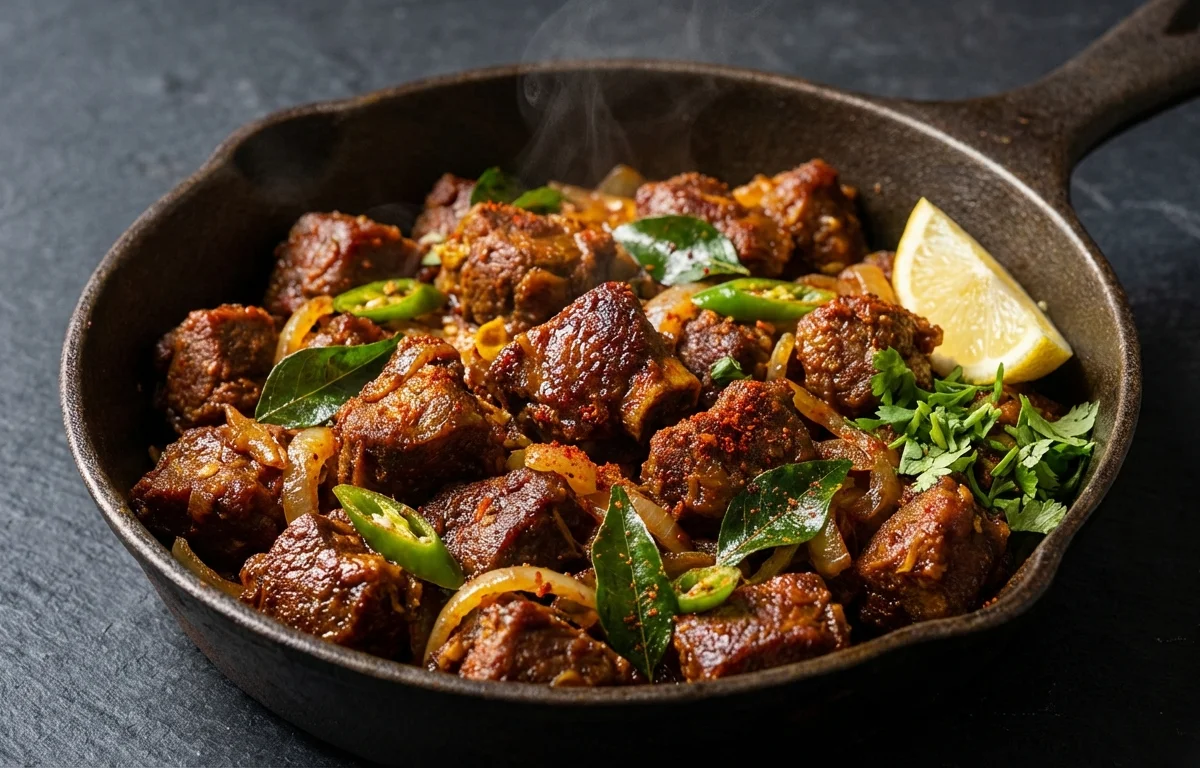
Dry Mutton Fry
Tender mutton cooked with onions, ginger, garlic, and warm spices until the masala clings to every piece. This dry-style Indian fry is rich, peppery, and perfect alongside roti, neer dosa, or simple rice.
For 4 servings
- prep · ~10 min
Prep the mutton and aromatics.
1.Wash the mutton pieces and drain well.2.Slice the onions thinly and chop the tomatoes finely.3.Slit the green chili and chop the coriander leaves. - pressure cook · ~30 min
Pressure cook the mutton.
1.Add mutton, half the ginger-garlic paste, turmeric powder, cinnamon, cloves, green cardamom, salt, and water to a pressure cooker.2.Mix well and cook on medium heat for 4 to 5 whistles, until the mutton is tender.3.Let the pressure release naturally, then open the cooker and keep the cooked mutton with its little stock aside.TIPIf the mutton is from an older goat, cook a little longer until the pieces are just tender before frying. - saute · ~12 min
Cook the spice base.
1.Heat oil in a wide pan over medium heat.2.Add cumin seeds, fennel seeds, curry leaves, and green chili; cook until fragrant.3.Add the sliced onions and cook until deep golden, 8 to 10 minutes.4.Add the remaining ginger-garlic paste and sauté for 1 minute.TIPUse a wide pan so the moisture cooks off faster and the fry turns nicely dry. - saute · ~7 min
Add tomatoes and ground spices.
Add the chopped tomatoes, coriander powder, red chili powder, garam masala, and crushed black pepper. Cook until the tomatoes soften and the masala looks thick and glossy.
- fry · ~15 min
Fry the mutton with the masala.
1.Add the cooked mutton and any remaining stock to the pan.2.Mix well so every piece is coated with the masala.3.Cook on medium heat, stirring often, until the moisture dries and the masala clings to the mutton.4.Fry for a few more minutes until the edges look slightly browned.TIPKeep stirring during the last few minutes so the masala roasts without catching at the bottom. - garnish · ~1 min
Finish with lemon juice and coriander leaves.
- serve · ~1 min
Serve the dry mutton fry hot.
What to keep in mind.
7 tips from the recipe — small details that make a real difference to the final dish.
- 1Drain the washed mutton well before pressure cooking so the stock stays concentrated and the fry dries faster later.
- 2Cook the onions to a deep golden brown, not just soft; this gives the fry its rich color and sweet-spicy base.
- 3If the pressure-cooked mutton releases too much stock, reserve some and add only as needed while frying.
- 4Use a wide, heavy pan for the final fry so the masala reduces evenly and coats each piece instead of steaming.
- 5The dish is ready when the oil begins to reappear at the edges and the masala clings tightly to the mutton.
- 6Add the lemon juice only after switching off the heat to keep its brightness and avoid a bitter finish.
- 7This fry tastes even better after a short rest, as the pepper, garam masala, and curry leaves settle into the meat.
Adapt it for your goals.
Spicier
Increase the green chilies and black pepper for a hotter, more pepper-forward fry that pairs especially well with neer dosa.
low oilLow-oil
Reduce the oil slightly and use a very wide pan to evaporate moisture efficiently while still getting a dry masala coating.
coconut styleCoconut-style
Add a spoonful of roasted coconut at the final fry stage for a coastal-style version with nuttier flavor and extra texture.
bonelessBoneless
Use boneless mutton for easier serving; shorten the pressure-cooking time slightly and fry just until the masala grips the meat.
Why this is on our healthy list.
Protein-Rich Main Dish
Mutton provides substantial protein, making this fry a filling main that pairs well with simple rice or flatbreads.
Aromatic Spice Benefits
Ginger, garlic, black pepper, cumin, fennel, and curry leaves add flavor while contributing plant compounds common in traditional Indian cooking.
Moderate Carbohydrate Profile
As a dry meat fry built around mutton, onions, tomatoes, and spices, it is lower in starch than gravy dishes served with potatoes.
Frequently asked questions
A piece should be easy to pierce and nearly tender before frying, but not falling apart, since it will cook a bit more in the masala.