Egg Kalvan
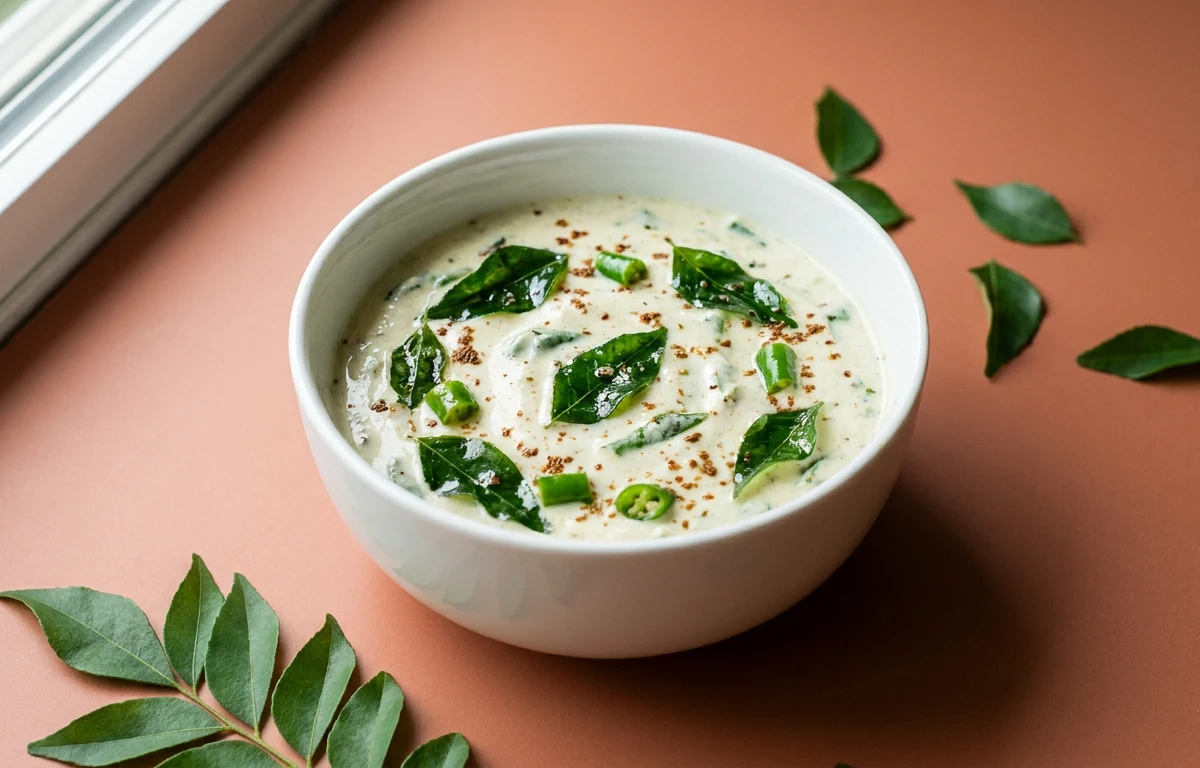
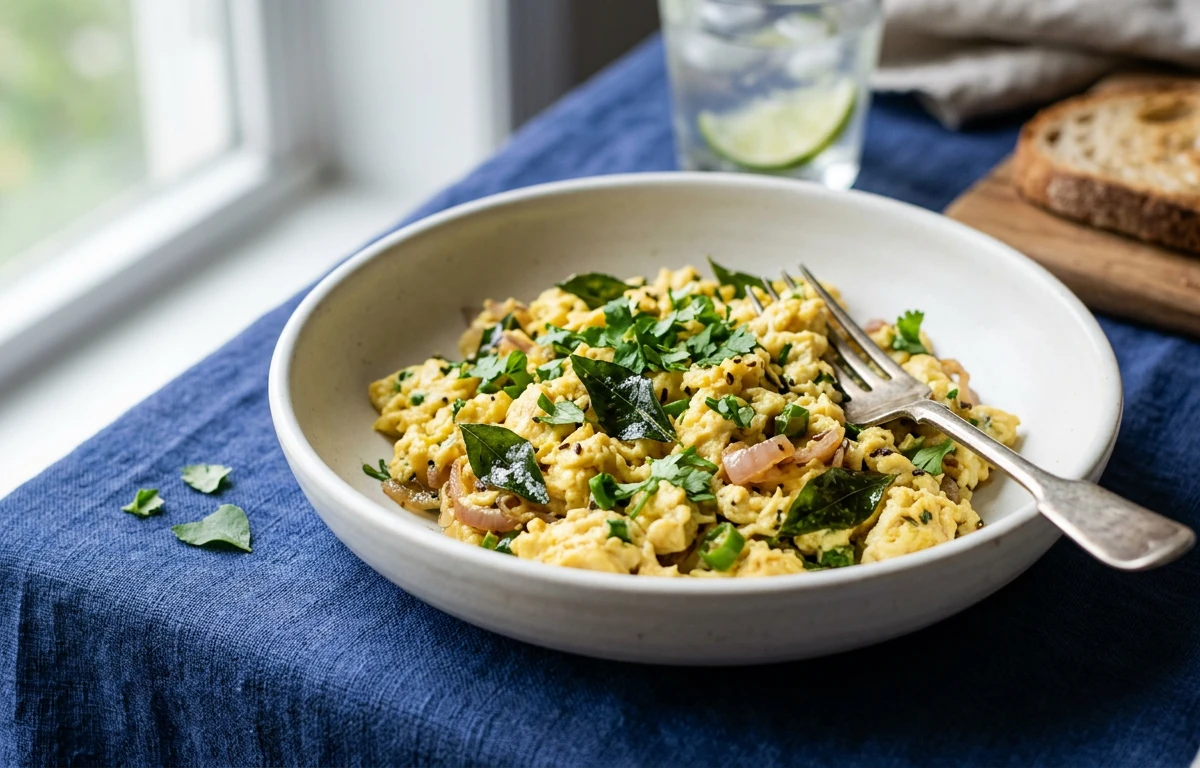
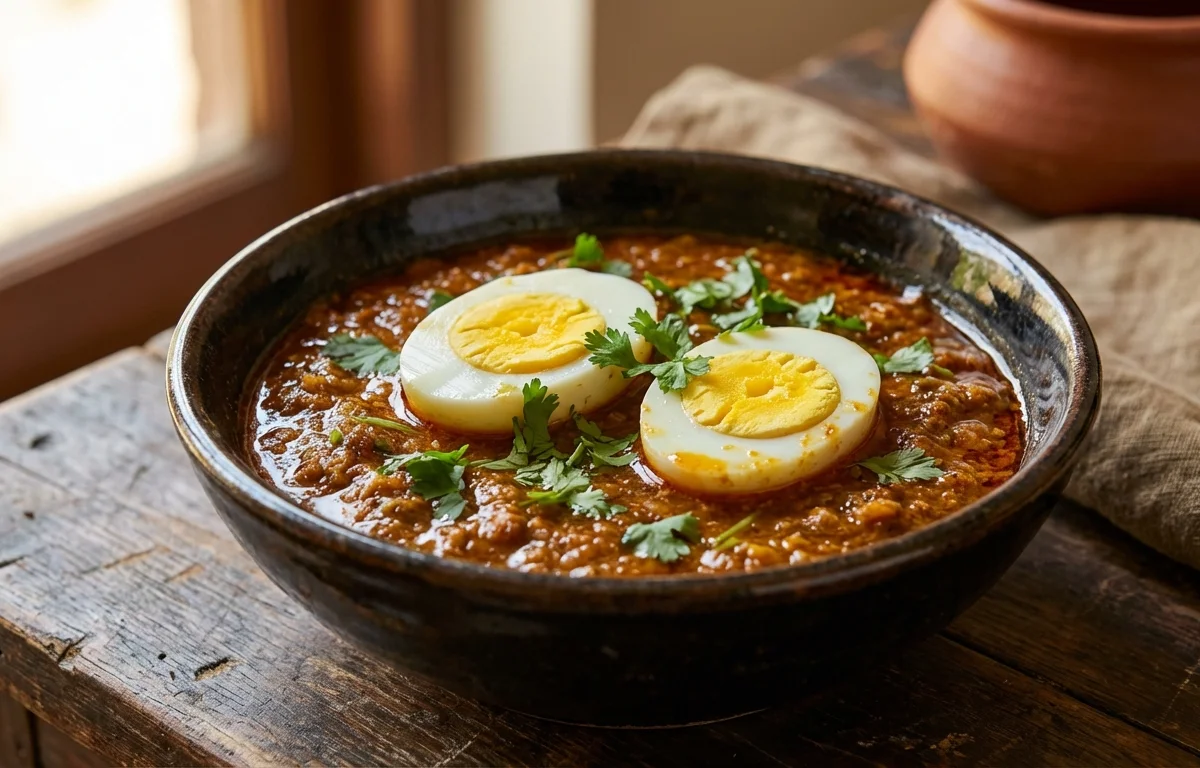
A homestyle South Indian egg curry with a thin, spiced coconut gravy that tastes especially good with rice, idiyappam, or dosa. The boiled eggs soak up the masala while the curry stays light enough for a full meal spread.
For 4 servings
- boil · ~10 min
Boil and peel the eggs.
Cook the eggs in boiling water until hard-boiled, about 10 minutes. Cool, peel, and set aside.
TIPA short rest in cool water helps the shells come off cleanly. - mix · ~3 min
Grind the coconut masala.
1.Add grated coconut, ginger, garlic, and half the fennel seeds to a mixer jar.2.Pour in a little of the water.3.Grind to a smooth paste and set aside. - temper · ~1 min
Make the tempering.
1.Heat oil in a pan over medium heat.2.Add mustard seeds and let them splutter.3.Add the remaining fennel seeds and curry leaves.4.Stir for a few seconds until fragrant.TIPKeep the heat medium so the seeds crackle without burning. - saute · ~11 min
Cook the onion and tomato base.
1.Add sliced onion and green chili.2.Cook until the onion turns soft and light golden, 5 to 6 minutes.3.Add chopped tomato and cook until it breaks down, 4 to 5 minutes. - saute · ~1 min
Add the spice powders.
Add red chili powder, coriander powder, turmeric powder, black pepper, and salt. Mix well and cook for 30 seconds so the masala smells roasted.
- simmer · ~8 min
Cook the coconut gravy.
1.Add the ground coconut paste to the pan and mix well.2.Pour in the remaining water and stir until smooth.3.Bring the curry to a gentle simmer and cook for 6 to 8 minutes.TIPDo not boil hard after adding coconut or the gravy can lose its smooth texture. - simmer · ~5 min
Add the eggs and finish the kalvan.
Make small slits in the boiled eggs and add them to the gravy. Simmer for 4 to 5 minutes so they absorb the masala.
- garnish
Garnish with coriander leaves.
- serve
Serve hot with rice, dosa, or idiyappam.
What to keep in mind.
7 tips from the recipe — small details that make a real difference to the final dish.
- 1Make 2-3 shallow slits in each boiled egg so the thin coconut gravy seasons the egg white better.
- 2Grind the coconut paste very smooth; a coarse paste can make the kalvan feel gritty instead of silky.
- 3Cook the onions only to light golden, not deep brown, to keep the gravy's color and taste homestyle.
- 4After adding the coconut paste, keep the curry at a gentle simmer so it stays smooth and doesn't split.
- 5If the gravy thickens on standing, loosen it with a splash of hot water before serving with idiyappam or dosa.
- 6This curry tastes even better after 20-30 minutes of resting, once the eggs have absorbed the masala.
- 7Store leftovers chilled for up to 2 days and reheat on low heat to protect the coconut gravy texture.
Adapt it for your goals.
Spicier
Increase green chili and black pepper for a sharper, heat-forward kalvan that pairs especially well with plain rice.
shallot styleShallot-style
Use small Indian shallots instead of regular onions for a sweeter, more traditional South Indian flavour.
roasted eggRoasted-egg
Lightly pan-fry the boiled eggs with a pinch of turmeric before simmering for a firmer surface and deeper flavour.
vegetarian no eggVegetarian-no-egg
Replace eggs with boiled potato or tofu to keep the coconut gravy format for those avoiding eggs.
Why this is on our healthy list.
Protein From Eggs
Boiled eggs add satisfying protein, making the curry more filling and suitable as a main dish with rice or dosa.
Digestive Aromatics
Ginger, garlic, fennel, and curry leaves contribute aroma along with traditional digestive-supporting ingredients.
Balanced Fat Source
Fresh coconut provides richness and body, helping the spices feel rounded without relying heavily on cream or butter.
Frequently asked questions
Yes. Use thick coconut milk for a smoother gravy, but simmer very gently and reduce the added water so the curry does not become too thin.