
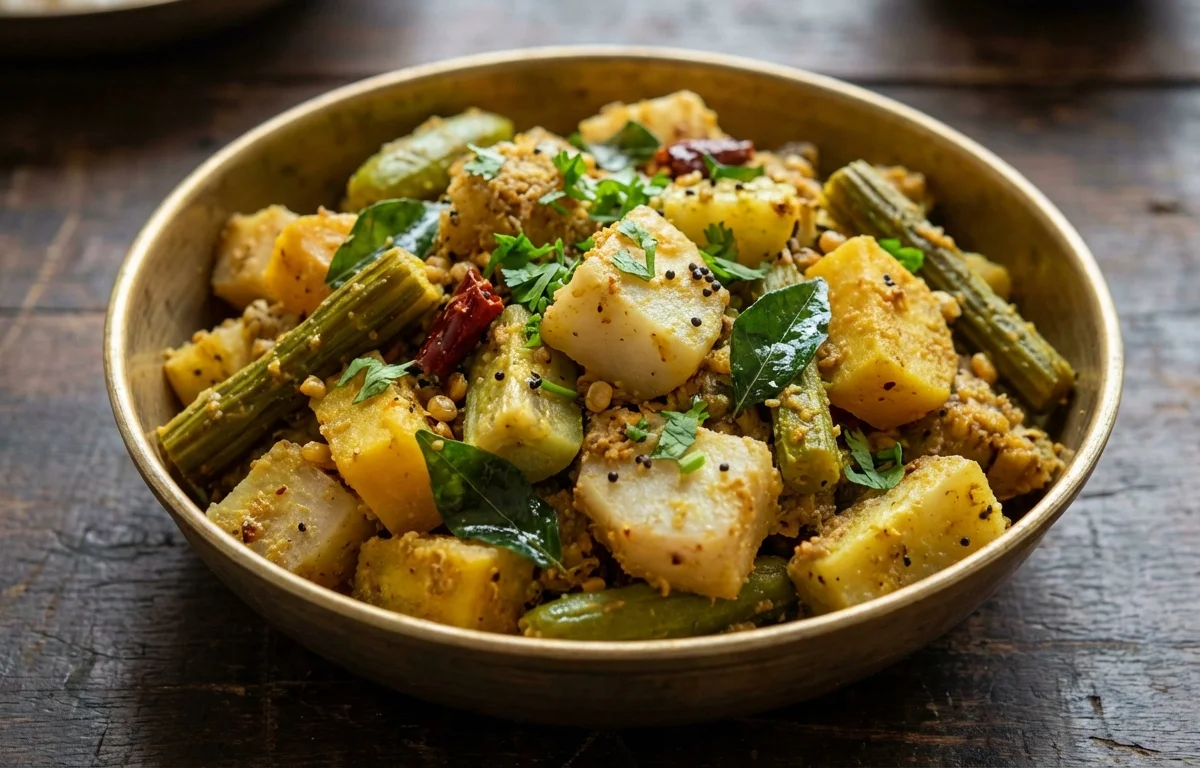
Gajbaje Sukke
A vibrant, dry Konkani stir-fry where raw banana and yam are cooked with freshly ground coconut masala. The jaggery balances the mild heat of chillies, while tamarind adds a gentle tang that makes every bite exciting. A coastal Karnataka staple that brings comfort and tradition to the plate.
For 4 servings
- prep · ~5 min
Peel and cube the vegetables.
1.Peel raw bananas and yam. Cut into 1-inch cubes.2.Drop into a bowl of water to prevent the banana from discoloring.3.Drain well before cooking.TIPRub a little oil on your hands after peeling yam to avoid itching. - boil · ~10 min
Boil banana and yam until tender.
1.Place banana and yam cubes in a pressure cooker with ½ cup water.2.Pressure cook for 2 whistles on medium heat and let the pressure release naturally.3.Drain completely and reserve. They should be firm-tender, not mushy.TIPCheck one cube; it should hold its shape but yield easily when pressed. - mix · ~2 min
Grind the coconut masala paste.
1.In a mixer jar, add grated coconut, dried red chilies, tamarind paste, and jaggery.2.Pulse with 2-3 tablespoons of water into a thick, coarse paste.3.Scrape down the sides once in between. Do not make it too smooth or watery. - temper · ~2 min
Make the tempering.
1.Heat coconut oil in a heavy-bottomed pan over medium heat.2.Add mustard seeds and wait until they splutter (30 seconds).3.Add urad dal and fry until it turns light golden brown.4.Tip in curry leaves and asafoetida. Stir once and immediately move to the next step.TIPCurry leaves should crackle and turn crisp in seconds — don't let them burn. - saute · ~3 min
Cook the masala paste.
1.Lower the heat and add the ground coconut masala to the pan.2.Sauté gently, stirring continuously, until the raw smell fades and the paste turns fragrant (2-3 minutes).3.The paste should look slightly dry and crumbly.TIPKeep the heat low — coconut paste catches and burns very quickly. - saute · ~5 min
Fold in the boiled vegetables.
1.Add the drained banana and yam cubes to the pan.2.Sprinkle salt over everything.3.Gently toss to coat each piece evenly with the masala.4.Cook uncovered on low heat for 4-5 minutes so the flavors meld and any excess moisture dries up.TIPStir gently with a flat spatula; boiled yam breaks if you are too rough. - garnish · ~2 min
Finish and serve.
1.Remove from heat and let it rest for 2 minutes.2.Transfer to a serving bowl. Drizzle a few extra drops of raw coconut oil on top for aroma, if desired.3.Serve warm as part of a traditional Konkani meal.
What to keep in mind.
7 tips from the recipe — small details that make a real difference to the final dish.
- 1Rub a little coconut oil on your hands before peeling yam to prevent itching.
- 2Drop peeled raw banana cubes into water immediately to prevent discoloration.
- 3Pressure cook the vegetables until just firm-tender — they should hold shape but yield easily.
- 4Grind the coconut masala to a coarse paste, not smooth, for better texture in the final dish.
- 5Sauté the coconut masala on low heat to prevent burning and bring out deep fragrance.
- 6Use a flat spatula and gentle toss to avoid breaking the soft yam cubes.
- 7Let the dish rest for 2 minutes before serving to allow flavors to meld.
Adapt it for your goals.
Lower-carb
Replace yam with raw papaya or cauliflower florets — reduces starch while keeping the texture similar.
no coconutNo-coconut
Substitute grated coconut with roasted peanuts or sesame seeds for a nutty, non-coconut version.
spicierSpicier
Add 1-2 green chilies to the masala grind for extra heat without affecting the dish's dry texture.
Why this is on our healthy list.
Rich in Dietary Fiber
Raw banana and yam are excellent sources of fiber, supporting healthy digestion and prolonged satiety.
Naturally Gluten-Free
This dish uses no wheat or gluten-containing grains, making it suitable for gluten-sensitive diets.
Low in Unhealthy Fats
Coconut oil is used only for tempering and garnish, keeping the fat content moderate and heart-friendly.
Frequently asked questions
Yes, thawed frozen grated coconut works well — just squeeze out excess moisture before grinding.



.webp)
.webp)