
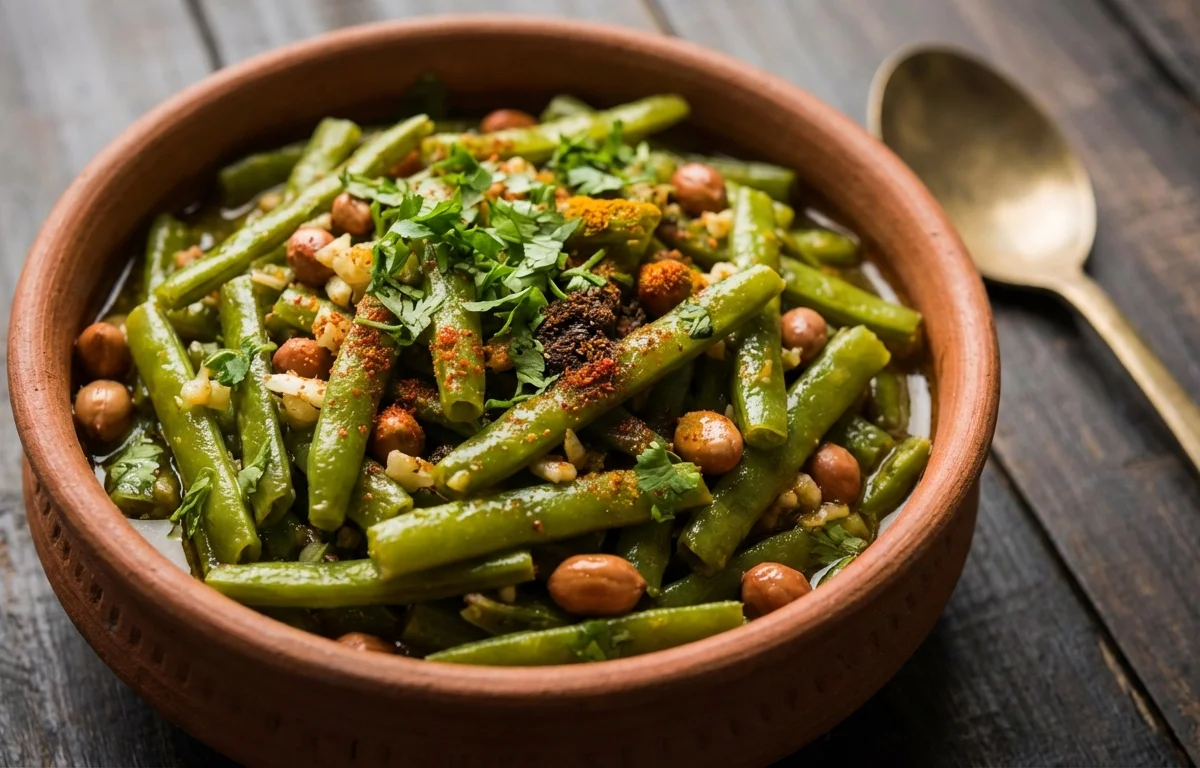
Gavar Bhaji
Tender cluster beans simmered with a handful of spices until perfectly cooked. This everyday Rajasthani-Gujarati sabzi has a mild, earthy flavor with a hint of heat from green chilies. A simple, homestyle dry curry that pairs beautifully with roti and dal.
For 4 servings
- prep
Trim and cut the cluster beans.
Wash the cluster beans thoroughly. Trim both ends and cut into 1-inch pieces. If any beans feel tough or fibrous, discard them.
TIPPick tender, bright green beans that snap easily. Overly mature beans stay tough even after cooking. - steam · ~10 min
Steam the cluster beans.
Steam the cut cluster beans in a steamer or colander set over boiling water for 8-10 minutes until fork-tender but still holding their shape. Alternatively, boil in a little salted water and drain.
TIPAvoid overcooking at this stage — the beans will cook further with the spices. - temper · ~1 min
Temper the spices.
1.Heat oil in a kadai or pan over medium heat.2.Add cumin seeds and let them crackle for 30 seconds.3.Add asafoetida and let it sizzle for a few seconds. - saute · ~6 min
Build the masala base.
1.Lower the heat and add turmeric powder, red chili powder, and coriander powder. Sauté for 10-15 seconds to bloom the spices.2.Add slit green chilies and julienned ginger. Cook for another 30 seconds.3.Add chopped tomatoes and salt. Cook until tomatoes soften and release oil at the edges, about 4-5 minutes.TIPKeep the heat low when adding powdered spices — they burn quickly and turn bitter. - simmer · ~7 min
Cook the beans with the masala.
Add the steamed cluster beans to the pan. Stir well to coat each piece with the masala. Cover and cook on low heat for 5-7 minutes, stirring once or twice. The beans should absorb the flavors and dry out slightly.
TIPIf the mixture feels too dry during cooking, sprinkle 1-2 tablespoons of water. - mix
Finish with garam masala and lemon juice.
Turn off the heat. Sprinkle garam masala and squeeze lemon juice over the bhaji. Mix gently to combine.
TIPAdding lemon juice off heat keeps its tang sharp and fresh. - garnish
Garnish with coriander leaves and serve hot.
Transfer to a serving bowl, scatter chopped coriander leaves on top, and serve immediately with roti or phulka.
What to keep in mind.
7 tips from the recipe — small details that make a real difference to the final dish.
- 1Pick cluster beans that snap cleanly; old ones taste woody.
- 2Steam beans just until fork-tender to avoid mushiness later.
- 3Bloom powdered spices on low heat to prevent bitterness.
- 4Let the masala base cook until oil separates for deeper flavor.
- 5Sprinkle water sparingly only if the beans seem too dry.
- 6Lemon juice added off heat preserves its bright, fresh tang.
- 7Gavar Bhaji tastes even better after resting for 30 minutes.
Adapt it for your goals.
No-onion-no-garlic
This recipe already omits onion and garlic, making it suitable for Jain or satvik diets. Ensure asafoetida is gluten-free if needed.
low oilLow-oil
Reduce oil to 1 tablespoon and use a non-stick pan. The steamed beans need less fat to coat with spices, lowering the calorie count.
protein boostProtein-boost
Add 1/2 cup of boiled chana dal or peanuts along with the beans for extra protein and a nutty crunch.
spicierSpicier
Increase red chili powder to 1/2 teaspoon and add a pinch of black pepper for those who prefer more heat.
Why this is on our healthy list.
Rich in Dietary Fiber
Cluster beans provide a good amount of fiber, which supports healthy digestion and helps keep you full longer.
Low in Calories
This dish is naturally low-calorie, with no heavy creams or fats, making it a light yet satisfying side.
Good Source of Plant Iron
Cumin and coriander add a modest amount of plant-based iron, while the lemon juice aids absorption.
Digestive Support
Asafoetida (hing) is known in Ayurvedic cooking to aid digestion and reduce bloating.
Frequently asked questions
Yes, thaw them completely and pat dry before steaming to avoid excess water, then reduce the initial steaming time by 2-3 minutes.



.webp)

.webp)
.webp)