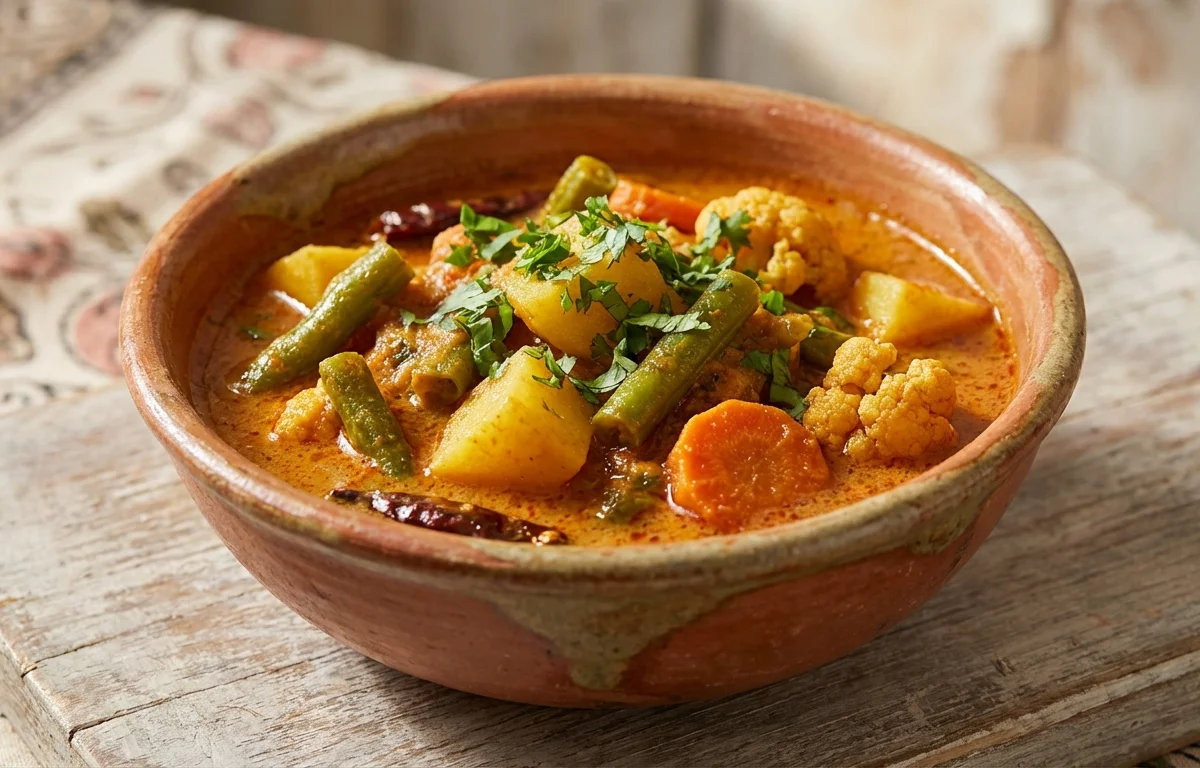
Goan Mixed Vegetable Curry
A gently spiced Goan-style vegetable curry with coconut, warm whole spices, and a light tang from tamarind. It is rich without feeling heavy and works beautifully with rice, neer dosa, or pav on the side.
For 4 servings
- prep · ~10 min
Soak the tamarind and prepare the vegetables.
1.Soak the tamarind in a little warm water for 10 minutes.2.Peel and cube the potato and carrot.3.Cut the green beans into short pieces and break the cauliflower into small florets.4.Keep the green peas ready and slice the onion and chop the tomato. - boil · ~10 min
Cook the vegetables until just tender.
Add the potato, carrot, green beans, cauliflower, and green peas to a pan with enough water to cover. Cook until the vegetables are just tender but still hold their shape, then drain and keep aside.
TIPDo not overcook the vegetables or they will turn mushy when simmered in the curry. - roast · ~5 min
Roast the coconut and whole spices.
1.Heat a small pan on medium-low heat.2.Add the grated coconut, dried red chili, coriander seeds, cumin seeds, black peppercorns, cloves, and cinnamon.3.Roast until the coconut smells nutty and turns light golden, stirring often.4.Take it off the heat and let it cool slightly.TIPKeep the heat low so the coconut browns evenly without burning. - mix · ~3 min
Grind the masala paste.
Squeeze the soaked tamarind and add the pulp to a grinder with the roasted coconut-spice mixture, turmeric powder, and a little water. Grind to a smooth, thick paste.
- saute · ~7 min
Cook the onion and tomato base.
1.Heat oil in a pan over medium heat.2.Add the sliced onion and cook until soft and lightly golden.3.Add the chopped tomato and cook until it softens and turns pulpy.4.Stir in the ground masala paste and cook for 2 minutes. - simmer · ~8 min
Simmer the curry with the vegetables.
Add the cooked vegetables, remaining water, and salt. Mix gently and simmer until the gravy thickens slightly and the vegetables absorb the flavor.
- garnish
Garnish with coriander leaves.
- serve
Serve hot with rice, neer dosa, or pav.
What to keep in mind.
7 tips from the recipe — small details that make a real difference to the final dish.
- 1Parboil the vegetables only until a knife meets slight resistance; they will finish cooking in the masala.
- 2Roast the coconut on medium-low heat and stir constantly so it turns evenly golden, not patchy or bitter.
- 3Grind the masala with minimal water first; a thick paste gives the curry a fuller body.
- 4Cook the onion until lightly golden before adding tomato, or the gravy can taste raw and flat.
- 5Strain the tamarind pulp if it has fibers or seeds so the curry stays smooth.
- 6After adding the vegetables, simmer gently and stir carefully to keep the cauliflower and potato from breaking.
- 7This curry tastes even better after a short rest, once the coconut-spice paste settles into the vegetables.
Adapt it for your goals.
Low-oil
Reduce the oil and sauté the onion with a splash of water as needed; the curry will be a little lighter but still flavorful from the roasted coconut masala.
spicierSpicier
Add an extra dried red chili or a few more peppercorns while roasting if you want a hotter, more robust curry for rice.
seasonal vegSeasonal-veg
Swap in pumpkin, ivy gourd, or sweet potato for part of the mixed vegetables to suit the season while keeping the same Goan masala base.
no onionNo-onion
Skip the onion and rely on the tomato and coconut masala for body if you want a simpler curry with a cleaner spice profile.
Why this is on our healthy list.
Vegetable-Rich Meal
Potato, carrot, beans, cauliflower, and peas bring a mix of fiber, color, and varied plant nutrients to the curry.
Contains Beneficial Spices
Coriander, cumin, black pepper, cloves, cinnamon, and turmeric add aroma along with traditional spice-based antioxidant compounds.
Satisfying Plant-Based Fats
Fresh coconut adds richness and satiety, helping the curry feel full-bodied without relying on dairy.
Frequently asked questions
Yes. Add frozen peas directly, and use cauliflower straight from frozen or thawed; just avoid overcooking since they soften quickly.