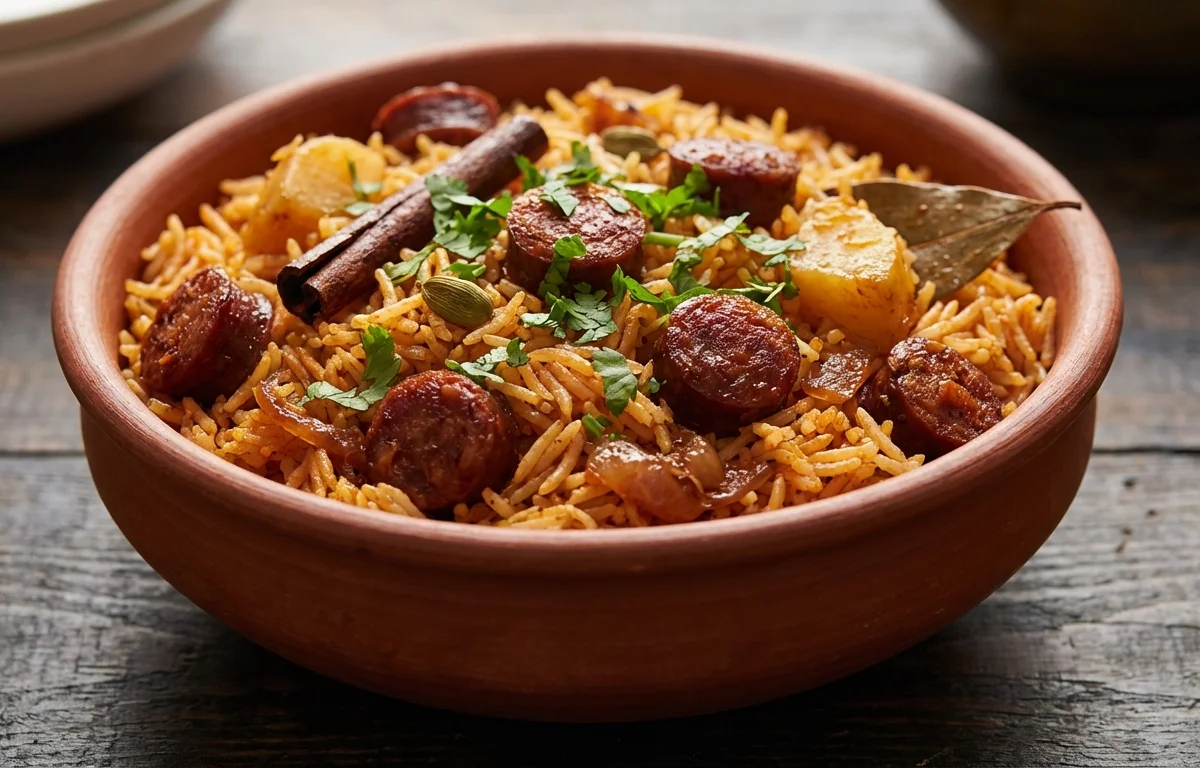
Goan Sausage Pulao
A warmly spiced rice dish made with tangy Goan sausage, onions, tomatoes, and fragrant whole spices. The sausage seasons the rice as it cooks, giving every spoonful a rich, savory, slightly smoky flavor.
For 4 servings
- prep · ~20 min
Prep the rice and sausage.
1.Wash the basmati rice until the water runs mostly clear.2.Soak the rice in fresh water for 20 minutes, then drain well.3.Remove the casings from the Goan sausage and crumble the filling into a bowl.4.Slice the onions, chop the tomatoes, chop the ginger and garlic, and slit the green chilies.TIPDrain the rice well so the grains stay separate while cooking. - saute · ~8 min
Cook the whole spices and onions.
1.Heat the oil in a heavy pot over medium heat.2.Add bay leaf, cinnamon, cloves, and green cardamom.3.Cook for 30 seconds until fragrant.4.Add the sliced onions and cook until light golden, 6 to 7 minutes. - saute · ~12 min
Build the sausage masala.
1.Add the ginger, garlic, and green chilies to the pot.2.Cook for 1 minute until the raw smell fades.3.Add the crumbled Goan sausage and cook for 5 to 6 minutes, breaking it up well.4.Add the chopped tomatoes and turmeric powder, then cook until the tomatoes soften and the mixture looks glossy, 4 to 5 minutes.TIPGoan sausage is naturally tangy and salty, so keep the extra salt light. - mix · ~1 min
Coat the rice with the masala.
Add the drained rice and gently mix for 1 minute so the grains are coated with the sausage mixture without breaking.
- boil · ~5 min
Add water and bring to a boil.
Pour in the hot water and add the salt. Bring the pot to a brisk boil over medium-high heat.
- simmer · ~15 min
Cover and cook the pulao.
Lower the heat, cover tightly, and cook for 12 to 15 minutes until the rice is tender and the water is absorbed.
TIPKeep the heat low once covered so the bottom does not catch before the rice finishes cooking. - rest · ~10 min
Rest the pulao off the heat.
Turn off the heat and let the pulao rest, covered, for 10 minutes to finish steaming.
- garnish
Finish with coriander and lime juice.
Fluff the rice gently with a fork, then mix in the chopped coriander leaves and lime juice.
- serve
Serve the Goan Sausage Pulao hot.
What to keep in mind.
7 tips from the recipe — small details that make a real difference to the final dish.
- 1Taste the sausage after sautéing before adding extra salt; Goan sausage can vary a lot in saltiness.
- 2Brown the onions to light golden, not dark brown, so the pulao stays balanced and not bitter.
- 3Cook the sausage until some fat renders out; that seasoned fat is what perfumes the rice.
- 4Use a heavy-bottomed pot and keep the flame low after covering to prevent scorching at the base.
- 5After resting, fluff with a fork from the sides inward so the basmati grains stay long and separate.
- 6Add the lime juice only at the end to keep its brightness from dulling during cooking.
- 7This pulao reheats well the next day; sprinkle a little water before steaming or microwaving to loosen the rice.
Adapt it for your goals.
Low-oil
Skip the extra oil and start the sausage first so it releases its own fat, then sauté the onions in that for a lighter version.
spicierSpicier
Add more slit green chilies or a little of the sausage's masala if available for a hotter, more robust pulao.
vegetable loadedVegetable-loaded
Stir in green peas or diced carrots with the tomatoes to make it a fuller one-pot meal with extra texture.
milderMilder
Reduce the green chilies and add a little extra tomato for a gentler version that still keeps the sausage flavor.
Why this is on our healthy list.
Protein from Sausage
The Goan pork sausage adds protein, making the pulao more filling than plain spiced rice.
Aromatics with Antioxidants
Onion, garlic, ginger, tomato, and spices like turmeric contribute beneficial plant compounds along with flavor.
Herb and Citrus Finish
Coriander leaves and lime juice add freshness and brightness without needing heavy finishing fats.
Frequently asked questions
You can, but soaked basmati cooks more evenly and is less likely to break or turn sticky in this one-pot method.