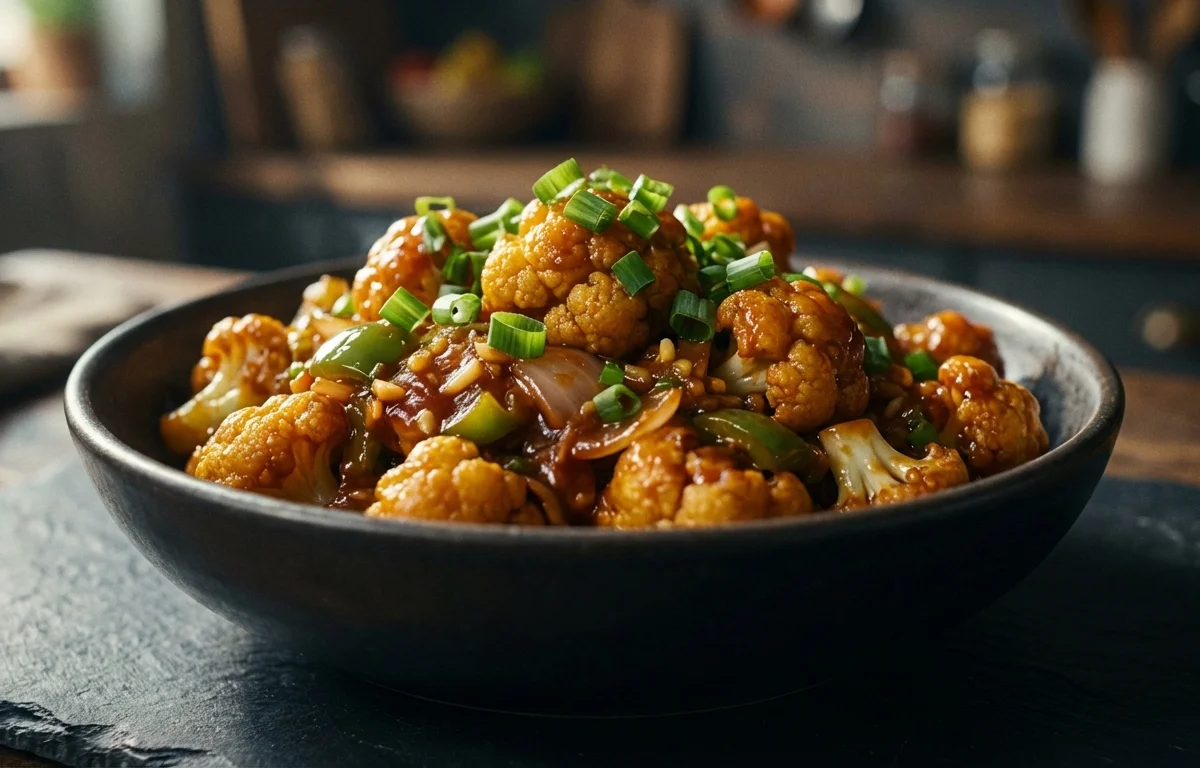
Gobi Manchurian Dry
Crispy cauliflower florets tossed in a glossy, spicy Indo-Chinese sauce with garlic, ginger, onion, and bell pepper. It has that classic street-style balance of crunch, heat, and tangy flavor that makes it hard to stop at one bite.
For 4 servings
- prep · ~10 min
Prepare the cauliflower and batter.
1.Wash the cauliflower florets and pat them dry well.2.In a bowl, mix all-purpose flour, corn flour, red chili powder, half the salt, and enough water to make a smooth medium-thick batter.3.Add the cauliflower florets and coat them evenly in the batter.TIPDry florets hold the batter better and fry up crisper. - fry · ~15 min
Fry the cauliflower until crisp.
1.Heat oil for frying in a deep pan over medium heat.2.Slide in the coated cauliflower florets in batches without crowding the pan.3.Fry until golden and crisp, about 4 to 5 minutes per batch.4.Lift them out and drain well before frying the next batch.TIPKeep the heat medium so the coating cooks through without turning too dark. - saute · ~4 min
Cook the aromatics and vegetables.
1.Heat 1 tbsp oil in a wide pan.2.Add ginger, garlic, and green chili and sauté for 30 seconds until fragrant.3.Add onion and bell pepper and cook on high heat for 2 to 3 minutes so they stay slightly crisp.4.Add the white part of the spring onion and toss briefly. - mix · ~2 min
Make the Manchurian sauce.
Add soy sauce, tomato ketchup, red chili sauce, vinegar, black pepper, the remaining salt, and a splash of water. Mix well and cook for 1 to 2 minutes until the sauce looks glossy and lightly thickened.
- assemble · ~2 min
Toss the fried cauliflower in the sauce.
Add the fried cauliflower to the pan and toss quickly so every piece is coated. Cook for 1 minute on high heat, then add the spring onion greens and toss once more.
TIPToss only at the end so the cauliflower stays crisp instead of turning soggy. - serve
Serve hot right away.
What to keep in mind.
7 tips from the recipe — small details that make a real difference to the final dish.
- 1Keep the cauliflower very dry before battering or the coating will slip and splutter in oil.
- 2Use a medium-thick batter that clings to each floret; a thin batter gives patchy, less crisp coverage.
- 3Fry in small batches so the oil temperature stays steady and the florets turn crisp instead of oily.
- 4For extra street-style crunch, let the first fry cool for a few minutes, then fry briefly a second time.
- 5Cook onion and bell pepper on high heat just until slightly blistered so they stay crunchy in the final toss.
- 6Have the sauce ready before adding the fried cauliflower, because even a minute too long in the pan softens the crust.
- 7Serve immediately after tossing; dry Gobi Manchurian loses its signature crispness as it sits.
Adapt it for your goals.
Air-fryer
Air-fry the battered florets with a light brushing of oil until crisp, then toss in the same sauce for a lighter version.
bakedBaked
Bake the coated cauliflower on a hot tray until golden, flipping once, for an oven-friendly alternative with less active frying.
veganVegan
The recipe is naturally vegan if your ketchup and sauces are vegan-friendly, making it easy for plant-based meals.
extra spicyExtra-spicy
Increase green chili and red chili sauce for a hotter street-style version that pairs especially well with fried rice.
Why this is on our healthy list.
Cauliflower-Based Vegetable Dish
Cauliflower brings fiber and a good amount of vegetables to the plate while keeping the dish hearty and satisfying.
Aromatics Add More Than Flavor
Ginger, garlic, and green chili contribute strong flavor, which helps build depth without needing heavy cream or butter.
Includes Colorful Vegetables
Onion, bell pepper, and spring onion add variety, texture, and extra plant compounds alongside the cauliflower.
Frequently asked questions
Usually the florets were wet before battering, the oil was not hot enough, or the fried gobi sat too long in the sauce before serving.