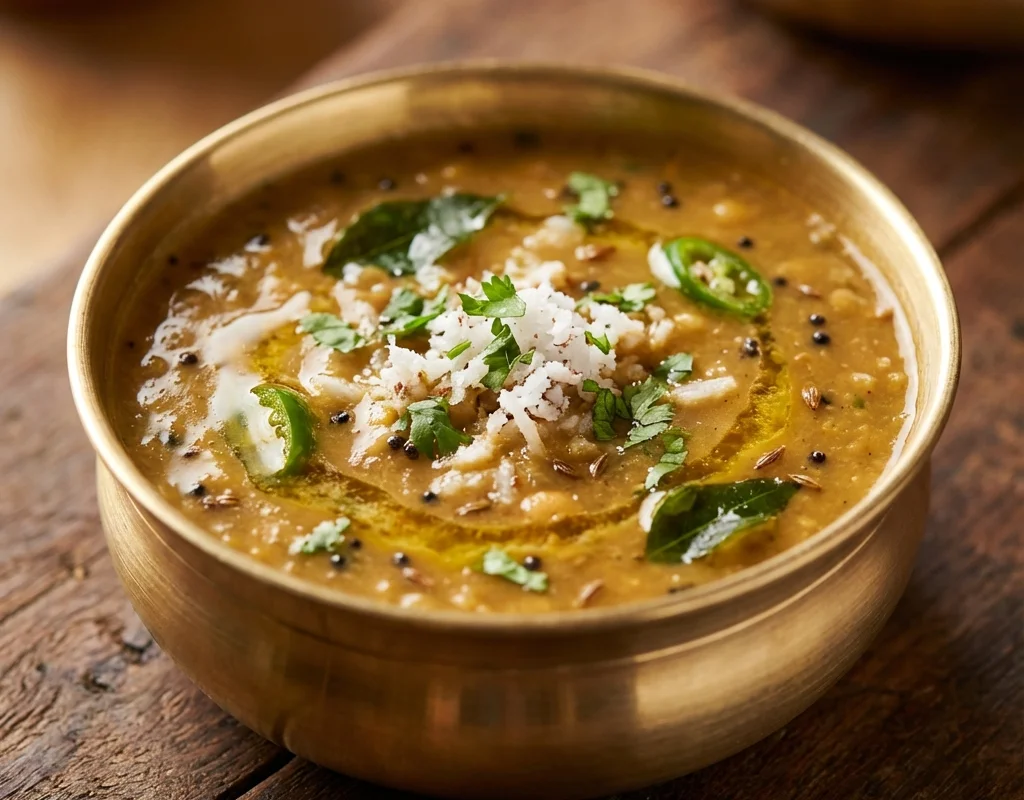
Godi Varan
A comforting Maharashtrian dal with a delicate natural sweetness from grated coconut and a whisper of jaggery. Light, soupy, and tempered with fragrant ghee, cumin, and curry leaves, this everyday dal is a soulful companion to steamed rice or soft chapatis.
For 4 servings
- prep · ~2 min
Wash and soak the dal.
Rinse toor dal in 2-3 changes of water until water runs clear. Drain and set aside.
- pressure cook · ~15 min
Pressure cook the dal with turmeric.
Add washed dal, 3 cups water, turmeric powder, and salt to the pressure cooker. Close the lid and cook on medium heat for 3-4 whistles. Let the pressure release naturally.
TIPNatural pressure release makes the dal softer and easier to mash. Don't force the steam out. - mix · ~3 min
Mash and loosen the cooked dal.
Open the cooker. Mash the dal with a ladle or whisk until smooth. Add 2 cups water and the grated jaggery. Mix well and bring to a gentle simmer on low heat.
TIPThe consistency should be thin and soupy, not thick like a regular dal. Add more water if needed. - mix · ~3 min
Add the fresh coconut.
Stir in the grated fresh coconut and let the dal simmer for 2-3 minutes. The coconut should soften slightly but retain its texture.
- temper · ~2 min
Make the tempering.
1.Heat ghee in a small tempering pan over medium heat.2.Add mustard seeds and wait until they splutter (30 sec).3.Add cumin seeds and let them sizzle and turn golden (20 sec).4.Add asafoetida and curry leaves. Fry for 10 seconds until fragrant.TIPCurry leaves will crackle — stand back a little as you add them to hot ghee. - simmer · ~2 min
Pour tempering over the dal and simmer.
Immediately pour the hot tempering over the simmering dal. Stir gently and let the flavors meld for 2 minutes on low heat. Turn off the flame.
- garnish
Garnish with coriander leaves and serve.
Sprinkle chopped coriander leaves over the dal. Serve hot with steamed rice and a drizzle of ghee.
What to keep in mind.
7 tips from the recipe — small details that make a real difference to the final dish.
- 1Use freshly grated coconut for the best texture and sweetness; frozen coconut can be watery.
- 2Don't skip natural pressure release — it makes the dal creamier without extra effort.
- 3Whisk the dal thoroughly after mashing to ensure a silky, lump-free consistency.
- 4Adjust the final consistency with warm water, not cold, to keep the dal from separating.
- 5Add jaggery after mashing the dal so it dissolves evenly and doesn't clump.
- 6Temper the curry leaves just until they crackle — overcooking makes them bitter.
- 7Serve immediately after adding the tempering for the most aromatic, vibrant flavor.
Adapt it for your goals.
Vegan
Replace ghee with coconut oil in the tempering for a fully plant-based version that complements the coconut flavor.
low oilLow-oil
Skip the tempering entirely and stir in a pinch of roasted cumin powder and asafoetida directly into the dal for a lighter, oil-free version.
high proteinHigh-protein
Add ¼ cup cooked moong dal or a handful of chopped spinach while simmering for extra protein and nutrients without overpowering the flavor.
spicierSpicier
Add 1-2 chopped green chilies along with the curry leaves in the tempering for a gentle heat that contrasts the sweetness.
Why this is on our healthy list.
Rich in Plant Protein
Toor dal is an excellent source of plant-based protein, making this dish a nourishing and filling option for vegetarians.
Gut-Friendly Fiber
The high dietary fiber in pigeon peas supports healthy digestion and helps maintain stable blood sugar levels.
Good Source of Folate
Lentils are naturally rich in folate, an essential B vitamin that supports red blood cell formation and overall vitality.
Anti-Inflammatory Spices
Turmeric and asafoetida provide anti-inflammatory compounds that may support joint health and immunity.
Naturally Low in Fat
With just one teaspoon of ghee for the whole recipe, this dal is a light yet satisfying dish that fits a heart-conscious diet.
Frequently asked questions
Fresh coconut gives the best texture and mild sweetness, but you can substitute 2 tablespoons of unsweetened dried coconut — rehydrate it in warm water for 5 minutes before adding.



.webp)