Gongura Egg Curry
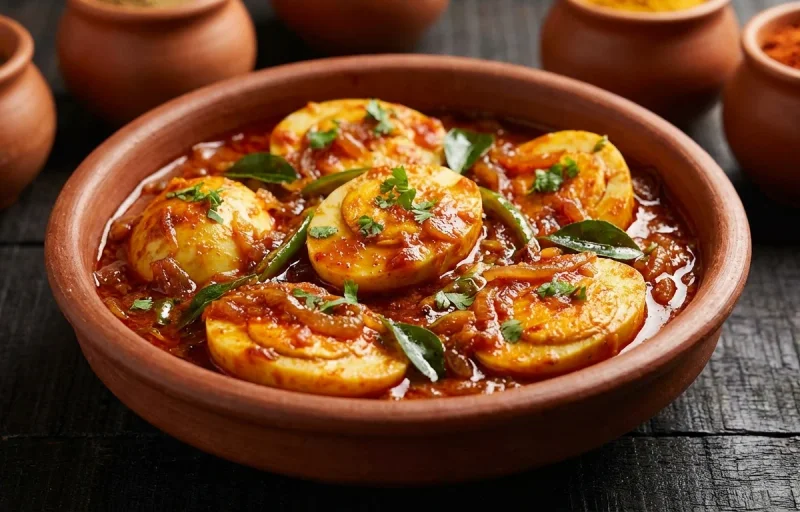
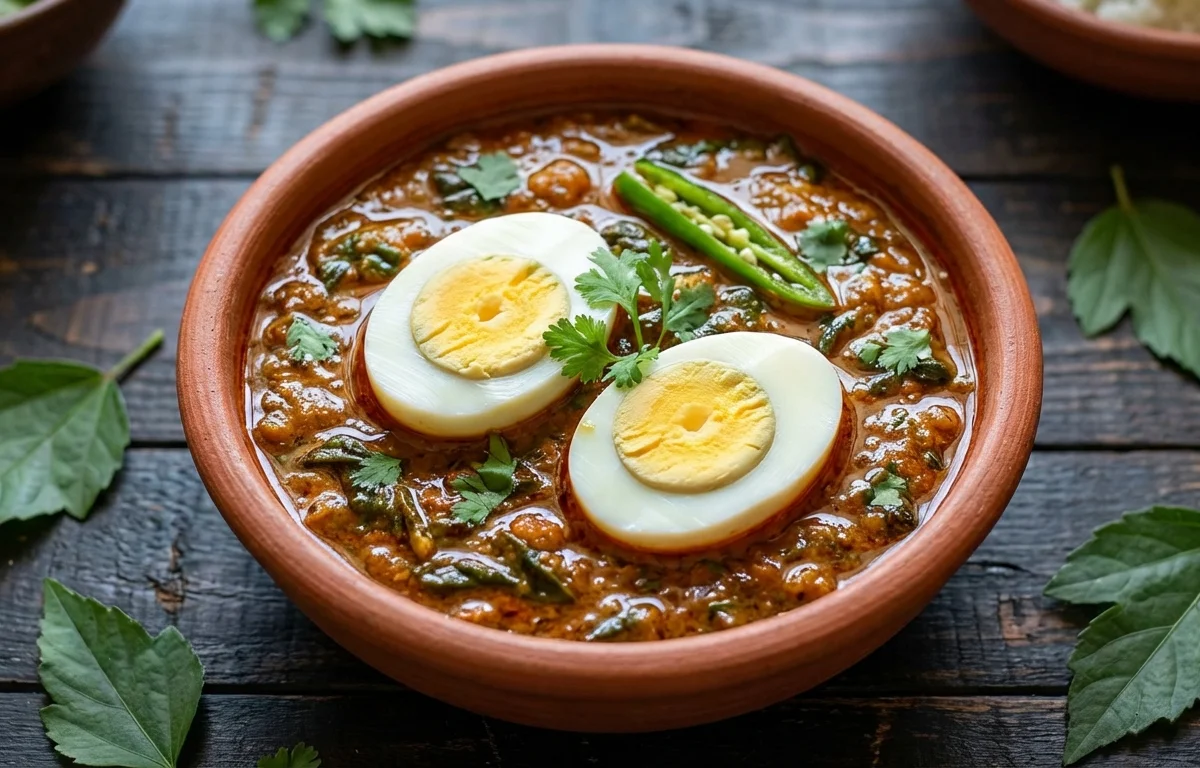
Tangy gongura leaves give this Andhra-style egg curry its bold, mouthwatering flavor. Hard-boiled eggs simmer in a spiced onion and tomato base, then get coated in the rich, sour gongura masala for a comforting dish that pairs beautifully with rice or roti.
For 4 servings
- boil · ~12 min
Boil and peel the eggs.
Place the eggs in a pot, cover with water, and boil until hard-cooked. Cool, peel, and make a few light slits on each egg so the masala can coat them better.
TIPLight slits help the eggs absorb the tangy gravy without breaking apart. - saute · ~6 min
Cook the gongura leaves.
Heat a little of the oil in a pan and add the gongura leaves. Cook until the leaves wilt fully, turn soft, and their moisture reduces. Set aside to cool slightly.
- mix · ~1 min
Blend the gongura.
Blend the cooled gongura into a coarse paste without adding extra water.
TIPKeep the paste slightly coarse for a more traditional texture and stronger gongura flavor. - temper · ~2 min
Make the tempering.
1.Heat the remaining oil in a kadai over medium heat.2.Add mustard seeds and let them splutter.3.Add cumin seeds, dry red chili, and curry leaves.4.Cook for a few seconds until fragrant. - saute · ~7 min
Cook the onion base.
1.Add onion and green chili.2.Cook until the onion turns soft and light golden.3.Add ginger-garlic paste and sauté until the raw smell goes away. - saute · ~7 min
Add tomato and spices.
1.Add tomato and cook until soft and pulpy.2.Add turmeric powder, red chili powder, coriander powder, garam masala, and salt.3.Mix well and cook until the masala thickens and smells rich.TIPCook the tomatoes down fully so the gravy tastes balanced and not raw. - simmer · ~7 min
Simmer with gongura and water.
Add the gongura paste and mix it into the masala. Pour in the water and bring everything to a gentle simmer until the curry thickens slightly.
- simmer · ~5 min
Add the eggs and finish the curry.
Add the boiled eggs and spoon the curry over them. Simmer for a few minutes so the eggs take on the tangy, spicy flavor.
- garnish
Garnish with cilantro.
- serve
Serve hot with rice or roti.
What to keep in mind.
7 tips from the recipe — small details that make a real difference to the final dish.
- 1Pat the boiled eggs dry before slitting so they do not tear when simmered in the gravy.
- 2Cook the gongura until its raw sharpness mellows and most moisture evaporates, or the curry can taste harsh and watery.
- 3Do not add water while blending the gongura; a thicker paste gives the curry a richer Andhra-style coating.
- 4Let the onion turn light golden before adding ginger-garlic paste for a sweeter, deeper masala base.
- 5Simmer the eggs gently after adding them; a hard boil can make the whites rubbery.
- 6This curry tastes even better after 30 minutes of resting, when the eggs absorb the tangy gongura masala.
- 7Store leftovers refrigerated for up to 2 days and reheat on low heat so the gravy does not split or reduce too much.
Adapt it for your goals.
Fried-egg
Lightly pan-fry the boiled eggs with a pinch of turmeric and chili before simmering for a firmer surface and extra flavor.
spicier andhraSpicier-andhra
Increase green chilies and red chili powder for a hotter version that matches the bold tang of gongura.
less gravyLess-gravy
Use less water and cook down longer for a thicker gongura egg masala that pairs especially well with roti.
potato addedPotato-added
Add cubed boiled potatoes with the eggs to stretch the curry and soak up the tangy masala beautifully.
Why this is on our healthy list.
Protein From Eggs
Boiled eggs make this curry filling and provide high-quality protein that pairs well with the spiced gravy.
Leafy Green Goodness
Gongura leaves add plant compounds and the benefits of leafy greens along with their signature sour flavor.
Aromatic Spice Support
Ginger, garlic, cumin, mustard seeds, and curry leaves contribute flavor while keeping the dish lively and aromatic.
Frequently asked questions
Yes, but the flavor can be saltier or more concentrated. Add it gradually and adjust salt and water after tasting.


.webp)