Gongura Kodi
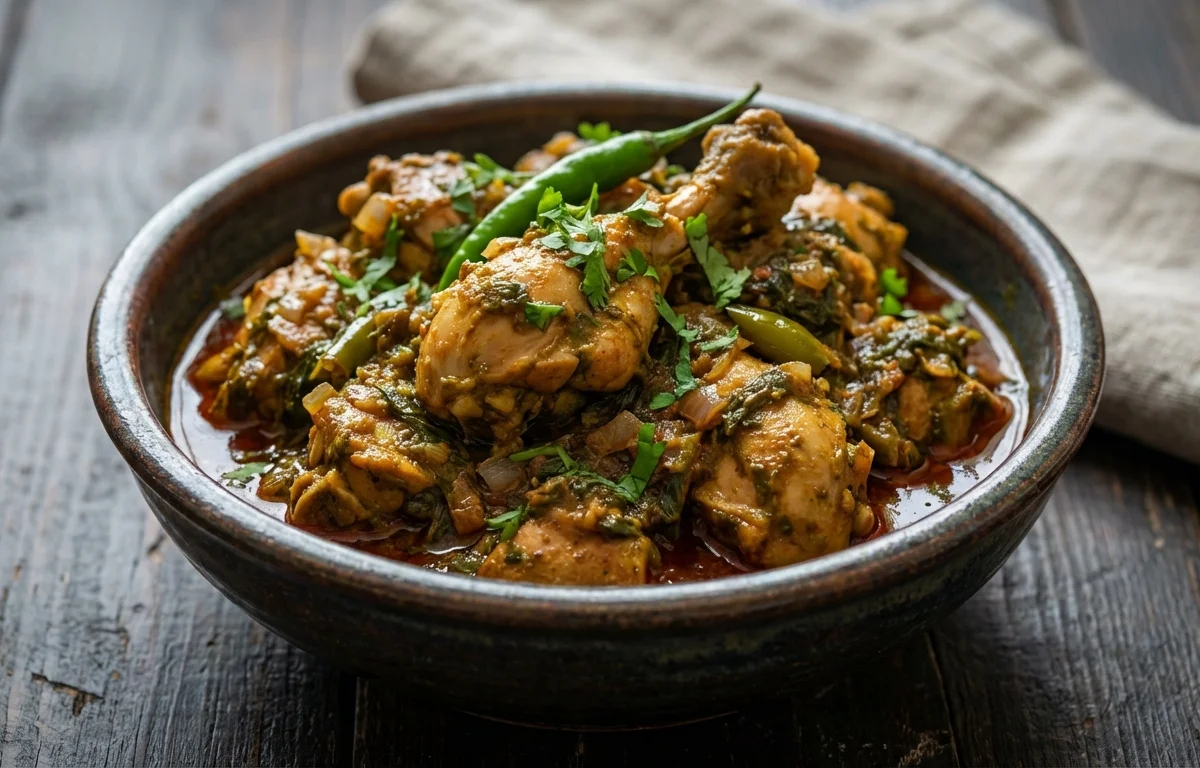
A fiery, tangy chicken curry from the heart of Andhra Pradesh, where tender chicken is slow-cooked in a rustic paste of gongura leaves and aromatic spices. The unique sourness of fresh sorrel leaves cuts through the richness, creating an intensely flavorful dish that pairs perfectly with steamed rice or jowar roti.
For 4 servings
- prep · ~3 min
Blanch the gongura leaves.
1.Bring 2 cups of water to a boil in a small saucepan.2.Add the cleaned gongura leaves and blanch for 2-3 minutes until wilted.3.Drain the leaves and rinse with cold water to stop cooking.4.Grind the blanched leaves into a smooth paste using 2-3 tablespoons of water. Set aside.TIPDon't overcook the leaves — blanching preserves the vibrant color and tangy flavor. - temper · ~2 min
Make the tempering.
1.Heat oil in a heavy-bottomed pan over medium heat until shimmering.2.Add mustard seeds and let them splutter for 30 seconds.3.Add cumin seeds, dried red chilies, and curry leaves. Sauté until fragrant, about 30 seconds.TIPUse medium heat — high heat burns the seeds and makes the oil bitter. - saute · ~10 min
Build the onion base.
1.Add sliced onions to the tempering and cook until deep golden brown, stirring occasionally.2.Add ginger-garlic paste and slit green chilies. Sauté until the raw smell disappears.3.Add chopped tomatoes and cook until they turn soft and mushy.TIPPatience with caramelizing the onions adds a deep, sweet base that balances the sour gongura. - saute · ~3 min
Cook the spice base.
1.Lower the heat and add turmeric powder, red chili powder, coriander powder, and cumin powder.2.Stir continuously for 1 minute to toast the spices without burning.3.Add 2 tablespoons of water to prevent sticking and cook until oil separates.TIPKeep the heat low while adding dry spices — a quick toast releases their oils, but a second too long makes them acrid. - saute · ~7 min
Sear the chicken.
1.Add the chicken pieces and salt to the pan.2.Sauté on medium-high heat for 5-7 minutes, turning the pieces until the chicken is lightly browned on all sides.TIPBrowning the chicken first locks in juices and adds a layer of flavor before the gravy comes together. - simmer · ~20 min
Simmer the curry with gongura paste.
1.Add the ground gongura paste and 1 cup of water to the chicken. Stir well.2.Bring to a boil, then lower the heat to a gentle simmer.3.Cover and cook for 15-20 minutes, stirring occasionally, until the chicken is tender and the oil surfaces.TIPSimmer covered for juicy chicken — the steam helps cook the meat evenly while the tangy gravy thickens. - mix · ~1 min
Finish with garam masala.
1.Uncover the pan and check the consistency. If too thin, simmer for another 2-3 minutes.2.Sprinkle garam masala over the top and stir gently to mix.TIPAdding garam masala at the very end keeps its aroma fresh and noticeable in the final dish. - garnish
Garnish with fresh coriander leaves and serve hot.
What to keep in mind.
6 tips from the recipe — small details that make a real difference to the final dish.
- 1Use bone-in chicken for deeper flavor and juicier meat — the marrow adds richness to the gravy.
- 2Blanch gongura leaves just until wilted, then plunge into cold water to lock in the vibrant green color and tang.
- 3Caramelize the onions until deep golden brown — this sweet base perfectly balances the sourness of the gongura.
- 4Toast the ground spices on low heat for only a minute; burnt spices will make the curry bitter.
- 5Sear the chicken on medium-high heat until lightly browned to seal in juices before adding the gongura paste.
- 6Simmer covered for 15–20 minutes — the steam tenderizes the chicken while the gravy thickens naturally.
Adapt it for your goals.
Low-oil
Reduce oil to 1 tablespoon and dry-roast the tempering spices in a non-stick pan. Use a pressure cooker for the chicken (2 whistles) to save time and oil while keeping the gravy rich.
High proteinHigh-protein
Replace chicken with 500 g of paneer (cubed) or firm tofu, and use a tablespoon of chickpea flour slurry to thicken the gravy. Ideal for vegetarians seeking a protein-packed meal.
JainJain
Omit onion and ginger-garlic paste; use asafoetida (hing) in the tempering and add more tomato (2 medium) for body. This keeps the dish sattvic and suitable for Jain dietary restrictions.
VeganVegan
Swap chicken with 400 g of chickpeas (canned, drained) and cook for just 10 minutes after adding gongura paste. The tangy gravy complements legumes beautifully.
Why this is on our healthy list.
Rich in Antioxidants
Gongura (sorrel leaves) are packed with vitamin C and beta-carotene, which help combat oxidative stress and support immune function.
High in Lean Protein
Chicken provides high-quality, low-fat protein essential for muscle repair and satiety, especially with bone-in cuts that also add minerals like calcium.
Anti-Inflammatory Spices
Turmeric, ginger, and cumin in the recipe contain curcumin and other compounds known for their natural anti-inflammatory properties.
Digestive Aid
The sourness of gongura leaves stimulates digestive enzymes, while cumin and curry leaves help reduce bloating and improve gut health.
Low in Saturated Fat
Using skinless chicken and a modest amount of oil keeps saturated fat low, making this curry a heart-friendly choice when paired with whole grains.
Frequently asked questions
Yes, frozen gongura leaves work well — thaw them completely, squeeze out excess water, and blanch for 1 minute before grinding. They may be slightly less tangy, so add a squeeze of lemon at the end if needed.


.webp)