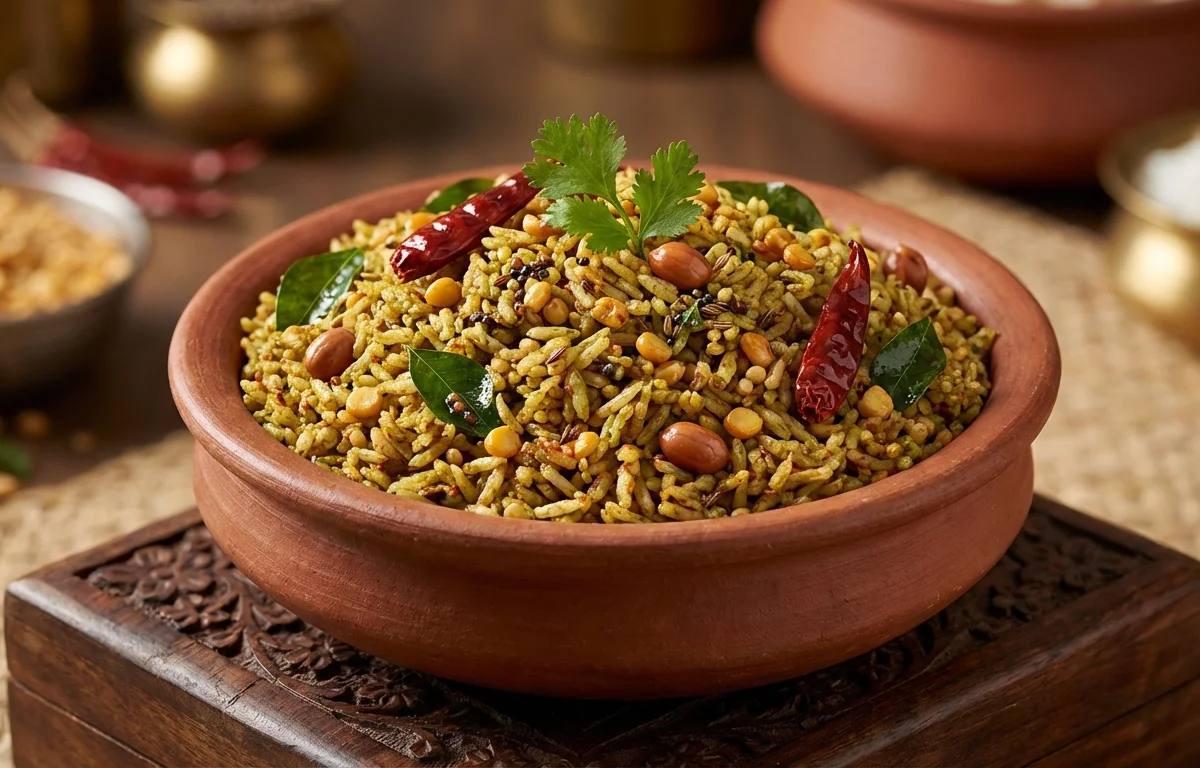
Gongura Rice
Tangy gongura leaves cooked down with green chilies, garlic, and a simple tempering, then mixed with fluffy rice. This Andhra favorite is bold, comforting, and perfect as part of a larger meal.
For 4 servings
- prep · ~20 min
Wash the rice and prep the leaves.
1.Wash the rice until the water runs mostly clear.2.Soak the rice for 20 minutes, then drain.3.Wash the gongura leaves well and roughly chop them.4.Slit the green chilies and lightly crush the garlic cloves. - boil · ~15 min
Cook the rice until fluffy.
Bring water to a boil, add the drained rice and half of the salt, then cook until the grains are just done and separate. Spread the cooked rice on a plate or wide bowl to cool slightly.
TIPCool the rice a little before mixing so the grains stay separate and do not turn mushy. - temper · ~3 min
Make the tempering.
1.Heat oil in a wide pan over medium heat.2.Add mustard seeds and let them splutter.3.Add cumin seeds, urad dal, chana dal, peanuts, and dried red chilies.4.Cook until the dals turn lightly golden and the peanuts smell nutty. - saute · ~8 min
Cook the garlic, chilies, and gongura.
1.Add garlic, green chilies, and curry leaves to the pan.2.Sauté for 30 seconds until fragrant.3.Add gongura leaves and turmeric powder.4.Cook, stirring often, until the leaves wilt completely and turn into a thick, tangy mash.TIPCook the gongura until most of its moisture is gone; this gives the rice a deeper sour flavor and prevents clumping. - mix · ~3 min
Mix the gongura base with the rice.
Add the remaining salt to the gongura mixture and mix well. Gently fold in the cooked rice until every grain is coated evenly.
- rest · ~5 min
Let the rice rest for 5 minutes.
- serve
Serve the gongura rice warm.
What to keep in mind.
7 tips from the recipe — small details that make a real difference to the final dish.
- 1Dry the washed gongura well before chopping so it cooks down faster and the rice stays fluffy, not wet.
- 2Spread the cooked rice on a wide plate and let steam escape before mixing; hot rice can break and turn sticky.
- 3Fry the urad dal, chana dal, and peanuts only until light golden; if they darken too much, the tempering tastes bitter.
- 4Cook the gongura until it looks like a thick paste with little visible moisture, or it will clump the rice.
- 5Taste the gongura mixture before adding rice; the sour leaves often need a final pinch of salt to balance them.
- 6Rest the mixed rice for 5 to 10 minutes so the tangy gongura flavor settles into the grains.
- 7Store leftovers chilled and reheat gently in a pan, not the microwave, to keep the peanuts and dal tempering from going soft.
Adapt it for your goals.
Spicier
Add 1 to 2 extra green chilies or another dried red chili for a fiercer Andhra-style heat that stands up well to the sour gongura.
low oilLow-oil
Reduce the oil slightly and dry-roast the peanuts separately; the dish will be lighter but still keep some crunch and tempering flavor.
no garlicNo-garlic
Skip the garlic for a simpler, temple-style profile where the gongura's tang and the curry leaves stand out more clearly.
sesame boostSesame-boost
Mix in a spoon of roasted sesame powder for a nuttier, richer version that softens the leaf's sharp sour edge.
Why this is on our healthy list.
Leafy Greens Goodness
Gongura leaves add the benefits of leafy greens along with a naturally bold, tangy flavor that needs very little extra seasoning.
Plant-Based Protein and Crunch
Peanuts, chana dal, and urad dal contribute some plant protein and texture, making the rice more satisfying than plain seasoned rice.
Aromatic Digestive Support
Garlic, cumin, curry leaves, and mustard seeds bring traditional aromatics that add depth while making the dish feel lighter and more balanced.
Frequently asked questions
Yes. Leftover rice works very well as long as the grains are separate and not overly soft. Bring it to room temperature before mixing.
.webp)