
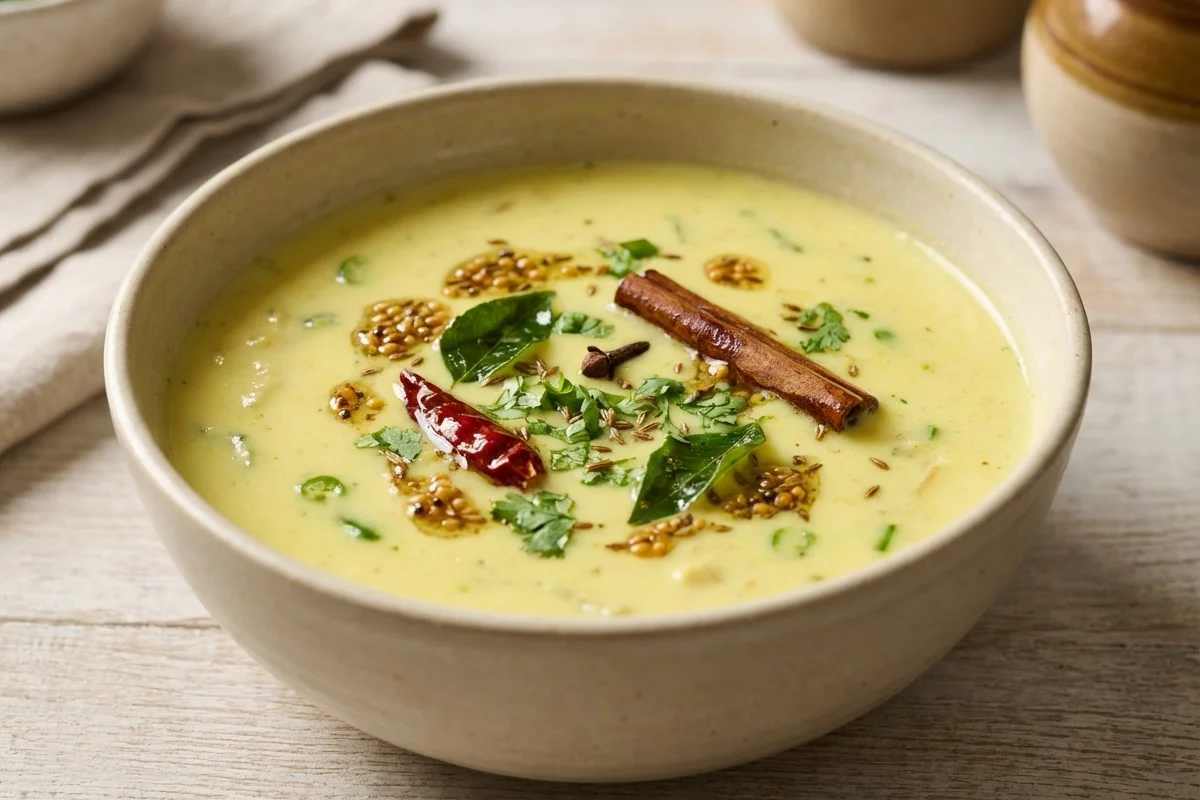
Gujarati Kadhi
Light, sweet-tangy Gujarati kadhi is made with yogurt and chickpea flour, then finished with a fragrant tempering of mustard, cumin, curry leaves, and cloves. It is soothing, gently spiced, and perfect with steamed rice or khichdi.
For 4 servings
- mix · ~5 min
Whisk the kadhi base.
1.Add yogurt and chickpea flour to a bowl.2.Whisk until completely smooth with no lumps.3.Pour in water little by little and whisk again.4.Add salt and jaggery and mix well.TIPWhisk the flour into the yogurt first before adding water so the kadhi stays smooth. - temper · ~2 min
Make the tempering.
1.Heat ghee in a pot over medium heat.2.Add mustard seeds and let them splutter.3.Add cumin seeds, fenugreek seeds, cloves, cinnamon, and dried red chili.4.Add curry leaves, asafoetida, grated ginger, and green chili and cook briefly until fragrant.TIPKeep the heat medium so the spices bloom without turning bitter. - boil · ~15 min
Cook the kadhi.
Pour the yogurt mixture into the pot and stir continuously as it heats. Bring it to a gentle boil, then lower the heat and cook for 12 to 15 minutes, stirring often, until slightly frothy and lightly thickened.
TIPDo not leave it unstirred in the beginning, or the yogurt and chickpea flour can catch at the bottom. - garnish
Garnish with cilantro.
- serve
Serve the kadhi hot.
What to keep in mind.
7 tips from the recipe — small details that make a real difference to the final dish.
- 1Use slightly sour yogurt for the classic sweet-tangy Gujarati kadhi balance.
- 2Whisk besan into the yogurt before adding water to prevent stubborn lumps.
- 3Stir continuously until the first gentle boil so the yogurt base stays smooth and doesn’t split.
- 4Keep the tempering on medium heat; fenugreek burns fast and can make the kadhi bitter.
- 5Let the kadhi simmer until lightly frothy and just coating the spoon, not thick like pakora kadhi.
- 6Taste after simmering and adjust jaggery or salt only at the end, since flavors round out as it cooks.
- 7Kadhi thickens slightly as it stands; loosen leftovers with a splash of water while reheating.
Adapt it for your goals.
Low-oil
Reduce the ghee slightly and keep the tempering brief; you still get the spice aroma with a lighter finish.
milderMilder
Use one green chili and skip the dried red chili for a gentler kadhi that suits kids or sensitive palates.
veganVegan
Swap yogurt for a tangy plant yogurt and use oil instead of ghee; keep besan for body and stability.
no jaggeryNo-jaggery
Leave out the jaggery for a more tart kadhi if you prefer less sweetness than the traditional Gujarati style.
Why this is on our healthy list.
Contains Protein and Calcium
The yogurt in this kadhi contributes protein and calcium, making the dish more nourishing than a plain broth.
Light Yet Satisfying
Its thin yogurt-besan base feels soothing and comforting while still offering body and staying power.
Digestive Spice Support
Ginger, cumin, asafoetida, and fenugreek are traditional spices often used in meals designed to feel warming and easy to digest.
Frequently asked questions
Usually the heat was too high or the mixture wasn’t stirred enough at the start. Whisk the yogurt and besan very smooth, then heat gently while stirring until it comes to a boil.



.webp)
.webp)
.webp)