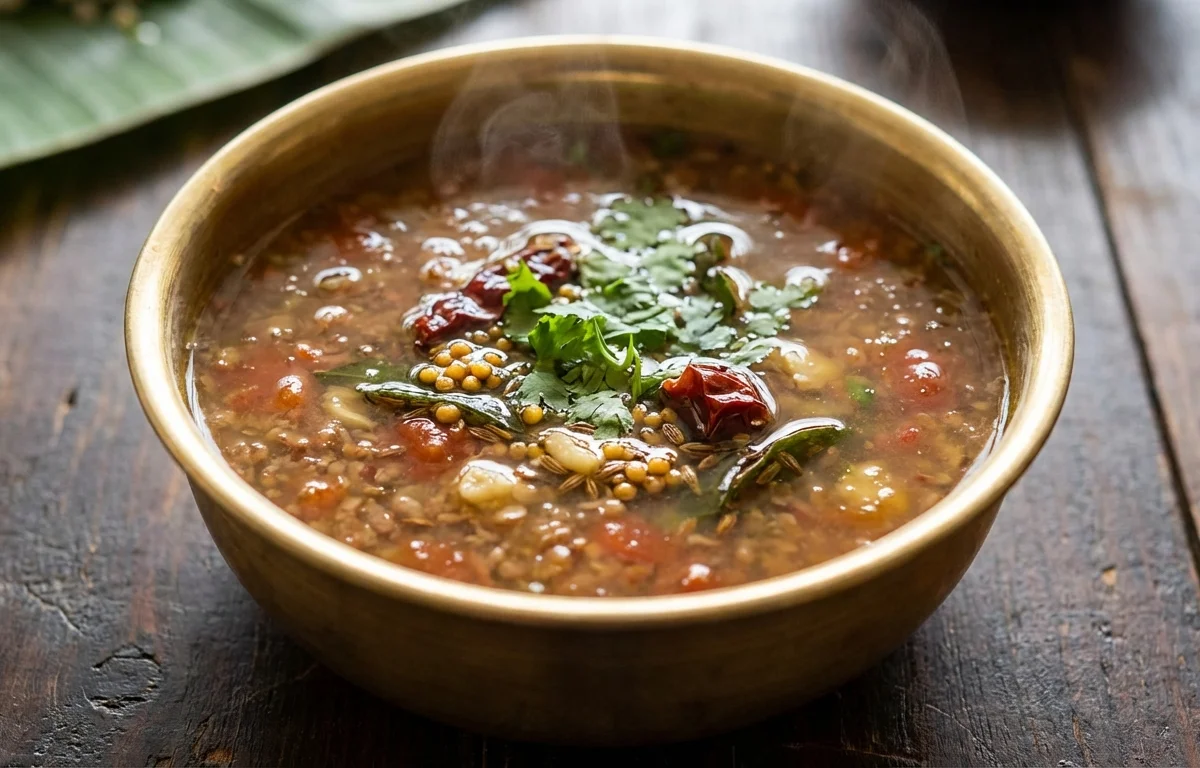
Horsegram Rasam
A warm, tangy, and peppery South Indian rasam made with nutrient-dense horsegram. This hearty broth is spiked with garlic, cumin, and black pepper, making it the perfect comfort food for rainy days or when you need a light yet deeply satisfying meal.
For 4 servings
- prep
Soak and cook the horsegram.
1.Wash half cup horsegram thoroughly and soak in water for 2 hours.2.Drain the soaked horsegram and add it to a pressure cooker with 3 cups of water and a pinch of turmeric powder.3.Pressure cook on medium heat for 5-6 whistles until soft but not mushy.TIPThe dal should be soft enough to press between your fingers but still hold its shape. Donot throw away the cooked water — it forms the base of the rasam. - prep
Prepare the tamarind water.
Soak tightly packed tamarind in 1/4 cup warm water for 10 minutes. Squeeze well to extract the pulp and discard the fibers. Set the tamarind water aside.
- prep
Crush the spice paste.
Using a mortar and pestle, lightly crush the garlic cloves with skin, cumin seeds, and black peppercorns into a coarse paste. Set aside.
TIPKeeping the skin on garlic adds a rustic aroma. Pounding instead of grinding releases essential oils without turning it into a fine paste. - simmer · ~10 min
Build the rasam base.
1.Transfer the cooked horsegram along with its water into a deep saucepan.2.Add chopped tomatoes, tamarind water, and salt.3.Add an extra cup of water for the desired thin consistency.4.Bring to a boil, then reduce heat and let it simmer for 10 minutes until the raw smell of tamarind disappears. - temper · ~2 min
Make the tempering.
1.Heat ghee in a small tadka pan over medium heat.2.Add mustard seeds and let them splutter for 30 seconds.3.Add broken dried red chilies, curry leaves, and a pinch of asafoetida.4.Immediately add the crushed garlic-cumin-pepper paste and sauté for 30 seconds until fragrant.TIPDonot let the garlic burn — it turns bitter and ruins the delicate flavor. Keep the heat at medium. - mix · ~1 min
Combine and finish.
1.Pour the tempering over the simmering rasam base.2.Mix well and let it come to a rolling boil once.3.Turn off the heat immediately to preserve the fresh aroma of the tempering. - garnish · ~5 min
Garnish with fresh coriander leaves.
Stir in the chopped coriander leaves and cover the pot. Let it rest for 5 minutes for the flavors to meld.
TIPA squeeze of fresh lemon at the time of serving lifts the tanginess significantly.
What to keep in mind.
7 tips from the recipe — small details that make a real difference to the final dish.
- 1Soaking horsegram for at least 2 hours cuts cooking time and ensures even softening.
- 2Reserve the cooked horsegram water — it's the flavorful, nutritious base of the rasam.
- 3Pound garlic with its skin on using a mortar and pestle for a rustic, aromatic paste.
- 4Do not over-boil after adding the tempering; a single rolling boil preserves the fresh fragrance.
- 5Adjust the rasam's consistency with extra water; it should be sippable, not thick like a dal.
- 6Let the rasam rest for 5 minutes off heat before serving to allow flavors to meld.
- 7Serve hot in small bowls or as a soup with rice to balance its peppery kick.
Adapt it for your goals.
Coconut Milk
Replace 1 cup of water with thin coconut milk during simmering for a creamier, milder rasam — perfect for those who prefer a less spicy broth.
Tomato FreeTomato-Free
Skip tomatoes and use an extra tablespoon of tamarind paste for tanginess; this variant is ideal for those avoiding nightshades or seeking a sharper sour note.
Grain Bowl AdditionGrain Bowl Addition
Add 1/2 cup cooked rice or quinoa directly into the simmering rasam for a heartier, one-pot meal with added fiber and texture.
Lemon Cilantro FinishLemon-Cilantro Finish
Stir in 2 teaspoons of fresh lemon juice at the final step for a bright, citrusy twist that cuts through the richness of ghee.
Why this is on our healthy list.
High in Plant Protein
Horsegram is a legume rich in protein, making this rasam a satisfying, muscle-friendly option without any animal products.
Supports Digestion
Asafoetida and cumin aid digestion, while garlic's prebiotic properties promote a healthy gut microbiome.
Low in Fat
With minimal ghee used only in the tempering, this rasam is a light, low-fat broth that's both nourishing and easy on the stomach.
Natural Immunity Boost
Black pepper and dried red chilies provide a dose of antioxidants and capsaicin, which may support immune function and circulation.
Frequently asked questions
Yes, use 1 cup of cooked canned horsegram (rinsed and drained) and skip the soaking and first pressure cook step. Add it with the tomatoes and adjust salt.