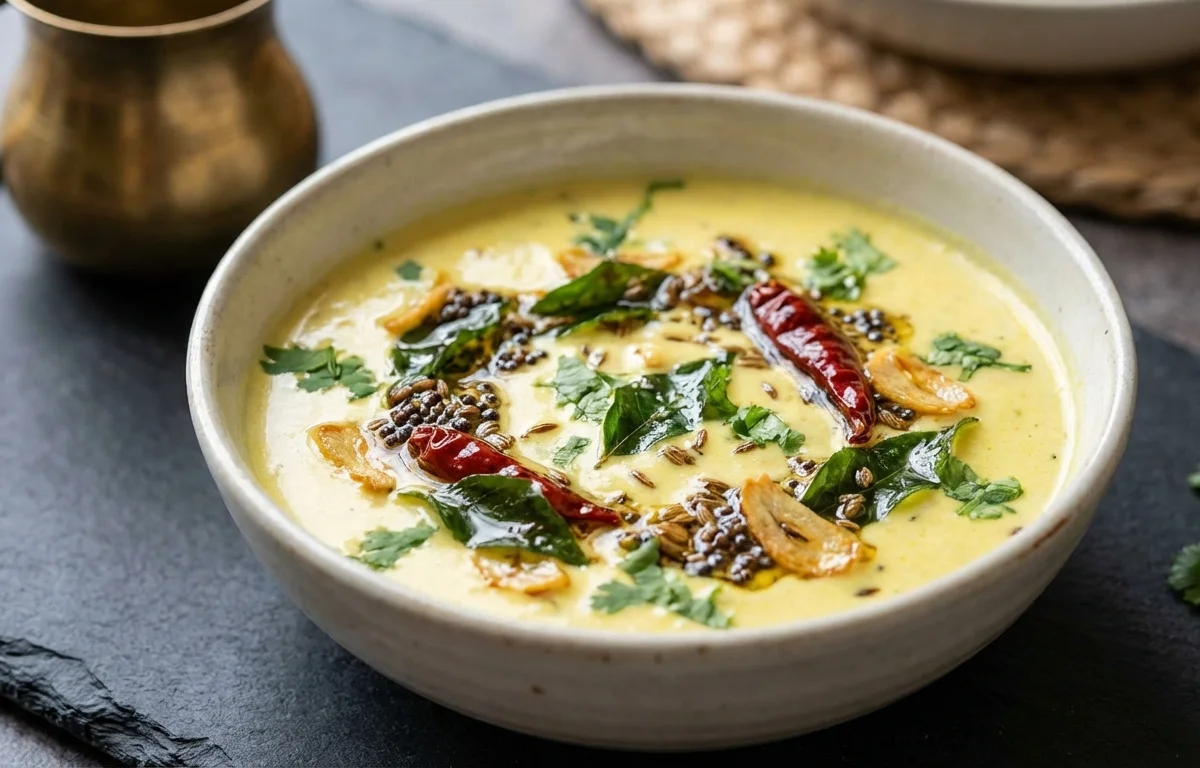
Hyderabadi Dahi ki Kadi
A gently spiced Hyderabadi yogurt curry with a silky, tangy base and a fragrant tempering of whole spices, ginger, and curry leaves. It is light, comforting, and especially good with plain rice or pulao.
For 4 servings
- mix · ~5 min
Whisk the yogurt base.
1.Add yogurt and chickpea flour to a bowl.2.Whisk until completely smooth with no lumps.3.Pour in water little by little and whisk into a thin, even mixture.4.Stir in salt, turmeric powder, and red chili powder.TIPA smooth base keeps the kadi silky and helps prevent splitting. - temper · ~2 min
Make the tempering.
1.Heat oil in a deep pan over medium heat.2.Add mustard seeds and cumin seeds and let them crackle.3.Add fenugreek seeds, dried red chili, and curry leaves.4.Stir for a few seconds until fragrant.TIPKeep the heat moderate once the fenugreek goes in so it does not turn bitter. - saute · ~7 min
Cook the aromatics.
1.Add onion and cook until soft and lightly golden.2.Add ginger, garlic, and green chili.3.Cook until the raw smell fades and everything smells fragrant. - simmer · ~15 min
Cook the kadi gently.
Lower the heat and pour in the yogurt mixture slowly, stirring continuously. Cook on low to medium-low heat until the kadi comes to a gentle simmer and thickens slightly, stirring often so the yogurt does not curdle.
TIPDo not let it boil hard; a gentle simmer keeps the texture smooth. - simmer · ~9 min
Finish until lightly thickened.
Simmer for 8 to 10 minutes more until the raw taste of chickpea flour is gone and the curry looks glossy and lightly thick. Adjust with a splash of water if it gets too thick.
- garnish
Garnish with cilantro.
- serve
Serve hot with rice.
What to keep in mind.
7 tips from the recipe — small details that make a real difference to the final dish.
- 1Whisk the yogurt and besan until fully lump-free before adding water, or the kadi can turn grainy.
- 2Use slightly sour yogurt for the classic Hyderabadi tang; fresh sweet curd will taste flatter.
- 3After adding fenugreek seeds, keep the heat moderate so they toast without becoming bitter.
- 4Pour the yogurt mixture into the pan only after lowering the heat, and stir constantly for the first few minutes.
- 5Stop at a gentle simmer; a rolling boil can split the yogurt and spoil the silky texture.
- 6The kadi is ready when it looks glossy and the raw besan smell has completely disappeared.
- 7It thickens as it stands, so loosen leftovers with a splash of water while reheating on low heat.
Adapt it for your goals.
Jain
Skip onion and garlic, increase ginger and green chili slightly, and rely on the tempered spices and curry leaves for depth.
low oilLow-oil
Reduce the oil in the tempering and sauté onions more slowly; the kadi stays light while keeping its tangy character.
spicierSpicier
Add an extra slit green chili or a little more red chili powder for a sharper, hotter finish with rice.
no onionNo-onion
Omit the onion for a simpler, lighter version where the yogurt's tang and the tempering stand out more clearly.
Why this is on our healthy list.
Protein from Yogurt and Besan
Yogurt and chickpea flour together make this curry more sustaining than a plain thin gravy.
Digestive Spices
Ginger, cumin, curry leaves, and fenugreek are traditional aromatics that add flavor while making the dish feel light and soothing.
Lighter Comfort Dish
This kadi gets most of its body from yogurt and besan rather than heavy cream, keeping it satisfying without feeling rich.
Frequently asked questions
Usually the heat was too high or the yogurt mixture was added to a very hot pan. Keep the heat low and stir continuously until it settles into a gentle simmer.