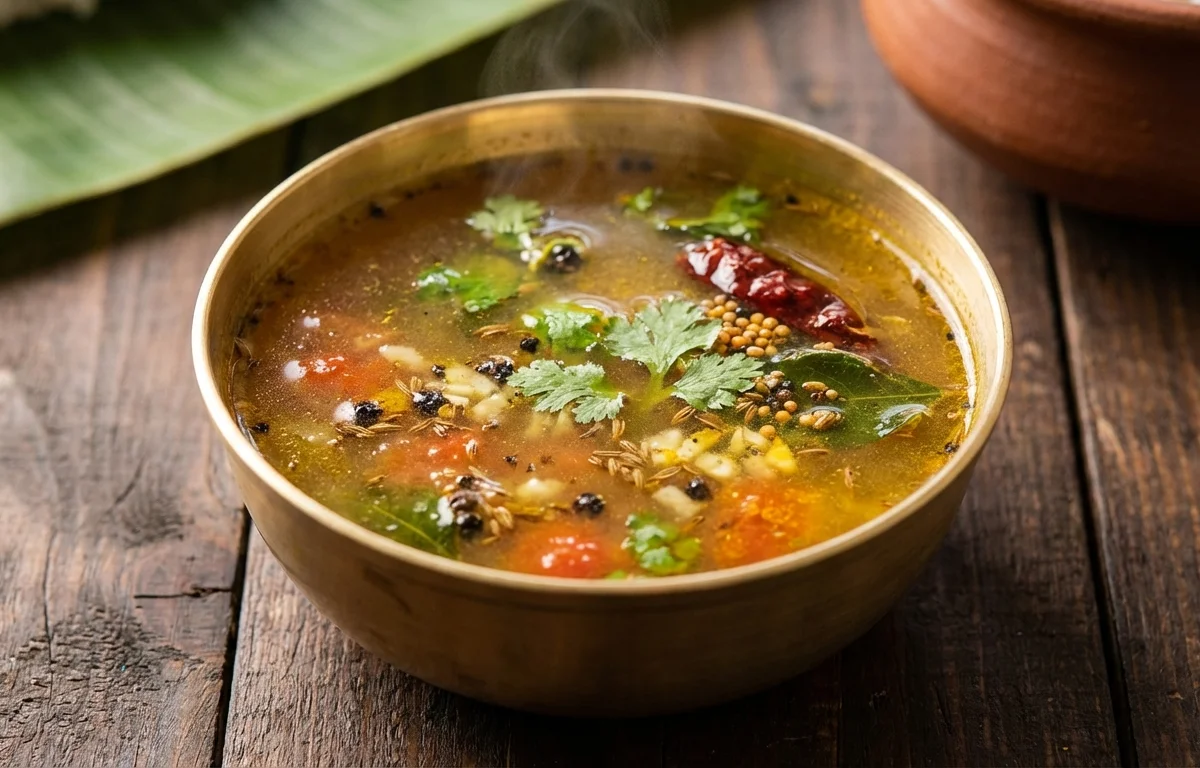
Jeeraga Rasam
A comforting, thin South Indian soup infused with cumin and black pepper. This Tamil Nadu-style rasam has a warm, spiced aroma and a gentle kick of heat, making it the perfect remedy for cold days or when you need a light, soothing accompaniment to rice.
For 4 servings
- prep · ~15 min
Soak the tamarind.
1.Soak the tamarind in 1 cup of warm water for 15 minutes.2.Squeeze the tamarind well with your fingers to extract the pulp.3.Strain the tamarind water and discard the pulp. Set the tamarind extract aside. - prep · ~1 min
Coarsely grind the spices and aromatics.
1.In a small mixer jar, add cumin seeds, black peppercorns, and garlic cloves.2.Pulse 3-4 times to a coarse, grainy texture. Do not make a fine paste.TIPA coarse grind releases the cumin and pepper oils gradually, giving the rasam a deeper, more layered flavor. - boil · ~10 min
Cook the tomato base.
1.In a saucepan, combine the chopped tomatoes, tamarind extract, and 1.5 cups of water.2.Add the turmeric powder and salt.3.Bring to a rolling boil over high heat.4.Reduce the heat to medium and simmer until the tomatoes soften completely and the raw tamarind smell disappears, about 8-10 minutes.5.Crush the softened tomatoes with the back of a ladle against the side of the pan. - simmer · ~5 min
Add the ground spice mix and simmer.
1.Add the coarsely ground cumin-pepper-garlic mixture to the saucepan.2.Stir well and add the remaining 0.5 cup of water to adjust consistency.3.Simmer on low heat until the rasam becomes frothy on top and aromatic, about 5 minutes.4.Do not let it boil vigorously after adding the spice mix. Turn off the heat immediately once frothy.TIPWatching for the frothy stage is key — boiling after this point will cause the volatile essential oils from the cumin and pepper to evaporate, weakening the flavor. - temper · ~2 min
Make the tempering.
1.Heat the ghee in a small tempering pan over medium heat.2.Once the ghee is hot, add the mustard seeds and let them splutter.3.Add the dried red chilies and curry leaves. Sauté until the leaves turn crisp and fragrant.4.Immediately add the asafoetida, stir once, and pour the entire tempering over the rasam. - garnish · ~2 min
Garnish with fresh coriander leaves.
Sprinkle the chopped coriander leaves on top. Cover the rasam immediately for 2 minutes to let the tempering infuse its aroma into the broth.
TIPCovering the rasam right after the tadka and garnish traps the essential oils, making the final dish more fragrant. - serve
Serve the Jeeraga Rasam hot.
Serve as a comforting soup, or pour over steamed rice with a drizzle of ghee. Pairs beautifully with a dry vegetable poriyal and papad.
What to keep in mind.
6 tips from the recipe — small details that make a real difference to the final dish.
- 1Use a small ball of tamarind the size of a gooseberry for the perfect sourness—too much will overpower the cumin.
- 2Pulse the cumin, pepper, and garlic coarsely; a fine paste muddies the broth and weakens the aroma.
- 3Simmer the tomato-tamarind base until the raw smell of tamarind vanishes—this deepens the flavor.
- 4Watch for the rasam to turn frothy after adding the spice mix, then immediately remove from heat.
- 5Cover the rasam for 2 minutes after pouring the tempering to lock in the aromatic oils from the tadka.
- 6For a thinner consistency, add an extra ¼ cup of water before the final simmer; for a thicker soup, reduce water by ¼ cup.
Adapt it for your goals.
Vegan
Replace ghee with coconut oil or any neutral oil for the tempering. The flavor profile stays warm and spiced, making it fully plant-based.
extra spicyExtra-spicy
Double the black peppercorns to 2 tsp and add a slit green chili while simmering the tomato base. Ideal for those who love a fiery kick.
low sodiumLow-sodium
Reduce salt to ⅛ tsp or omit entirely—the tamarind and cumin provide enough flavor depth for a salt-free version.
protein richProtein-rich
Add ½ cup of cooked toor dal (pigeon pea) along with the spice mix for a heartier, protein-packed rasam that still maintains its soupy texture.
Why this is on our healthy list.
Digestive Aid
Cumin and asafoetida are traditionally used in Ayurveda to stimulate digestion and reduce bloating.
Anti-Inflammatory Spices
Black pepper and turmeric contain piperine and curcumin, which have natural anti-inflammatory properties.
Low-Calorie Comfort
This broth-based rasam is light on calories yet deeply satisfying, making it ideal for a soothing meal.
Immune Support
Garlic and curry leaves are rich in antioxidants and antimicrobial compounds that support immune health.
Frequently asked questions
Yes, use 1 tablespoon of store-bought tamarind paste mixed with 1 cup of water as a direct substitute.