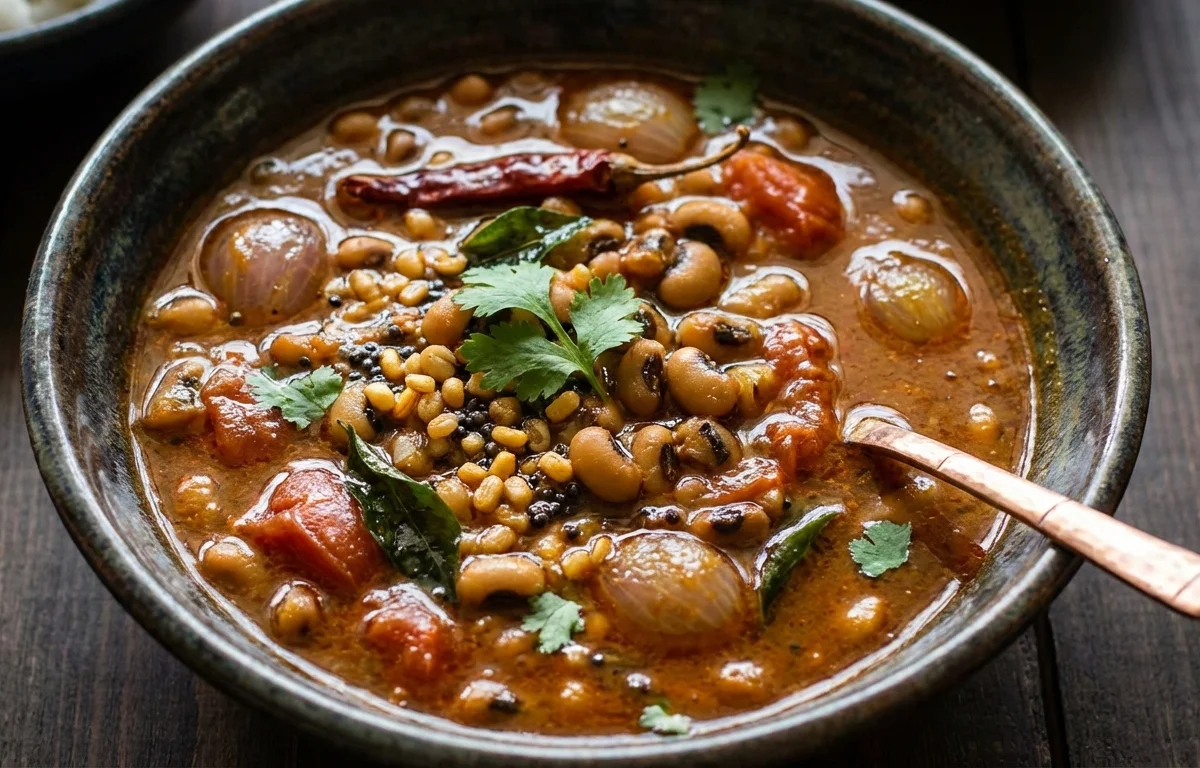
Karamani Kuzhambu
A homestyle Tamil kuzhambu made with tender black-eyed peas in a tangy tamarind gravy. The masala is simple but deeply comforting, with coconut, spices, and a gentle heat that goes beautifully with hot rice.
For 4 servings
- prep · ~15 min
Soak the karamani and prepare the tamarind.
1.Rinse the karamani well and soak it in plenty of water overnight.2.Soak the tamarind in warm water for 10 minutes.3.Squeeze and strain the tamarind extract; keep it aside.TIPA good overnight soak helps the karamani cook evenly and keeps the gravy smooth. - pressure cook · ~20 min
Pressure cook the karamani.
Drain the soaked karamani and add it to a pressure cooker with 2 cups water. Cook until soft but not mushy, about 4 whistles, then let the pressure drop naturally.
TIPThe beans should hold their shape in the kuzhambu, so avoid overcooking. - roast · ~5 min
Roast the masala ingredients.
1.Heat a small pan over low heat.2.Roast coriander seeds, 0.5 tsp cumin seeds, black peppercorns, and dried red chili until fragrant.3.Cool slightly, then grind with grated coconut and a little water to a smooth paste. - temper · ~2 min
Make the tempering.
1.Heat oil in a kadai over medium heat.2.Add mustard seeds and let them splutter.3.Add the remaining 0.5 tsp cumin seeds, curry leaves, and crushed garlic.4.Cook for a few seconds until fragrant.TIPKeep the heat medium so the mustard pops and the garlic does not burn. - saute · ~8 min
Cook the onion and tomato base.
1.Add the chopped onion and sauté until soft and light golden.2.Add the chopped tomato and cook until it breaks down.3.Add turmeric powder, red chili powder, and sambar powder.4.Mix well and cook for 1 minute. - simmer · ~15 min
Simmer the kuzhambu.
Add the cooked karamani with its cooking liquid, the ground coconut paste, tamarind extract, remaining 1 cup water, and salt. Mix well and simmer until the gravy thickens slightly and the raw tamarind smell disappears.
TIPStir now and then as the coconut paste cooks, so the gravy does not catch at the bottom. - garnish
Garnish with cilantro.
- serve
Serve hot with rice.
What to keep in mind.
7 tips from the recipe — small details that make a real difference to the final dish.
- 1Cook the black-eyed peas until just tender; they should press easily but still hold shape in the gravy.
- 2Roast the coriander, cumin, pepper, and red chili on low heat only until aromatic, or the masala can turn bitter.
- 3Grind the coconut masala very smooth so the kuzhambu gets a velvety texture instead of a grainy finish.
- 4Let the tamarind simmer until its raw smell is completely gone before switching off the heat.
- 5Stir often after adding the coconut paste, since kuzhambu can catch at the bottom as it thickens.
- 6This kuzhambu tastes even better after resting 20 to 30 minutes, when the tamarind and spice flavors settle together.
- 7If making ahead, refrigerate after cooling and reheat gently with a splash of water, as the gravy thickens on standing.
Adapt it for your goals.
No-garlic
Skip the garlic in the tempering for a simpler, more traditional satvik-style version while keeping the curry leaves and cumin prominent.
spicierSpicier
Add one more dried red chili in the masala or a little extra chili powder if you want a hotter kuzhambu for rice.
shallot basedShallot-based
Replace the onion with small shallots for a sweeter, more Tamil homestyle flavor and a richer gravy base.
thin kuzhambuThin-kuzhambu
Use a little more water for a lighter, pourable kuzhambu that mixes easily with hot rice.
Why this is on our healthy list.
Legume-Based Protein
Black-eyed peas add plant protein and make the kuzhambu more filling and satisfying when served with rice.
Good Fiber Support
Karamani, onion, tomato, and tamarind contribute fiber that supports a hearty, balanced meal.
Spice-Rich Dish
Cumin, coriander, pepper, garlic, and curry leaves add aroma along with beneficial plant compounds.
Naturally Dairy-Free
The gravy gets body from coconut instead of dairy, making it suitable for those avoiding milk products.
Frequently asked questions
Yes, but the beans may cook less evenly and take longer. Overnight soaking gives softer, more uniformly cooked karamani and a better final texture.