Kathirikai Gothsu
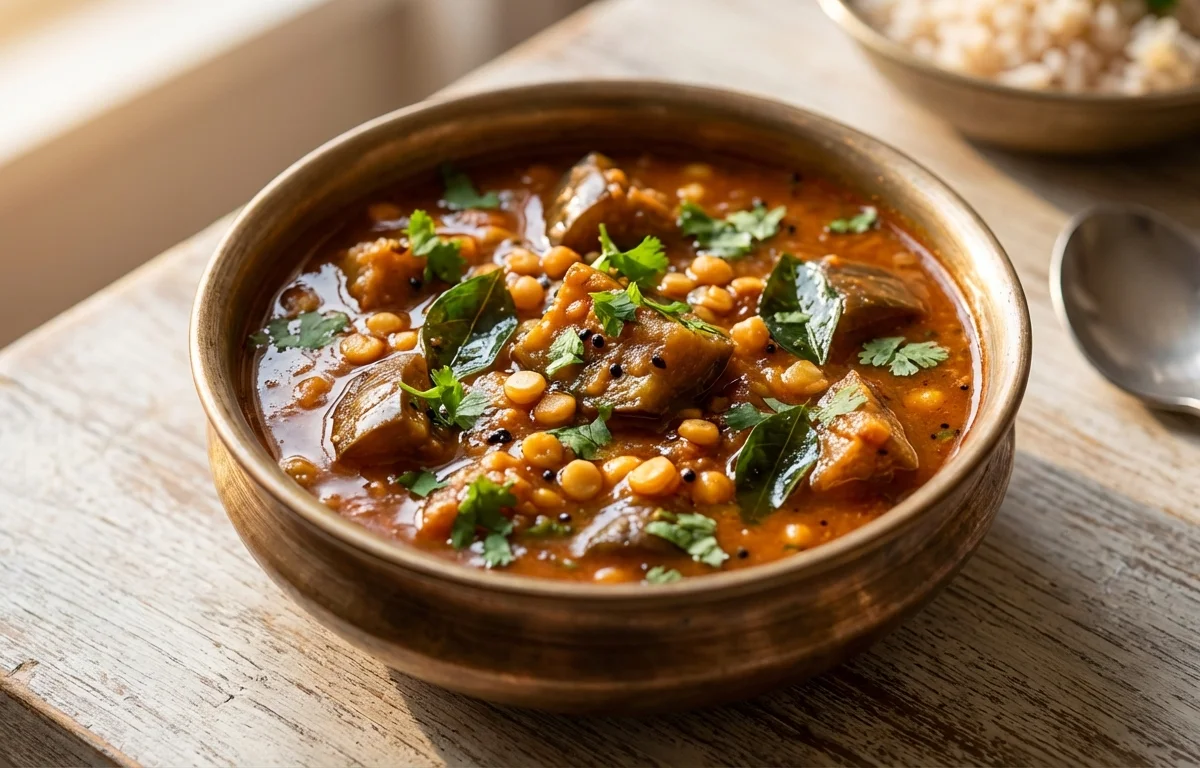
Smoky eggplant simmered with tamarind, tomato, and a simple tempering makes this comforting South Indian gothsu. It has a lightly tangy, savory taste and is especially good with pongal, idli, or dosa.
For 4 servings
- prep · ~10 min
Soak the tamarind and prepare the vegetables.
1.Soak tamarind in a little warm water for 10 minutes.2.Chop the onion and tomatoes finely.3.Slit the green chilies and chop the ginger. - roast · ~12 min
Roast the eggplant until soft and smoky.
Roast the eggplant directly over flame, turning often, until the skin is charred and the flesh is very soft. Cool slightly, peel off the skin, and mash the flesh well.
TIPRoast until completely soft inside; any firm patches will stay chunky in the gothsu. - temper · ~2 min
Make the tempering.
1.Heat sesame oil in a pan over medium heat.2.Add mustard seeds and let them splutter.3.Add urad dal, chana dal, and dried red chili.4.Add curry leaves and asafoetida, then stir for a few seconds. - saute · ~10 min
Cook the onion, ginger, and tomatoes.
1.Add onion, green chili, and ginger to the pan.2.Cook until the onion turns soft and lightly golden, about 4 to 5 minutes.3.Add tomatoes and cook until they break down and turn pulpy.4.Stir in turmeric powder and sambar powder. - mix · ~3 min
Add the roasted eggplant and tamarind extract.
Squeeze and strain the tamarind extract into the pan. Add the mashed eggplant, salt, jaggery, and water, then mix well until smooth and combined.
- simmer · ~12 min
Simmer the gothsu until slightly thickened.
Bring the mixture to a gentle simmer and cook uncovered until the raw tamarind smell disappears and the gothsu thickens a little, while still staying pourable.
TIPKathirikai gothsu should not be too thick; add a splash of water if it tightens too much. - garnish
Garnish with coriander leaves.
- serve
Serve hot with pongal, idli, or dosa.
What to keep in mind.
7 tips from the recipe — small details that make a real difference to the final dish.
- 1Roast the eggplant until it fully collapses; any undercooked spots stay fibrous in the gothsu.
- 2After peeling, mash the eggplant while still warm so it blends smoothly into the tamarind base.
- 3Cook the tomatoes down until jammy before adding liquids; this gives the gothsu body without extra thickening.
- 4Let the tamarind simmer until its raw smell is gone, or the finished dish will taste sharp instead of rounded.
- 5Keep the final texture pourable rather than chutney-thick, especially if serving with ven pongal or idli.
- 6Sesame oil gives the most traditional flavor here; it also supports the smoky taste of the fire-roasted eggplant.
- 7Gothsu often tastes even better after 20 to 30 minutes of resting, once the smoke, spice, and tang settle together.
Adapt it for your goals.
No-onion
Skip the onion for a simpler temple-style version; the gothsu will taste slightly lighter and more tangy.
spicierSpicier
Add an extra green chili or a little more sambar powder if you want a sharper heat for dosa or idli.
jainJain
Omit onion, ginger, and asafoetida if needed, and rely on tomato, tamarind, curry leaves, and roasted eggplant for flavor.
pressure cookedPressure-cooked
If open-flame roasting is not possible, cook eggplant until soft in a pressure cooker, though the gothsu will be less smoky.
Why this is on our healthy list.
Vegetable-rich and light
Eggplant, tomato, onion, and coriander make this a vegetable-forward side with plenty of flavor without needing heavy ingredients.
Digestive spice support
Ginger, curry leaves, asafoetida, and tempered dals are traditionally used to add aroma and make the dish feel easier to eat.
Plant-based comfort dish
This gothsu is naturally vegan when made as written and gets satisfying texture from roasted eggplant rather than dairy.
Frequently asked questions
Yes. Roast until the skin is charred and the flesh is completely soft, but the gothsu will have less smoky flavor than flame-roasted eggplant.