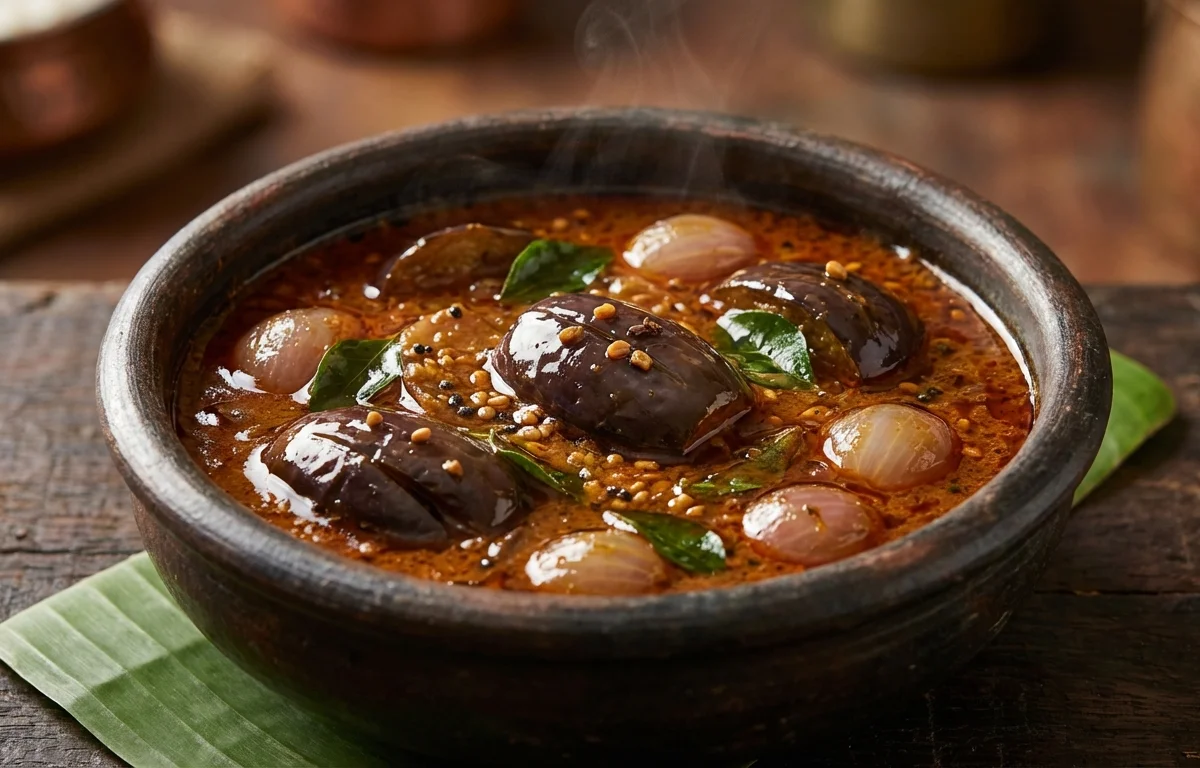
Kathirikai Kara Kuzhambu
A bold, tangy Tamil-style brinjal curry with tamarind, spices, and a gently thickened gravy. Small eggplants soak up the punchy masala beautifully, making it perfect with hot rice and a simple poriyal.
For 4 servings
- prep · ~10 min
Soak the tamarind and prep the brinjals.
1.Soak the tamarind in a little warm water for 10 minutes.2.Squeeze and extract about 1 cup tamarind water; discard the fibers.3.Wash the eggplants and slit each into quarters, keeping them joined at the stem. - temper · ~1 min
Make the tempering.
1.Heat sesame oil in a kadai over medium heat.2.Add mustard seeds and let them splutter.3.Add fenugreek seeds and curry leaves, and cook for a few seconds until fragrant.TIPKeep the heat moderate after adding fenugreek seeds so they do not turn dark and bitter. - saute · ~7 min
Cook the shallots, garlic, and brinjal.
1.Add the shallots and garlic and sauté until the shallots turn lightly golden.2.Add the slit eggplants and stir gently to coat them in the oil.3.Cook for 4 to 5 minutes until the eggplants begin to soften. - saute · ~5 min
Add the tomato and spice powders.
1.Add the chopped tomato and cook until soft.2.Add sambar powder, red chili powder, and turmeric powder.3.Mix well and cook for 1 minute so the spices lose their raw smell. - simmer · ~15 min
Pour in the tamarind water and simmer.
1.Pour in the tamarind water and the 1 cup water.2.Add salt and jaggery, then mix gently.3.Bring the kuzhambu to a boil, then lower the heat and simmer until the eggplants are tender and the gravy slightly reduces.TIPDo not stir too hard once the eggplants soften or they may break apart into the gravy. - mix · ~3 min
Thicken the kuzhambu lightly.
Add the rice flour slurry and stir well. Cook for 2 to 3 minutes more until the gravy looks glossy and lightly thickened.
- rest · ~10 min
Let the kuzhambu rest for 10 minutes.
TIPA short rest helps the tamarind, spice, and brinjal flavors come together better. - serve
Serve hot with rice.
What to keep in mind.
7 tips from the recipe — small details that make a real difference to the final dish.
- 1Choose small, firm Indian brinjals so they soften evenly without collapsing into the gravy.
- 2Keep the slit brinjals attached at the stem; they hold shape better during simmering.
- 3After adding fenugreek, lower the heat slightly—burnt fenugreek will make the kuzhambu noticeably bitter.
- 4Cook the shallots until lightly golden before adding brinjal for a sweeter, deeper base flavor.
- 5Simmer uncovered toward the end so the tamarind gravy reduces and tastes punchier with rice.
- 6Stir the rice flour slurry again just before pouring it in, or it can settle and form lumps.
- 7This kuzhambu tastes even better after a few hours or the next day as the brinjal absorbs the tamarind masala.
Adapt it for your goals.
Jain
Skip shallots and garlic, and use a little extra tomato plus curry leaves for body and aroma while keeping the tamarind-spice profile intact.
low oilLow-oil
Reduce the sesame oil slightly and cook covered after adding tamarind water; the gravy will still be flavorful, though a bit less rich.
no rice flourNo-rice-flour
Omit the rice flour slurry and simmer longer to reduce naturally if you prefer a more traditional, looser kuzhambu texture.
drumstick addedDrumstick-added
Add cut drumstick pieces along with the brinjal for a more elaborate Tamil-style kuzhambu with extra vegetable flavor.
Why this is on our healthy list.
Rich in Plant Ingredients
Eggplant, shallots, tomato, garlic, curry leaves, and tamarind bring a varied mix of plant compounds and natural flavor without needing heavy cream.
Moderate, Satisfying Fat Source
Sesame oil adds richness and helps carry the spice flavors, so the dish feels full-bodied even with a simple ingredient list.
Digestive Spice Support
Garlic, fenugreek, curry leaves, and tamarind are traditional South Indian ingredients often valued for making tangy, spiced meals feel balanced.
Frequently asked questions
They were likely overcooked or stirred too much after softening. Use small firm brinjals and simmer gently once the tamarind liquid is added.