
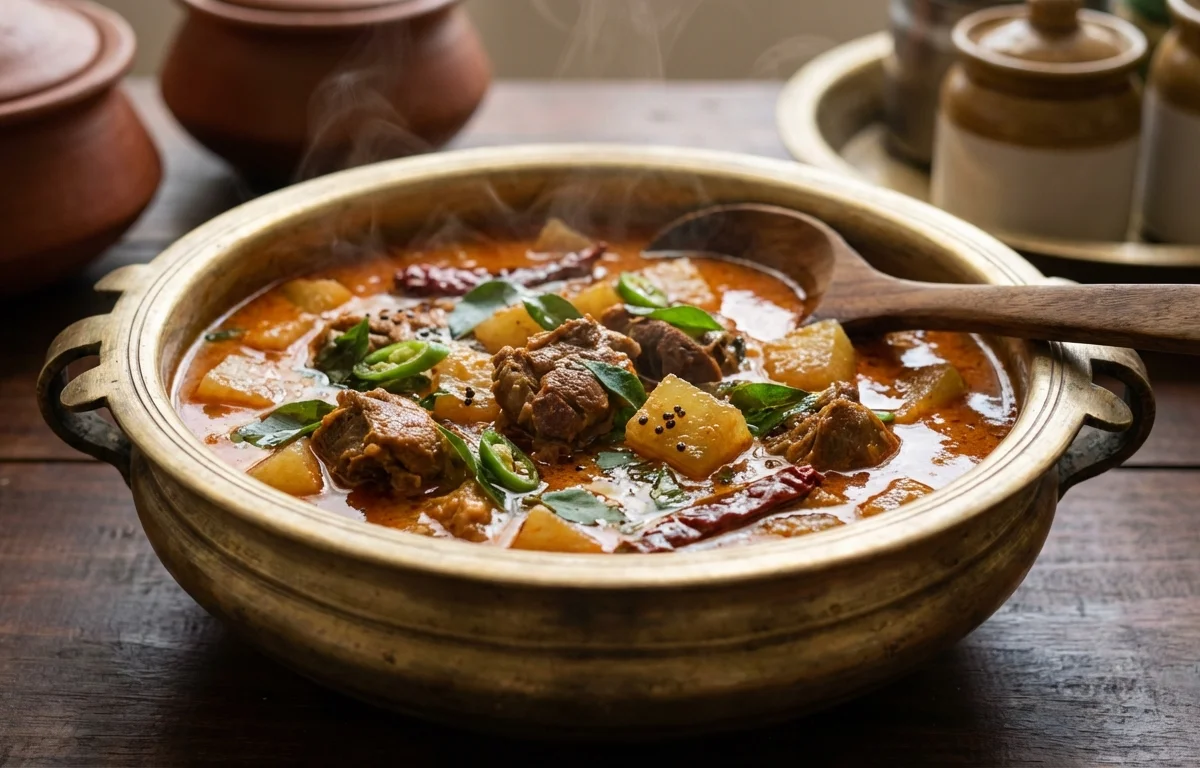
Kerala Duck Curry with Ash Gourd
Rich, gently spiced duck curry simmered with tender ash gourd in a coconut-based gravy. This Kerala-style dish balances deep meat flavor, warm spices, and the light sweetness of winter melon in every spoonful.
For 4 servings
- prep · ~15 min
Prepare the duck and grind the coconut.
1.Wash the duck pieces well and drain fully.2.Peel and cube the ash gourd, then keep it aside.3.Grind the grated coconut with 0.5 cup water to a smooth paste. - pressure cook · ~20 min
Pressure cook the duck.
1.Add duck, 0.5 tsp salt, turmeric powder, 0.5 cup water, and half of the chopped ginger and garlic to a pressure cooker.2.Mix well, close the cooker, and cook over medium heat for 4 whistles.3.Let the pressure drop naturally before opening.TIPDuck should be nearly tender at this stage; it will finish cooking in the gravy. - saute · ~13 min
Cook the spice base.
1.Heat coconut oil in a kadai over medium heat.2.Add curry leaves, black peppercorns, fennel seeds, cinnamon, cloves, and cardamom; cook until fragrant (30 seconds).3.Add sliced onion and cook until lightly golden (6-7 minutes).4.Add the remaining ginger, garlic, and green chili; cook until the raw smell fades (1 minute).5.Add tomato and cook until soft and pulpy (4-5 minutes). - saute · ~1 min
Add the ground spices.
Stir in red chili powder, coriander powder, and crushed black pepper. Cook on low heat for 30 seconds so the spices bloom without burning.
TIPLower the heat before adding spice powders so they stay bright and do not turn bitter. - simmer · ~5 min
Build the curry.
1.Add the pressure-cooked duck along with its cooking liquid to the pan.2.Add the ash gourd, coconut paste, kokum, and the remaining 1.5 cups water.3.Mix well and bring the curry to a gentle simmer. - simmer · ~20 min
Simmer until the ash gourd turns tender.
Cover and cook on low heat, stirring once or twice, until the ash gourd is soft and the gravy thickens lightly. Stir in garam masala during the last 2 minutes.
- rest · ~10 min
Rest the curry for 10 minutes.
TIPA short rest helps the duck, ash gourd, and spices settle into a deeper Kerala-style flavor. - serve
Serve hot.
What to keep in mind.
7 tips from the recipe — small details that make a real difference to the final dish.
- 1Drain the duck well before pressure cooking so the meat sears in its own fat instead of tasting watered down.
- 2Stop the pressure cooking at nearly tender; overcooked duck can shred apart during the final simmer.
- 3Cube the ash gourd evenly so it softens at the same rate and does not turn mushy in the gravy.
- 4Cook the onions to light golden, not dark brown, to keep the curry Kerala-style and let the coconut stay sweet.
- 5After adding the coconut paste, keep the curry at a gentle simmer and stir occasionally to prevent splitting or sticking.
- 6Remove the kokum once the curry reaches the tang you like, especially if you plan to rest it longer before serving.
- 7This curry tastes even better after a few hours, so make it ahead and reheat gently for a deeper spice balance.
Adapt it for your goals.
Spicier
Increase green chili and crushed black pepper for a hotter, more pepper-forward Kerala-style curry.
thicker gravyThicker-gravy
Use a little more grated coconut or reduce the simmering liquid for a richer curry that coats rice beautifully.
without kokumWithout-kokum
If kokum is unavailable, use a small amount of tamarind for tang, though the flavor will be less fruity.
stovetop onlyStovetop-only
Cook the duck covered in a heavy pot until nearly tender before building the curry if you do not use a pressure cooker.
Why this is on our healthy list.
Protein-Rich Main Dish
Duck provides substantial protein, making this curry filling and satisfying as a centerpiece meal.
Includes Hydrating Ash Gourd
Ash gourd is a light vegetable that adds bulk and tenderness to the curry without making it heavy.
Aromatic Spice Support
Ginger, garlic, black pepper, fennel, and curry leaves add flavor depth while reducing the need for excessive heat or richness.
Balanced Fat from Coconut
Fresh coconut and coconut oil give body and satiety, helping the spices taste rounded rather than harsh.
Frequently asked questions
Yes. Simmer the duck in a covered heavy pot with the ginger, garlic, salt, turmeric, and water until nearly tender, then continue with the masala and ash gourd.



.webp)
.webp)