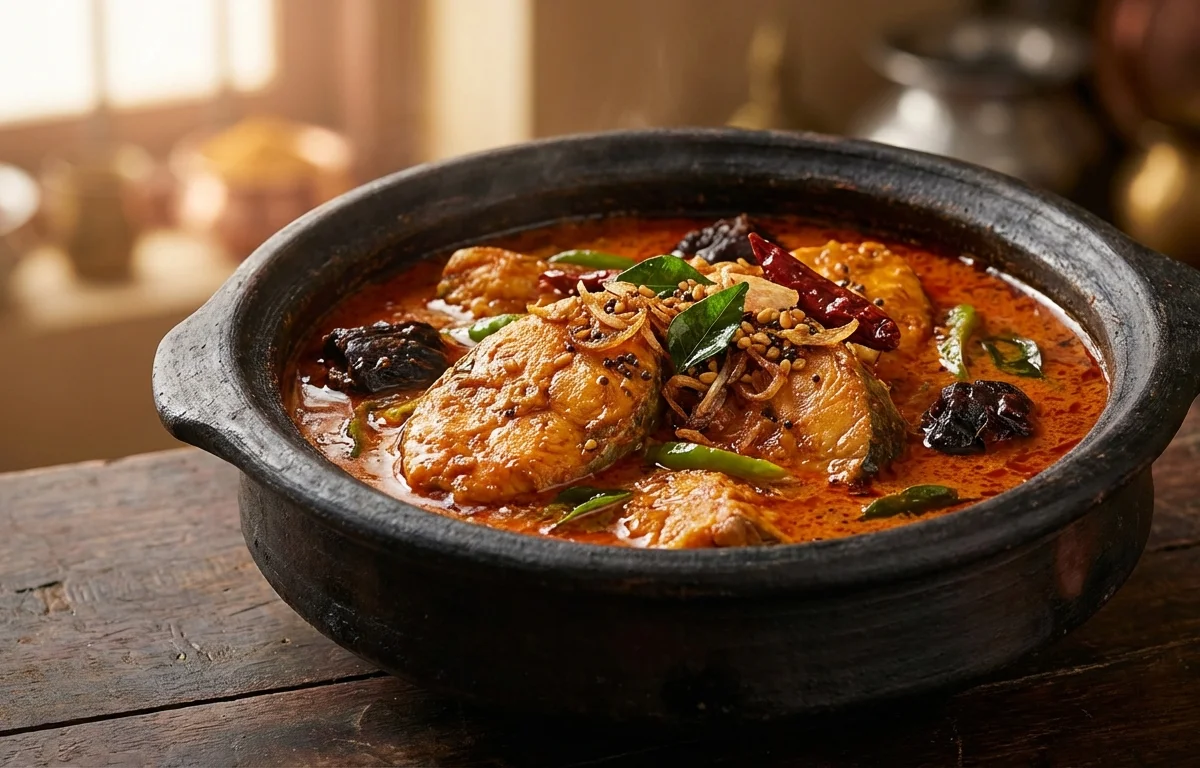
Kerala Fish Curry
Tangy, gently spiced fish curry simmered with coconut, kudampuli, and curry leaves. This Kerala classic has a bright, coastal flavor and a light gravy that pairs beautifully with rice for a comforting meal.
For 4 servings
- prep · ~10 min
Soak the kudampuli and prep the fish.
1.Rinse the kudampuli and soak it in a little warm water for 10 minutes.2.Clean the fish and cut it into medium steaks or chunks if needed.3.Slice the shallots, garlic, and ginger, and slit the green chilies.TIPKeep the fish pieces fairly large so they stay intact while simmering. - mix · ~2 min
Grind the coconut.
Grind the grated coconut with a little of the kudampuli soaking water to a smooth paste. Set it aside for the curry base.
- temper · ~2 min
Make the tempering.
1.Heat coconut oil in a clay pot or pan over medium heat.2.Add mustard seeds and let them splutter.3.Add fenugreek seeds and curry leaves and cook briefly until fragrant.TIPDo not let the fenugreek seeds darken too much or they will taste bitter. - saute · ~6 min
Cook the aromatics and spices.
1.Add shallots, ginger, garlic, and green chilies.2.Cook until the shallots soften and turn lightly golden, about 4 to 5 minutes.3.Add turmeric powder, red chili powder, coriander powder, and black pepper.4.Stir for a few seconds so the spices bloom without burning. - simmer · ~7 min
Build the curry base.
1.Add chopped tomato and cook until soft and pulpy, about 3 to 4 minutes.2.Stir in the ground coconut paste.3.Add the soaked kudampuli, its soaking water, plain water, and salt.4.Bring the curry to a gentle simmer.TIPKeep the heat moderate once the coconut goes in so the gravy stays smooth. - simmer · ~10 min
Cook the fish in the gravy.
Slide the fish pieces into the simmering curry in a single layer. Cover and cook gently for 8 to 10 minutes, swirling the pot once or twice instead of stirring, until the fish is just cooked through.
TIPAvoid stirring with a spoon after adding the fish or the pieces may break. - rest · ~10 min
Let the curry rest for 10 minutes.
- serve
Serve hot with rice.
What to keep in mind.
7 tips from the recipe — small details that make a real difference to the final dish.
- 1Soak the kudampuli first so it softens and releases a cleaner, deeper sourness into the gravy.
- 2Use a clay pot if you have one; it helps the curry simmer gently and gives a more traditional Kerala taste.
- 3Let the shallots turn lightly golden before adding spice powders for a sweeter, rounder curry base.
- 4After adding the coconut paste, keep the heat moderate and do not boil hard or the gravy can split.
- 5Add the fish in a single layer and swirl the pot instead of stirring so the pieces stay whole.
- 6Resting the curry for 10 minutes is important; the fish finishes settling and the kudampuli flavor mellows into the coconut gravy.
- 7This curry often tastes even better the next day; cool fully and refrigerate, then reheat very gently.
Adapt it for your goals.
Low-coconut
Use less ground coconut for a thinner, sharper curry where the kudampuli and spices come through more strongly.
spicierSpicier
Increase green chilies or red chili powder for a hotter coastal-style curry that still keeps the same tangy base.
prawnPrawn
Swap the fish for prawns and reduce the final simmering time so they stay juicy and tender.
tomato lightTomato-light
Use less tomato if you want the sourness to come mainly from kudampuli rather than a tomato-forward gravy.
Why this is on our healthy list.
Protein-Rich Main Dish
Fish makes this curry satisfying and protein-rich, helping turn a simple rice meal into a balanced main course.
Aromatic Digestive Ingredients
Ginger, garlic, curry leaves, and spices bring flavor along with traditional digestive support in a light curry base.
Moderate, Light Gravy
The gravy is thinned with water and brightened by kudampuli, so it tastes rich without relying on heavy cream or butter.
Frequently asked questions
Use firm fish that holds its shape during simmering, such as seer fish, king fish, pomfret, or other sturdy steaks and chunks.